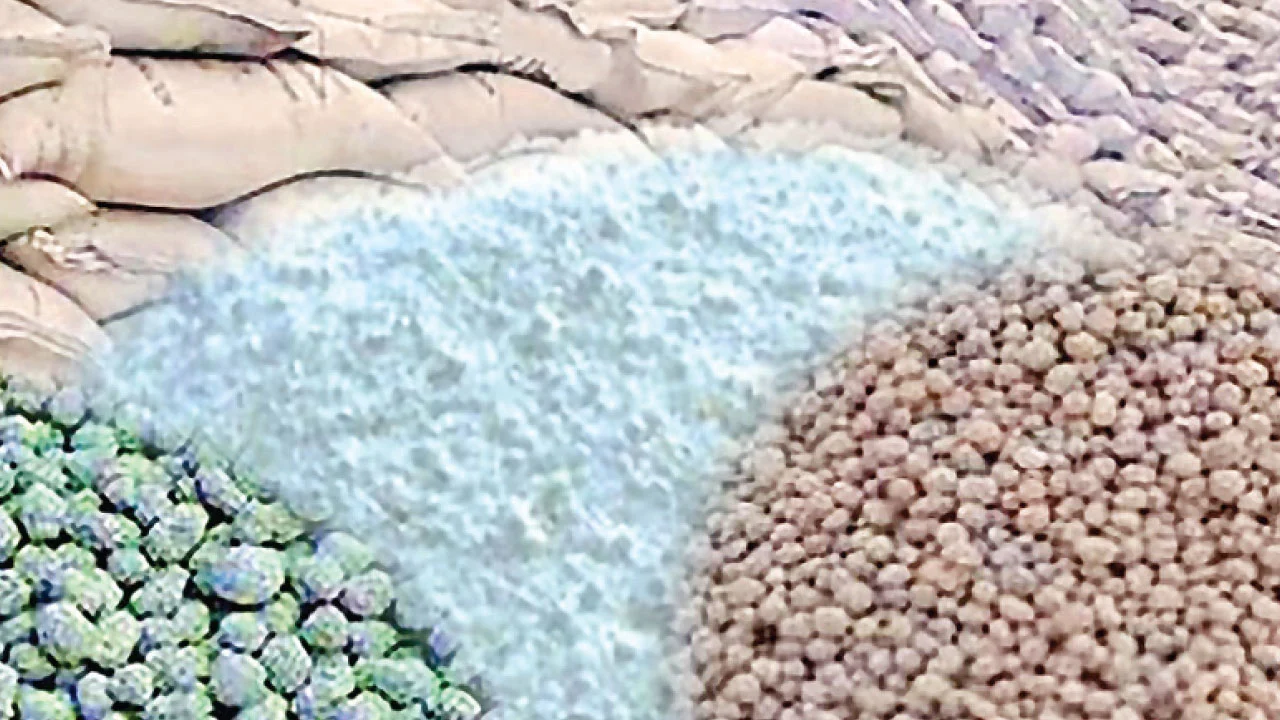
US-Israeli strikes on Iran, Bangladesh’s failure to sign a fertilizer-export agreement with Qatar, and a gas and energy supply crisis have dealt a major blow to the country’s fertilizer stocks. With factories unable to get the gas they need, urea production has fallen by an average of 25 to 30 percent a day. As a result, current stocks are steadily sinking below the safe-reserve target of 500,000 tons. This picture emerged from the ministry’s review of the fertilizer stock situation yesterday, Thursday.
Meanwhile, the ongoing war and geopolitical tensions in the Middle East have also created risk and uncertainty around fertilizer imports from Saudi Arabia and the United Arab Emirates. In addition, because shipping through the Strait of Hormuz has been disrupted, fertilizer must now be brought via an alternative route through Egypt’s Yanbu port, a detour of roughly 1,200 miles. This is increasing both import costs and time. On top of this, with Qatar not having signed a supply agreement, imports now depend on just two countries instead of three, deepening the crisis further.
According to relevant sources, fertilizer must be supplied and distributed at the field level every day to meet farmers’ demand. Three factors — production shortfalls, delayed ship arrivals, and Qatar’s pulling back — are creating a shortfall in fertilizer supply relative to demand.
In light of this, to reduce risk and uncertainty, the government has begun the tender process to import urea fertilizer from alternative countries — Russia, Malaysia and Brunei. Completing all formalities and beginning fertilizer import operations will take another two to three months. By then, however, the Aman season will already be over.
Sources say that if the current situation continues, fertilizer shortages during this peak Aman season of seedbed preparation and transplanting could deal a major blow to crop production in the current fiscal year. Amid this crisis, the appointments of district- and upazila-level fertilizer dealers made by the Awami League have recently been cancelled. In their place, the government has begun appointing new dealers under a new policy.
The removal of old dealers and the new appointments have created a kind of logjam in fertilizer stock and distribution at the field level. Agriculture field-office officials claim that old dealers, in an attempt to put the current government in a difficult position, have created an artificial shortage in the market, raising prices of both urea and non-urea fertilizer by Tk 500 to 700 per sack. This has created a new financial burden on farmers.
Because of the price increase, at least three unscrupulous fertilizer traders had been fined in Satkhira alone as of August 16. During the same period, cases were filed against 15 dealers in Sherpur district. The same pattern has been seen nationwide.
Meanwhile, according to Bangladesh Agricultural Development Corporation (BADC) sources, the government has set the price of a 50-kilogram sack of TSP fertilizer at Tk 1,350 and DAP at Tk 1,050. However, farmers complain that, unable to get fertilizer from authorized dealers, they are buying TSP on the open market for Tk 1,700 to 1,800. For DAP, they are having to pay roughly Tk 1,500 to 1,600.
Farmer Waliullah, of Basantapur village in Rajshahi’s Godagari upazila, alleges that dealers are keeping fertilizer off their shop shelves, secretly stockpiling it elsewhere, and later selling it at higher prices. Durgapur upazila farmer Abir Ahmed alleges that an artificial shortage is being created through collusion between agriculture officials and a section of dealers. He claims that, in many cases, fertilizer can be obtained if an extra Tk 500 to 700 is paid.
On this, Agriculture Ministry Additional Secretary (Fertilizer Management and Materials) Ahmed Faisal Imam said Thursday that some irregularities have been detected in the fertilizer supply system. In areas where demand is lower, some dealers are selling that fertilizer in other areas at higher prices. Some dealers, meanwhile, are withdrawing fertilizer from government warehouses, keeping their own warehouses empty, and trying to sell the fertilizer through retailers or sub-dealers instead. As a result, farmers cannot find fertilizer at dealers’ shops but can get it at retail level at higher prices.
Earlier, this past Sunday, Agriculture Secretary Selim Khan said at a discussion meeting in Rangpur that there is currently no fertilizer shortage in the country and that adequate stocks are available. He said no irregularities or corruption in fertilizer management would be tolerated, for the sake of farmers’ interests. He directed field-level officials to increase oversight and issued a stern warning against those engaged in irregularities.
Agriculture Ministry Joint Secretary (Fertilizer Management and Monitoring Wing) Dr. Jahangir Alam said this past Sunday that government supply continues to meet normal fertilizer demand during the Aman season. But since the notice for dealer appointments under the new policy was published, an unscrupulous group and some dealers have been spreading disinformation with dishonest intent, creating artificial panic.
Meanwhile, on Sunday, Finance Minister Amir Khasru Mahmud said the country’s gas and energy crisis would not be resolved even over the next two years. A BCIC official said that unless the country’s three closed fertilizer factories can be reopened as an alternative, a major fertilizer crisis could emerge in the coming Boro season as well as the Aman season, raising fears of a major setback for agriculture.
According to Agriculture Ministry data, urea fertilizer demand in the country stands at 2.62 million tons in the current fiscal year. On top of that, 500,000 tons must be kept as a safety reserve. In total, 3.12 million tons are needed. The country currently has roughly 500,329 tons of urea in stock, just 329 tons above the safe-reserve threshold.
A few days ago, this stock stood at roughly 85,000 tons higher. That’s because, where the production shortfall previously stood at 10 percent, that shortfall reached 25 to 30 percent as of yesterday, Thursday.
It is learned that there are plans to import a total of 1.029 million tons of urea from abroad. Of this, the process is under way to procure roughly 550,000 tons from Saudi Arabia, 325,000 tons from the United Arab Emirates, and a further 160,000 tons from Russia through tender.
BCIC officials say that, among the country’s several urea fertilizer factories, production capacity has fallen due to the gas crisis. The Palash and Shahjalal fertilizer factories in Ghorashal are producing at roughly 70 percent capacity. The two factories together are producing more than 100,000 tons a day.
BCIC Senior General Manager Manjur Reza said that if gas supply normalizes, initiatives could be taken to restart several more closed factories. In addition, he said, if factories including Ashuganj can be restarted, domestic fertilizer production would increase and pressure on imports would ease, saving foreign currency as well.
However, an analysis of statistics from the Agriculture Ministry shows that while the urea situation is relatively reassuring, stocks of DAP, TSP and MOP remain below the safe threshold.
According to ministry data, DAP stock currently stands at 300,353 tons. A safe reserve requires 500,000 tons, meaning a shortfall of 197,000 tons. TSP stock stands at 300,479 tons. A safe reserve requires 400,000 tons, a shortfall of 96,000 tons.
MOP stock, meanwhile, stands at 100,623 tons. With the safe threshold at 300,000 tons, the shortfall is 139,000 tons. This shortfall will grow larger by the day.
According to Department of Agricultural Extension data, the target for transplanted Aman cultivation this season is 5,710,762 hectares, with a production target of 18.0576 million tons.
According to BCIC officials, dealers withdraw fertilizer from government warehouses through a defined process. They are then supposed to sell fertilizer to farmers at the government-set price, under the supervision of district and upazila fertilizer-seed monitoring committees. As a result, if fertilizer is sold above the set price at any level, the relevant monitoring committee’s oversight needs to be strengthened.
Relevant officials say that, because of war and transport risk in the international market, arrangements are being kept in place to procure fertilizer from multiple sources. This way, even if a problem arises with one country or supply route, it will still be possible to import fertilizer from an alternative source.
However, they see the reliance on imports for urea supply as a major risk.
বাংলায় মূল প্রতিবেদন পড়ুন · Read the original Bengali report