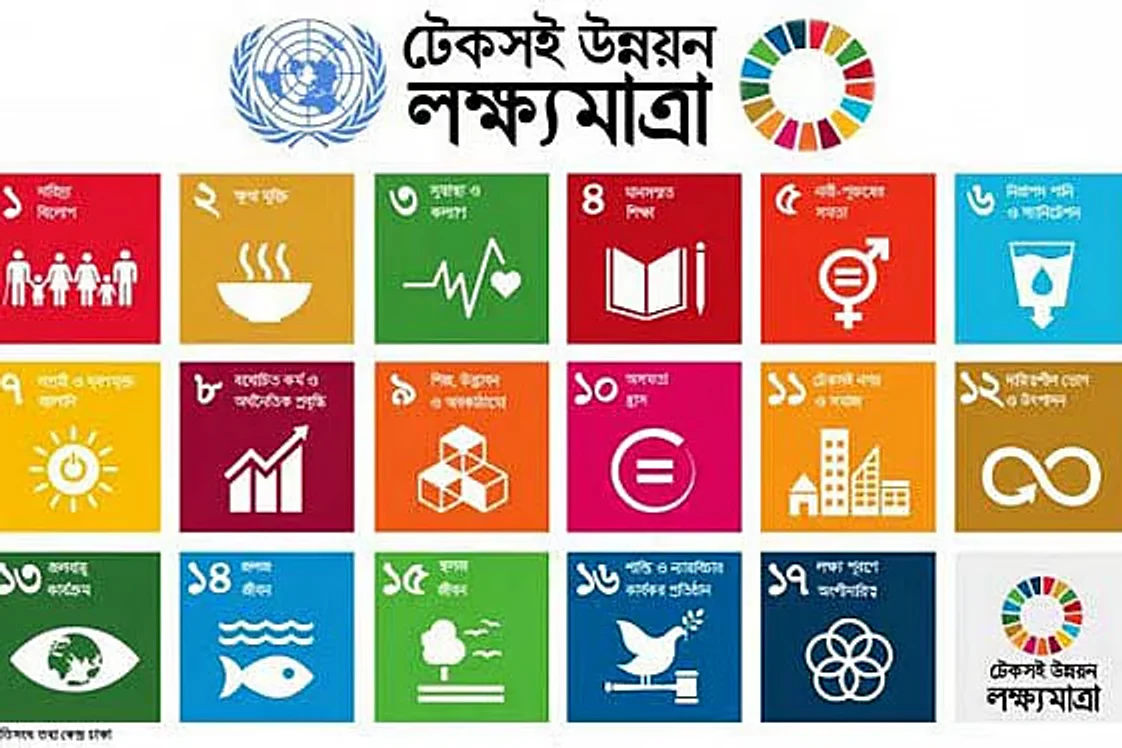
Bangladesh will need about 421 billion US dollars in additional financing over the next five years to achieve the Sustainable Development Goals (SDGs). The figure emerged from a review of the government’s recently updated SDG financing strategy.
The estimate of the additional financing was given at a “national validation workshop on the Development Finance Assessment (DFA) and SDG financing” held in the capital today.
The Economic Relations Division (ERD) organised the workshop with the cooperation of the United Nations Development Programme (UNDP) and the office of the UN resident coordinator in Bangladesh. The information was given in a press release sent by the ERD today.
The keynote presentation at the workshop was delivered by Selim Raihan, a teacher in the economics department of the University of Dhaka and executive director of the private research institution the South Asian Network on Economic Modeling (SANEM). In his presentation he analysed Bangladesh’s changing financing situation. He also set out possible strategies for securing additional financing from both public and private sources.
Selim Raihan said Bangladesh will need an additional 421 billion dollars from the 2026-27 financial year to 2029-30. The bulk of this money will have to be raised through domestic public and private financing, climate finance and international partnerships.
Speaking as chief guest, the ERD secretary, Md Shahriar Kader Siddiky, said: “The remaining time for implementing the SDGs is extremely challenging. On the one hand there is a huge financing gap; on the other, time in hand is limited and the global situation is uncertain. I believe Bangladesh will be able to meet this challenge and achieve meaningful progress.”
Md Shahriar Kader Siddiky added: “What we now need is clear prioritisation, coordinated initiative and effective implementation.”
Speaking as special guest, the UN resident coordinator in Bangladesh, Carol Flore-Smereczniak, set out various aspects of the report at an important moment in Bangladesh’s development journey.
Carol Flore-Smereczniak said opportunities for development financing are steadily narrowing in the world today. Against that background, she said, an important opportunity has been created for Bangladesh to increase investment in implementing the SDGs from its own sources by raising the tax-to-GDP ratio and encouraging the private sector to invest in ways consistent with the Sustainable Development Goals.
The workshop was chaired by the ERD additional secretary, A H M Jahangir. He said a coordinated and realistic financing plan is extremely important during Bangladesh’s preparation for graduation from least developed country status.
The UNDP deputy resident representative, Sonali Dayaratne, said more effective financing policies and stronger partnerships need to be built to fill the financing gap.
The workshop was organised with the support of the UNDP Climate Finance Network (CFN) programme, funded by the United Kingdom’s Foreign, Commonwealth and Development Office (FCDO). Representatives of various ministries and agencies, development partners, representatives of the banking sector, academics and representatives of civil society took part.
বাংলায় মূল প্রতিবেদন পড়ুন · Read the original Bengali report