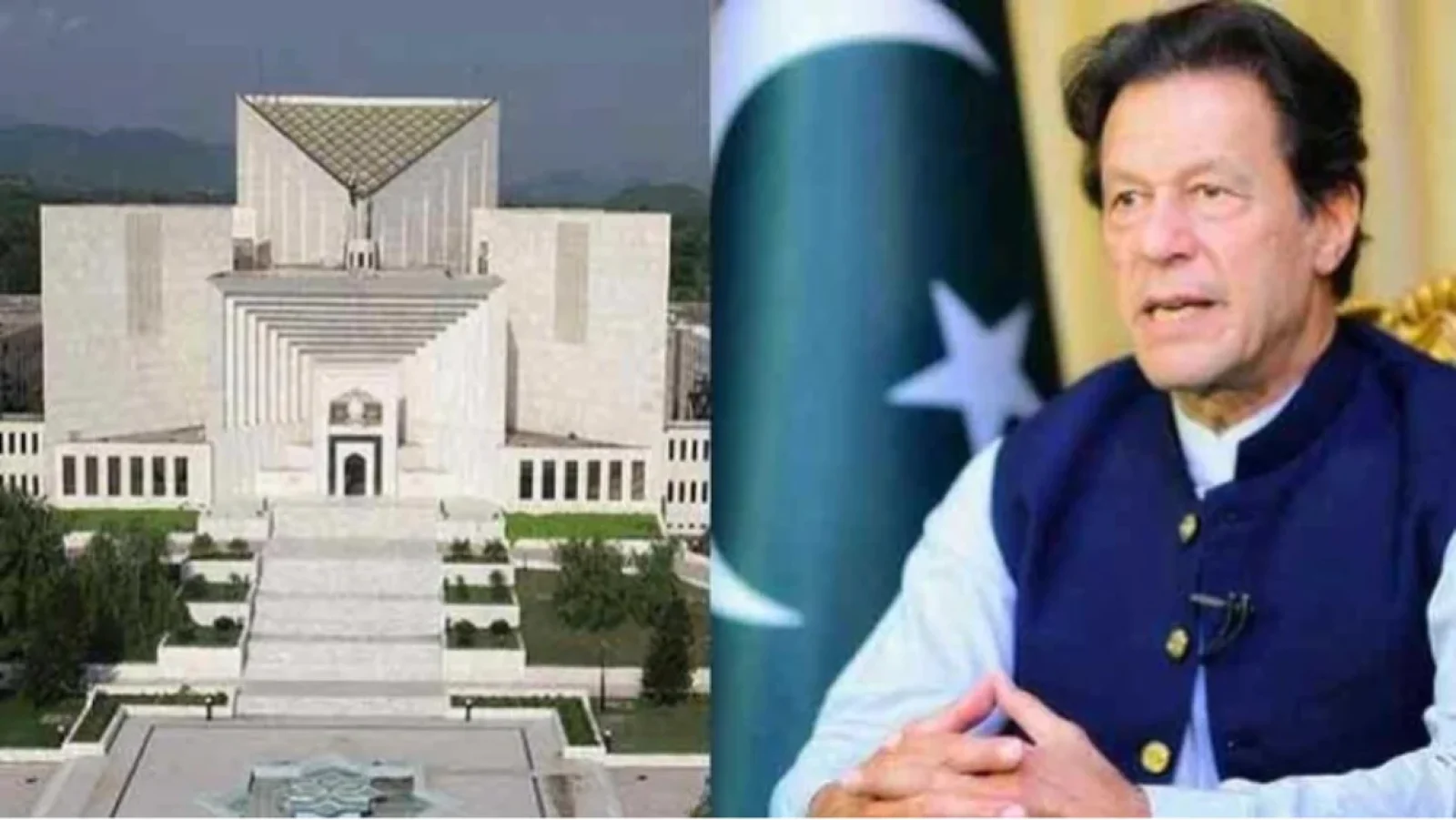
A special order by Pakistan’s Supreme Court regarding the medical treatment of former prime minister Imran Khan has raised questions about equality under the law. An analytical report has questioned decisions to move him from prison to a private hospital, allow family visits, and grant him special treatment privileges.
On August 18, a three-member bench of Pakistan’s Supreme Court ordered Imran Khan transferred from Rawalpindi’s Adiala Jail to Shifa International Hospital in Islamabad. The court also ordered the formation of a medical board for him and directed that he be allowed weekly visits from family members. The next hearing is scheduled for September 16.
Imran’s family and his party, Pakistan Tehreek-e-Insaf (PTI), allege that prison authorities are not properly implementing the court’s order. The Pakistani government, meanwhile, has filed a review petition against the order.
The central issue in the debate, however, is not whether Imran should receive medical treatment. The question is whether other prisoners with similar health problems would receive the same treatment.
Article 25 of Pakistan’s constitution guarantees equality before the law for all citizens. The analysis states that Imran Khan is certainly entitled to necessary medical care and humane treatment. But if he is granted additional privileges compared with other prisoners because of his political identity, that could conflict with the principle of equality under the law.
Questions over evidence of serious illness
The report notes that the Supreme Court did not have Imran’s complete medical records in hand when it ordered his hospital transfer.
On August 1, a cardiologist at the Pakistan Institute of Medical Sciences (PIMS) found his blood pressure at 140/100 and advised him to lower it. On August 10, a four-member medical board found his blood pressure at 140/80 and recommended an hour of daily walking.
Whether this information constitutes clear evidence of a serious medical emergency remains in question. A few days later, on August 21, Imran’s sister, cardiologist Dr Uzma Khan, told a press conference that her brother was “100% fit.” At the same time, she alleged that he was being subjected to psychological torment, kept in isolation, and denied adequate medical care.
Concerns had previously been raised about Imran’s health as well. His family had claimed he had lost a significant portion of vision in his right eye. The government had objected to that claim, and his eye condition was later said to have improved.
Pakistan’s information ministry says Imran has been examined roughly 30 times by various doctors and medical boards since his imprisonment in 2023.
Would other prisoners get the same treatment?
The biggest question in the ongoing debate over Imran Khan’s medical treatment is this: if another prisoner with a similar illness sought the same relief from the courts, would they also be granted treatment at a private hospital, a personal physician, and special family-visit privileges?
Analysts say ensuring prisoners’ right to medical treatment is essential. But decisions on which hospital treats them, how long they remain hospitalized, and when they are returned to prison should give weight to doctors’ professional judgment.
Imran Khan’s case has therefore raised a significant question for Pakistan’s judicial system: are all prisoners equal in the eyes of the law, or do some receive special treatment because of their political identity and influence?
বাংলায় মূল প্রতিবেদন পড়ুন · Read the original Bengali report