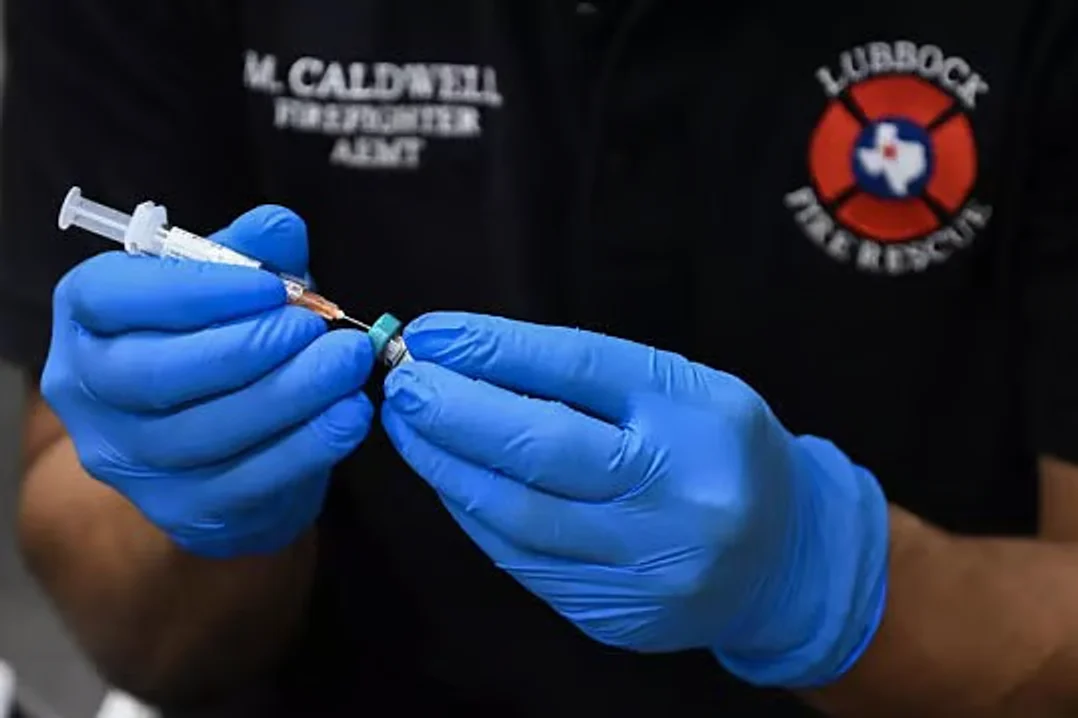
The United States is experiencing a measles outbreak, the worst in the past 35 years. With growing reluctance towards vaccination, infections with the disease have also risen alarmingly in the country.
The US Centers for Disease Control and Prevention (CDC) said yesterday, Friday, that 2,318 infections have been detected since the beginning of 2026. That number has exceeded the total number of infections in 2025. That year a record 2,289 infections were detected and three people died, including two children.
The president of the American Academy of Pediatrics, Andrew Racine, said: “We are facing a crisis that was entirely avoidable. And yet its biggest victims are children.” He added: “This should on no account be accepted as our new normal.”
Measles generally causes fever, various respiratory symptoms and a reddish rash on the skin. In some cases, however, it can create more serious complications, including pneumonia and inflammation of the brain (encephalitis), which can cause long-term health problems and even death.
Because of the success of vaccination programmes, measles was declared eliminated in the United States in 2000. Against a background of falling vaccination rates in recent years and growing public distrust of public-health authorities, measles infections have returned alarmingly in the country.
The measles outbreak in the United States has not yet been brought under control. Experts fear the number of cases will rise further in the days ahead. An epidemiologist at the University of South Carolina, Professor Melissa Nolan, said: “I firmly believe many measles infections are not being detected at all.”
South Carolina has recorded the highest number of infections this year. Melissa Nolan told AFP: “People who do not vaccinate their children generally also have a reluctance or hesitancy about medical care.”
Although measles vaccination is compulsory in the United States, many states allow exemptions from the requirement on religious grounds or, in some cases, personal belief.
Experts say the tendency not to vaccinate has risen markedly since the Covid-19 pandemic. At the same time there has been a proliferation of false information about vaccines and growing public distrust of public-health authorities.
Nolan cited South Carolina as an example: “There are countless places there, and many social-media groups and pages, where people are taught how to obtain a legal exemption from vaccination.”
In September 2025 a joint survey by The Washington Post and the non-profit organisation KFF was published. It found that one in every six American parents does not want to vaccinate their children, or delays doing so, because of fears of side effects and a lack of trust in public-health authorities.
This tendency is seen particularly among white and conservative populations. The matter has become a cause of deep concern for medical experts.
In Nolan’s view, the measles outbreak now under way is probably only the beginning of a bigger crisis. She fears that infections of whooping cough and other vaccine-preventable diseases will gradually be seen to rise in the days ahead.
বাংলায় মূল প্রতিবেদন পড়ুন · Read the original Bengali report