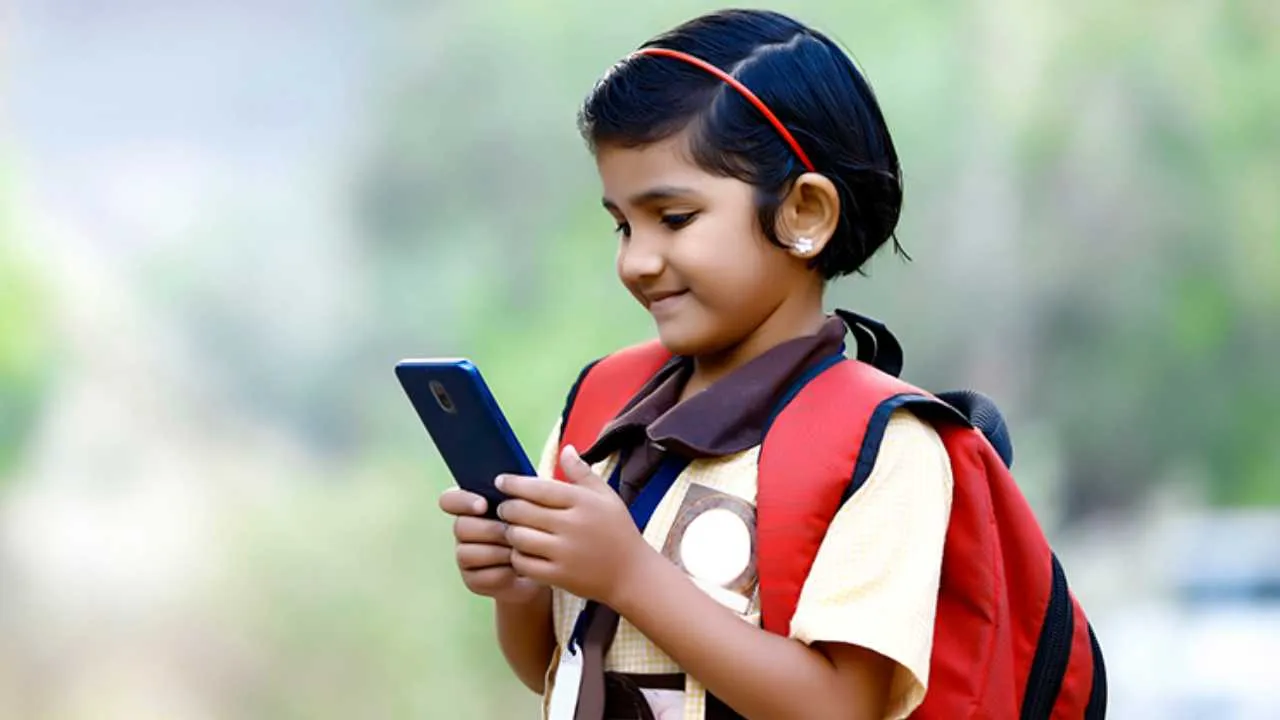
Moves to ban or restrict students’ use of mobile phones in schools are growing around the world. In recent years, many countries have adopted such policies out of concern about falling attention in the classroom, cyberbullying and the negative effects of social media.
According to the latest data from UNESCO’s Global Education Monitoring (GEM) Report, 114 countries, about 58 percent of all countries, have national bans on mobile phone use in schools. The share of countries banning or restricting phones in schools was 24 percent in June 2023, rose to 40 percent at the start of 2025 and reached 58 percent in March this year.
But there are questions about how effective it would be to apply such policies from developed countries directly to Bangladesh, given the large differences in social and cultural environments, education systems, family structures and access to technology.
Educationists and technology experts believe that rather than copying other countries’ decisions, Bangladesh should set its policy on phones in schools in light of the realities of its own society and education system.
Bans are spreading worldwide
According to the GEM Report, several countries, including Bolivia, Costa Rica, Croatia, Georgia, the Maldives and Malta, introduced national bans on mobile phones in schools between late 2025 and March 2026. The type and scope of the bans vary. Some countries ban phones for the whole school day, others only in the classroom, and some allow phones for learning purposes or for students with disabilities or illnesses.
France bans mobile phones in schools for pupils at primary and lower secondary level. The United States has no national ban, but restrictions on phones in schools have taken effect in 39 states. Of these, 15 states ban phone use outright, while 24 require school districts to draw up their own policies. In England, schools have been instructed to stop pupils using phones for the whole school day, but it is up to schools to decide how to enforce the ban.
Bangladesh’s reality is different
Professor Malay Bhowmick, an educationist, playwright and director, favours not giving smartphones to students at school level, but stresses using technology in a controlled way for positive purposes rather than rejecting it altogether.
“There is no way to move forward by rejecting modern technology, especially new media. Technology must be kept under human control and used for positive work. The same applies to artificial intelligence,” he said. On phones in schools, he said: “We should consider not giving smartphones to students at least up to secondary level. But it needs to be clear what is meant by a ‘ban’. Even if phones are banned in school, there must be a way for families to contact students in an emergency. That arrangement could be kept under the school’s control.”
Banning phones in school alone will not bring the desired results, he said; awareness must also be built at home. In many cases parents themselves are hooked on phones or television, and hand their children a smartphone or let them play mobile games to keep them busy.
Bhowmick believes serious consideration should be given to not giving children smartphones up to class eight and keeping them away from mobile games and unregulated digital content. “Children should not be kept only in exam- and result-centred education. They must be given the chance to read stories, poems and other books, draw, take part in cultural activities and sport, and get to know nature. It is because these opportunities have shrunk that children are gradually becoming dependent on their phones,” he said.
Noting that students now look up summaries on their phones instead of reading textbooks, stories or poems, he said: “The features and main message of a story, poem or character can easily be found through Google or artificial intelligence. As a result, students are growing up with fragmented knowledge without reading the original text.”
He also believes students should not be assessed only through written exams. Their activities, creativity and participation in cultural and co-curricular activities should also count, and teachers need to watch whether students are bringing answers from phones or AI, for which teachers need proper training. Before anything else, he said, it should be considered how far the social and cultural realities and teaching methods of countries that have banned phones in schools match those of Bangladesh.
“Bangladesh has several education streams, including government schools, kindergartens, English-medium schools and different kinds of madrasas. So rather than applying other countries’ experience directly, decisions should be made in light of Bangladesh’s own social, cultural and educational realities,” he said.
Children need alternatives
“Even if it is not possible to stop children using mobile phones completely, their use and risky content can be controlled. Families as well as schools must take responsibility for this,” said educationist Rasheda K Choudhury.
“Many countries have restricted social media use for under-16s. In Bangladesh too, risky mobile content for children can be controlled. Parents can also block various harmful content if they want,” she said.
In her view, stopping phone use only in schools will not solve the problem; children’s phone use at home also needs monitoring and control, and parents must be involved. She said she had seen in the United States how, alongside bans on phones in schools, various content is blocked for children at home. If Bangladesh is to take similar steps, parents and all stakeholders in education and society must be involved.
“In Bangladesh, effective action is often taken only after a problem has reached its peak. So steps must be taken early to control the harmful use of mobile phones. It is not enough to blame children; alternatives must also be created for their mental development,” she said.
Noting that children’s phone habits have grown since the Covid pandemic, she said: “At the same time, opportunities such as playgrounds, swimming or running outdoors have shrunk, leaving children largely confined indoors.”
Stressing the need to create opportunities for storytelling, drawing, sport and other creative activities, she said simply banning phones without such alternatives will not bring the desired result. Coordinated efforts are needed at every level: family, school and society.
Not just a ban, but coordinated action
Cyber security expert Arif Mainuddin believes it is reasonable to ban or strictly control smartphone use in classrooms in Bangladesh’s schools. In his view, gaming addiction among schoolchildren has grown along with smartphone use during and after the Covid pandemic.
“Coordinated efforts by families, schools and individuals are needed to get students out of mobile gaming addiction. That means setting children’s screen time, increasing opportunities for recreation and sport, and parents being careful about using their own phones in front of their children,” he said.
“Limiting phone use is not enough; students must be engaged in alternative creative activities. Schools could hold regular debates, sports competitions, science clubs and IT fairs,” he said. Through such activities, students will be able to apply their talent and creativity to positive work beyond technology-based entertainment, he believes.
Rules of use instead of a ban
Education researcher KM Enamul Haque believes controlling phone use in schools has become an important education policy issue worldwide, but says the full picture cannot be understood by seeing it only as a “mobile phone ban”.
“With the growth of information technology, laptops, iPads and other digital devices, as well as phones, have become part of education. Technology-based learning spread widely during the Covid-19 pandemic in particular, making the importance of technology in education even clearer,” he said.
Rather than banning phones in all of Bangladesh’s educational institutions at once, he believes it may be more effective to draw up rules of use based on local realities, the type of institution and students’ ages and needs. There should be clear policies on where, when and for what purpose phones and other digital devices may be used, he said, with attention also paid to the mental health of teachers and students, cyber security and the negative effects of social media.
“Many countries are moving away from bans alone towards appropriate controls that take account of the various uses of digital devices. In Bangladesh too, the aim should be to ensure safe, responsible and learning-friendly use of technology rather than pushing it away completely,” he said.
The question goes beyond phones
The experts’ views show that controlling phone use in schools is not limited to banning a device. It is directly linked to how children use phones at home, teachers’ ability to use technology, how students are assessed, cultural and co-curricular activities and the country’s multi-stream education system.
The bans and restrictions introduced in developed countries can offer Bangladesh experience. But before following them, it is essential to consider how well they fit Bangladesh’s social and cultural realities, families’ capacity, schools’ infrastructure and the need for technology-based learning.
Experts say the issue should not be limited to whether phones should be banned in schools. Equal weight should be given to how students can be protected from the harmful use of technology while also learning the digital skills they need. Alongside controlling phone use, they stress coordinated action by families, schools and society, and creating opportunities for creative alternatives for students.
বাংলায় মূল প্রতিবেদন পড়ুন · Read the original Bengali report