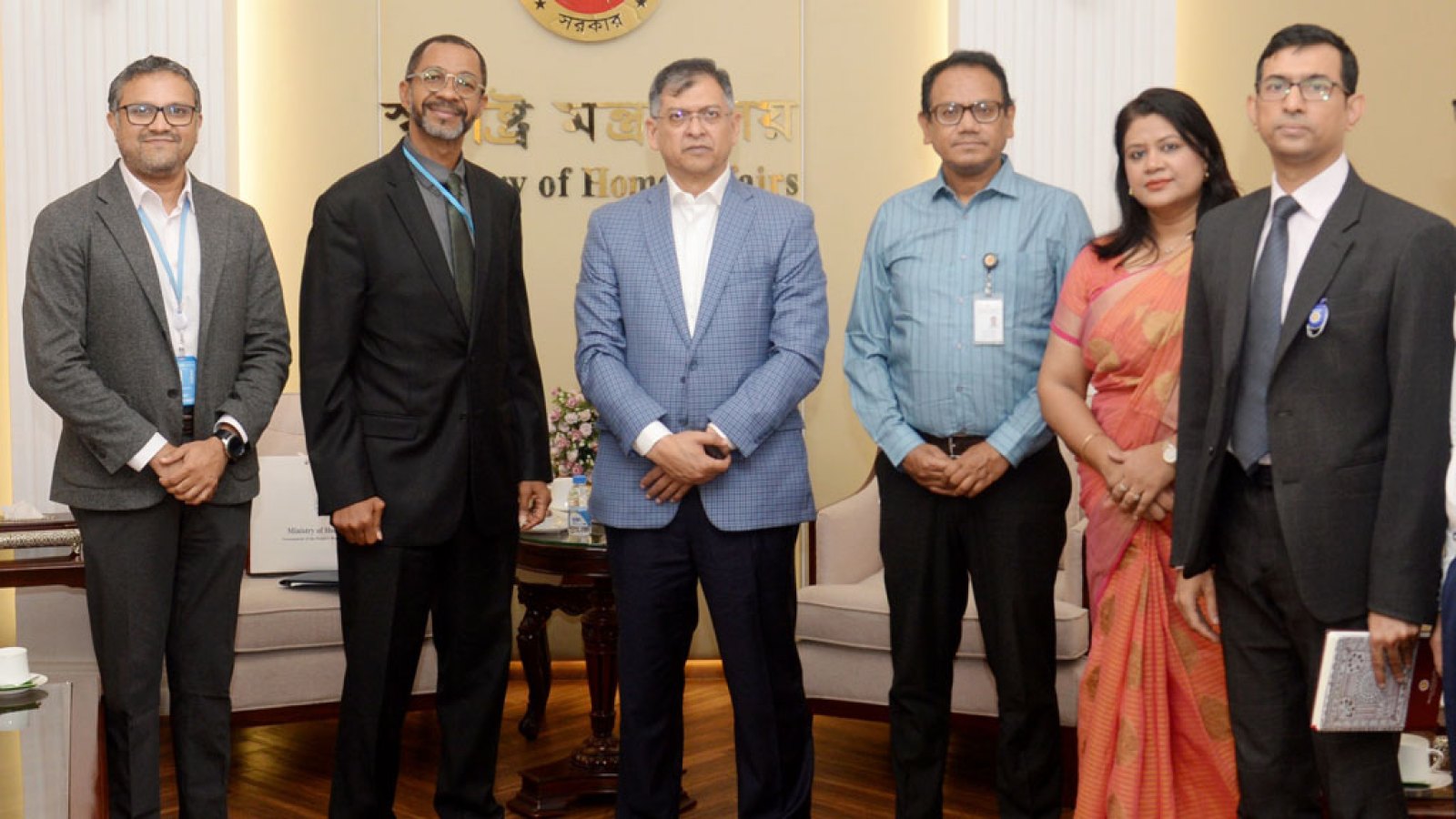
Home Minister Salahuddin Ahmed has said UNDP wants to provide full cooperation in Bangladesh’s legal and judicial reform process, including constitutional amendments and broader reforms.
Stephen Rodriguez, resident representative of the United Nations Development Programme (UNDP), paid a courtesy call on the home minister at his office at the Secretariat on Tuesday morning, August 25, during which he offered UNDP’s cooperation.
The meeting covered a range of issues of mutual interest in detail, including constitutional reform, support for Rohingya refugees, strengthening police capacity, institutional and technical support to counter rumors and disinformation, the proposed National Human Rights Commission law, and the Prevention and Remedy of Enforced Disappearance law.
At the meeting, the UNDP resident representative said: “We want to help implement the current government’s goals, priorities and work plan.”
Congratulating the minister, he said: “We are pleased to learn that you have been appointed chairman of the special committee on constitutional amendment. If you wish, we are keen to provide the necessary support in this process.”
The home minister highly praised UNDP’s continued support for Bangladesh’s socioeconomic development and other areas, and called for that cooperation to be expanded further in the future. Referring to UNDP’s support for displaced Myanmar nationals (Rohingya), the resident representative said UNDP is working to improve living standards inside the camps through environmental protection measures — such as preventing landslides — and various social development activities.
The minister said: “We want appropriate development and modernization of the existing infrastructure in the Rohingya camps, but in the wider interest, we do not want any new infrastructure built there.”
The resident representative said UNDP is providing training to Bangladesh Police on protecting civil rights, conflict and dispute resolution, and other areas to strengthen the force’s professional skills and capacity. The minister also emphasized the importance of UNDP’s cooperation in building police capacity.
On preventing the misuse of information technology, the resident representative said: “Various rumors, disinformation and hateful content are currently spreading on digital platforms. We are working with the Ministry of Information and Broadcasting and the Ministry of Posts, Telecommunications and Information Technology to effectively counter this. We want to provide technical and institutional support in this area, so that any violations can be swiftly remedied.”
The minister responded that the Cyber Security Act has already been passed, and suggested UNDP could provide logistical support for its successful implementation.
Asked about the proposed human rights commission law, the minister said the draft “National Human Rights Commission Act 2026” has received final approval from the Cabinet and is expected to pass in the next session of parliament. He said the law was drafted with input from various stakeholders, including UNDP, various international organizations, foreign missions, development partners, newspaper editors and lawyers, while also taking into account the country’s social psychology and religious sentiments. He said he expects it to be recognized as a modern, acceptable law.
The minister also said no enforced disappearances or extrajudicial killings have occurred in the country since the current government took office. Sharing his own experience of having been forcibly disappeared, he said the draft “Prevention and Remedy of Enforced Disappearance Act 2026” has also received policy approval from the Cabinet.
Emphasizing the importance of presenting an accurate image of Bangladesh in the international media, the resident representative said international media does not always portray the true picture of Bangladesh. He said Bangladesh is a liberal, religiously tolerant country, and that UNDP is keen to work toward reflecting that positive image as well.
The meeting was also attended by Dr Ziauddin Ahmed, additional secretary of the Home Ministry’s Political and Immigration Wing; Rebeka Khan, joint secretary of the Political-1 branch; and Saif Islam, program management and partnership support specialist at UNDP Bangladesh, among others.
বাংলায় মূল প্রতিবেদন পড়ুন · Read the original Bengali report