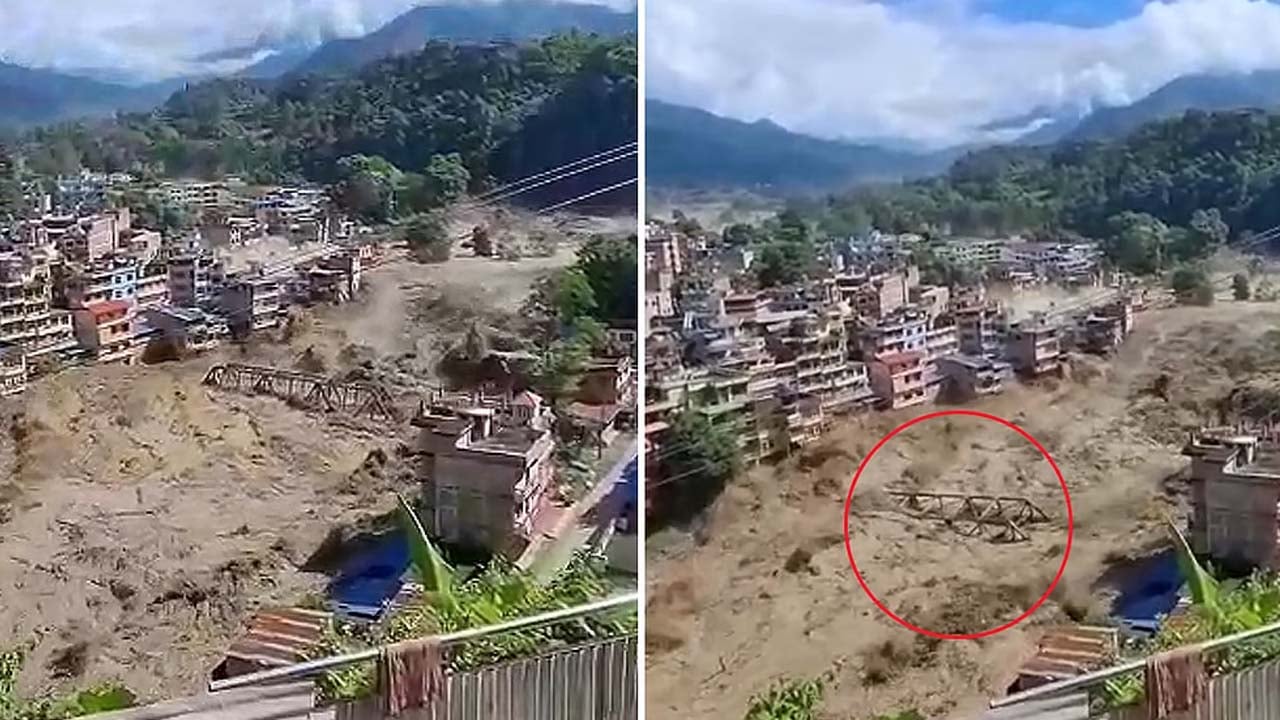
Nepal has been devastated by a massive flash flood caused by a sudden surge of water and mud from Tibet. Nearly a dozen riverside villages, markets, roads and bridges in the country’s Rasuwa district have suffered extensive damage. Authorities have confirmed at least eight deaths in the disaster. Hundreds of foreign tourists and local residents remain missing, including 105 Indian nationals.
According to the Nepal Tourism Board, at least 384 tourists remain unaccounted for since the flood. Of them, 291 are foreign nationals, including 105 Indians. Another 93 Nepali tourists are also missing. Local sources say the number of missing among the general public could run into the thousands. The missing list also includes 41 police personnel and 14 customs officials.
A settlement submerged in an instant
A sudden, massive surge of water entered the Bhotekoshi River from the direction of the Tibet border on Wednesday morning. The powerful current swept away riverside settlements, markets, roads and bridges within moments. Bridge after bridge was crushed and swept away by the force of the water.
Extensive devastation was wrought by the floodwaters across riverside areas including the Syabrubesi and Timure markets in Rasuwa district. According to Chameli Gurung, deputy chairperson of Uttargaya Rural Municipality, nearly a dozen villages — including Syabrubesi, Betrawati, Mailung, Sallentar, Shantibazar, Pairebesi, Khalti Basti, Sole, Trishuli and Battar — suffered extensive damage.
The powerful current also swept away a local helipad, preventing rescue helicopters from landing there. This has created a major challenge in rescuing people trapped in the remote area. At least 25 people have been rescued so far. However, with communications disrupted, the actual casualty toll is feared to rise further.
Why such a severe flood without rainfall?
The biggest question raised is how such a devastating flood occurred without rainfall. Locals say northern Nepal has seen little rain in recent days — in fact, Wednesday morning brought sunny weather to the Rasuwa area. Experts initially believe the flash flood was not caused by heavy local rainfall in Nepal.
Citing satellite data, experts say Tibet saw heavy rainfall over the past several days. This may have caused a dam or reservoir to break, releasing a massive volume of water and mud into the Bhotekoshi River. That surge is believed to have caused the sudden, devastating flood. However, it remains unconfirmed whether the flood was triggered by the bursting of a glacial lake.
Power stations damaged, entire district in the dark
The flood has damaged or completely swept away several local power stations, including the Chilime hydropower project. This has disrupted electricity supply across Rasuwa, plunging the district into darkness — a situation expected to further complicate nighttime rescue operations and communication in remote areas.
Risk also rising downstream
The disaster is not expected to remain confined to Rasuwa alone. The flash flood has caused the Bhotekoshi River to overflow, dangerously raising water levels in the downstream Trishuli River as well. This has raised fresh flood risk in riverside areas of Nuwakot, Dhading and Chitwan districts.
Residents of at-risk areas are already being moved to safer locations. Nepal’s flood forecasting division said water levels have also risen in the Galchhi area of Dhading. With flood waters expected to reach Mugling within hours, alerts have been issued for the relevant areas. The administration has also urged the public to avoid travel on the Prithvi Highway and the Mugling-Narayanghat road.
Emergency meeting, army deployed for rescue
Nepal’s Prime Minister Balendra Shah has called an emergency cabinet meeting to review the situation. The Nepal Army, Armed Police Force and Nepal Police have been deployed for rescue and relief operations. Additional personnel are also being sent from other districts.
Army helicopters and disaster-response forces are taking part in the rescue operation. Medical teams, scouts and the Red Cross have also been asked for assistance. Additional ambulances and medical personnel are being deployed as well. An emergency helpline has been set up to assist those affected.
Climate change adding to the risk
Flash floods and landslides in Nepal’s hilly regions during the monsoon are not new. But experts say climate change is steadily increasing the risk of heavy rainfall, glacial melt and flash floods in the Himalayan region. Flash floods and glacial lake outburst floods have caused extensive loss of life and property in Nepal’s hilly areas in the past as well.
Actual casualty toll still unclear
It remains unconfirmed how many have died, how many are missing, and the full extent of the damage from this devastating disaster. A clearer picture is expected once communication with remote areas is restored and rescue operations progress further.
The Nepal government is currently giving top priority to locating missing tourists and residents and rescuing those trapped. Work is also under way to determine the actual cause of the flash flood and calculate the full extent of the damage.
বাংলায় মূল প্রতিবেদন পড়ুন · Read the original Bengali report