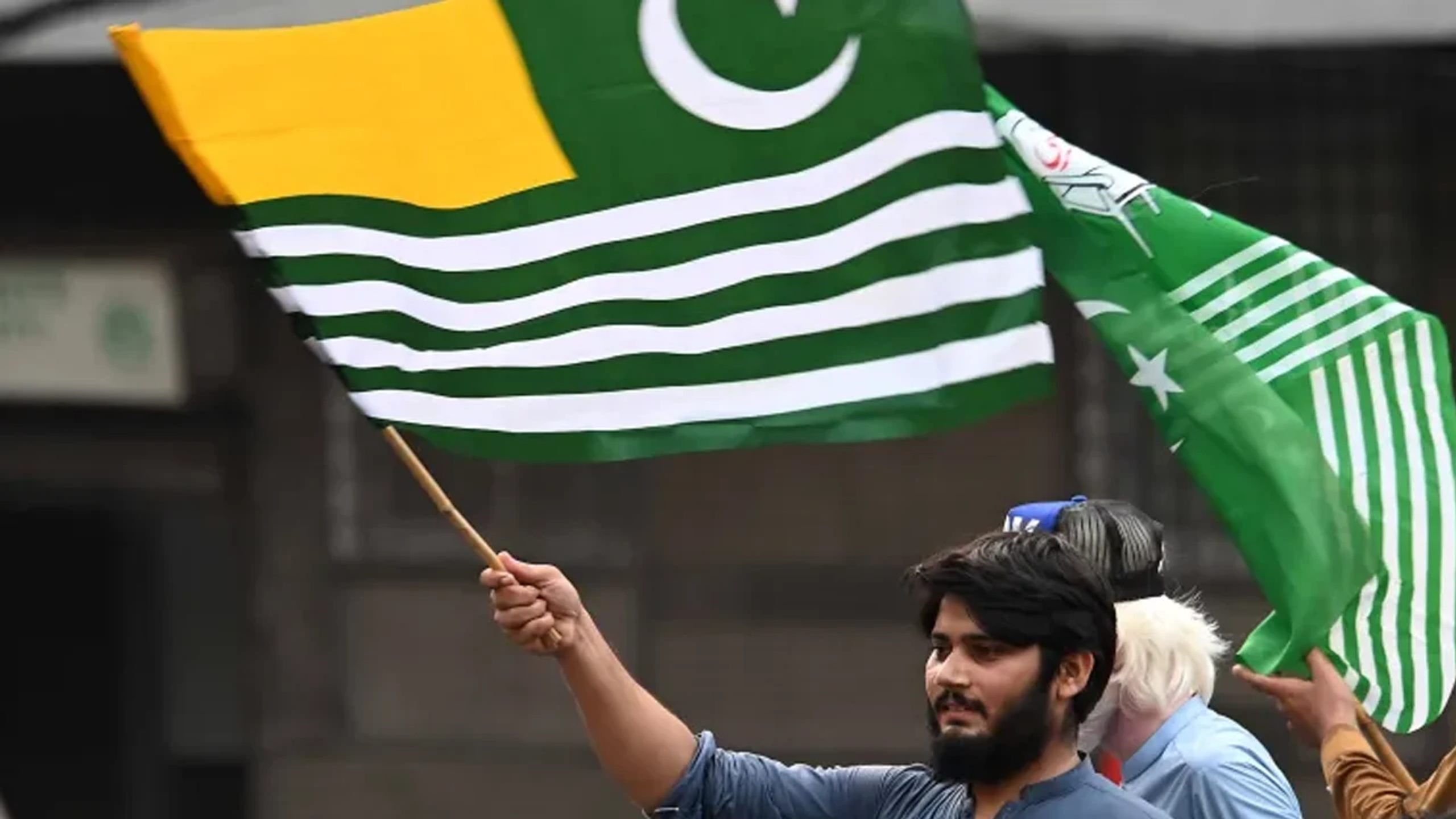
Pakistan-administered Kashmir, or Azad Jammu and Kashmir (AJK), has been in turmoil since June. At least 40 people have died in recent months in clashes between protesters and joint forces, in blockades and in strikes. Banking services were closed for two weeks, and mobile and internet communications remain entirely cut off in most areas. It is amid this severe unrest that elections to the region’s legislative assembly are about to begin. In the situation that has arisen, deep uncertainty has developed around the election.
The movement against Pakistan’s military and civilian administration is being led by the Jammu Kashmir Joint Awami Action Committee (JAAC). Although the organisation’s campaign began mainly over demands for cheap flour and cheaper electricity, it has now taken the shape of 38 demands. One central issue has come to the centre of the movement, however — the abolition of the 12 seats in the assembly reserved for refugee or displaced Kashmiris.
In a review of the situation the general election to the 45-seat assembly has been divided into three phases. Under the announced schedule, voting in Muzaffarabad and for the 12 refugee seats is set for 2 August, and voting in Poonch division, the main centre of the movement, for 10 August. The JAAC is not taking part in the election, however, and has called on its supporters to boycott the vote.
The 12 reserved seats and the legal tangle
Of Azad Kashmir’s 45 elected seats, 33 are decided directly by the votes of residents of the region. The remaining 12 are reserved for refugees who came from Indian-administered Kashmir and live in various cities of Pakistan. This arrangement, which began in 1960, took permanent form in the interim constitution of 1974. To ensure representation for roughly 3 lakh 89 thousand refugee voters, the constitution distributes these seats across various Pakistani cities such as Lahore, Rawalpindi and Sialkot.
JAAC leaders contend that these 12 seats lie entirely outside Azad Kashmir’s jurisdiction. They essentially give Islamabad the opportunity to influence the formation of the government in Muzaffarabad. The protesters’ proposal was that the seats be dropped until the Kashmir problem is resolved, with symbolic representation given in the Kashmir Council instead. That was rejected at an all-party meeting held in Muzaffarabad on 3 June.
The Supreme Court of Azad Kashmir subsequently said the matter is one protected by the constitution. Only the assembly can decide it, through a constitutional amendment. But as the assembly’s term has expired and it is not sitting, no such decision can be taken at present.
Who really holds power behind the curtain?
The Pakistan government has contended that the refugees have enjoyed this right for historical reasons. Pakistan’s defence minister, Khawaja Asif, has called on the protesters to decide the matter through the ballot rather than on the streets.
In the view of local representatives and international analysts, however, the elected government in Muzaffarabad holds no real political power.
In the view of the political analyst Ershad Mahmud, Pakistan’s bureaucracy and military have reduced Azad Kashmir’s local leadership to a merely “symbolic” level. This local leadership does not have the power to reach a political settlement with ordinary people.
One of the movement’s leaders, Umar Nazir Kashmiri, has already said publicly that they have lost confidence in the local government and have sent a letter directly to Pakistan’s army chief, Field Marshal Asim Munir. In the protesters’ view, real power in the region lies not with Islamabad but with the military headquarters in Rawalpindi.
Altogether, the conflict between retaining the refugee seats and regional autonomy has left the electoral field extremely heated. With a boycott by ordinary people and tight security force restrictions, a large question has arisen over how much acceptance this election will win.
বাংলায় মূল প্রতিবেদন পড়ুন · Read the original Bengali report