The government has taken up a Tk 1,203.73 crore project to improve safe water supply and sanitation in 123 upazilas of 16 districts in the Barind region. The Local Government Division has proposed the scheme, titled “Safe Water Supply and Sanitation Project in the Barind Region”. The Department of Public Health Engineering (DPHE) will carry it out from October 2026 to March 2030, and the whole cost will be met from government funds.
The Planning Commission’s project summary says the main aim is to improve public health and living standards in the Barind region by expanding safe water supply and sanitation.
Under the project, safe water and sanitation facilities in the Barind region will be expanded and existing systems improved.
The project will be placed before the next meeting of the Executive Committee of the National Economic Council (Ecnec) at the Bangladesh Secretariat. The meeting will be chaired by Prime Minister Tarique Rahman, who is Ecnec’s chairman.
A senior Planning Commission official told BSS that the project proposes to install 59,778 hygienic twin-pit latrines for low-income families, 4,394 community water supply units, 22,176 shallow tube wells and 4,829 deep tube wells.
In addition, 5,399 shallow tube wells and 1,113 deep tube wells with submersible pumps and reservoirs, 125 public toilets, 1,068 ring wells and 1,797 rainwater harvesting systems will be installed.
The project also plans to re-excavate ponds and build 16 pond sand filters.
The senior Planning Commission official told BSS that the Barind region ranks second among the six water-scarce areas identified in the Bangladesh Delta Plan 2100.
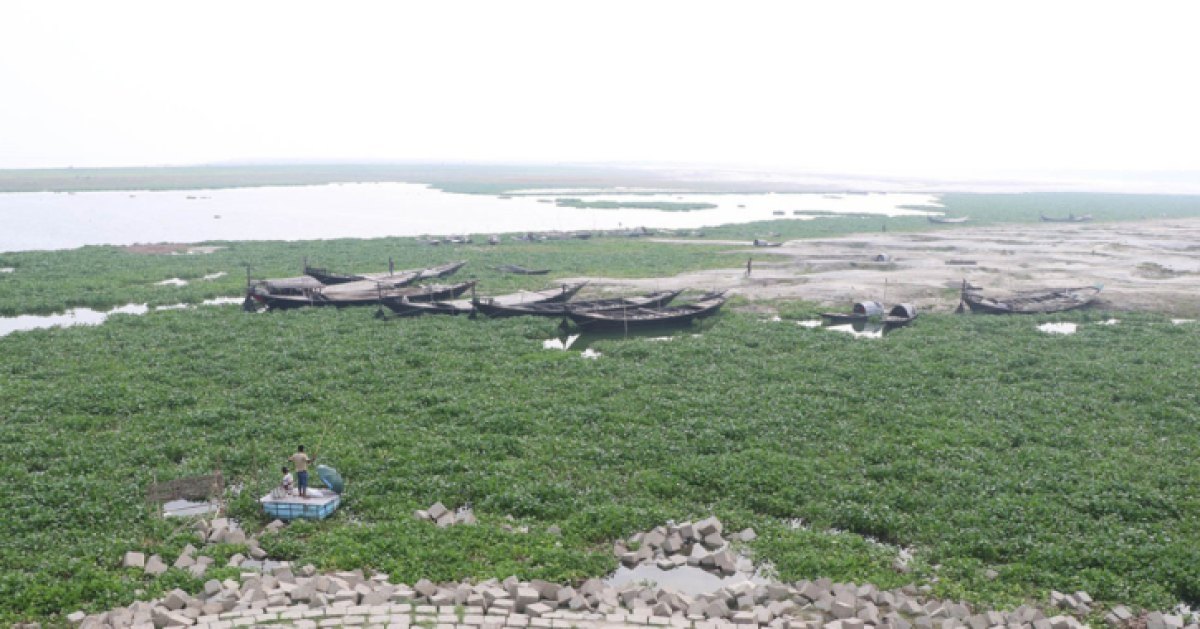
As the groundwater table falls in the dry season, large parts of northern Bangladesh face shortages of drinking and irrigation water. The situation improves somewhat in the monsoon, but the shortage never fully goes away.
The project document says only 63.6 percent of people in the Barind region have basic sanitation. Poor sanitation raises the risk of waterborne disease and environmental pollution. This threatens public health and reduces people’s capacity to work, which holds back socio-economic development.
Because of repeated drought, irregular rainfall, a falling groundwater table and limited sources of safe water, the Planning Commission has proposed bringing every upazila of the Rajshahi and Rangpur divisions under the project. Climate change and population growth have made these problems worse.
The proposal sets aside Tk 292.93 crore in the 2026-27 fiscal year, Tk 350.37 crore in 2027-28, Tk 367.58 crore in 2028-29 and Tk 192.85 crore in 2029-30.
A meeting of the project evaluation committee on January 26, 2026 recommended approval on condition that its decisions are carried out.
The Planning Commission said the project is also in line with the election manifesto pledge to build modern, safe communities through safe water supply and waste management.
Because its estimated cost is above Tk 50 crore, the project needs Ecnec’s approval under the government’s June 2022 instructions on the preparation, processing, approval and revision of development projects.
After completing the other required procedures, the Planning Commission has recommended placing the project before an Ecnec meeting for consideration and approval.
বাংলায় মূল প্রতিবেদন পড়ুন · Read the original Bengali report