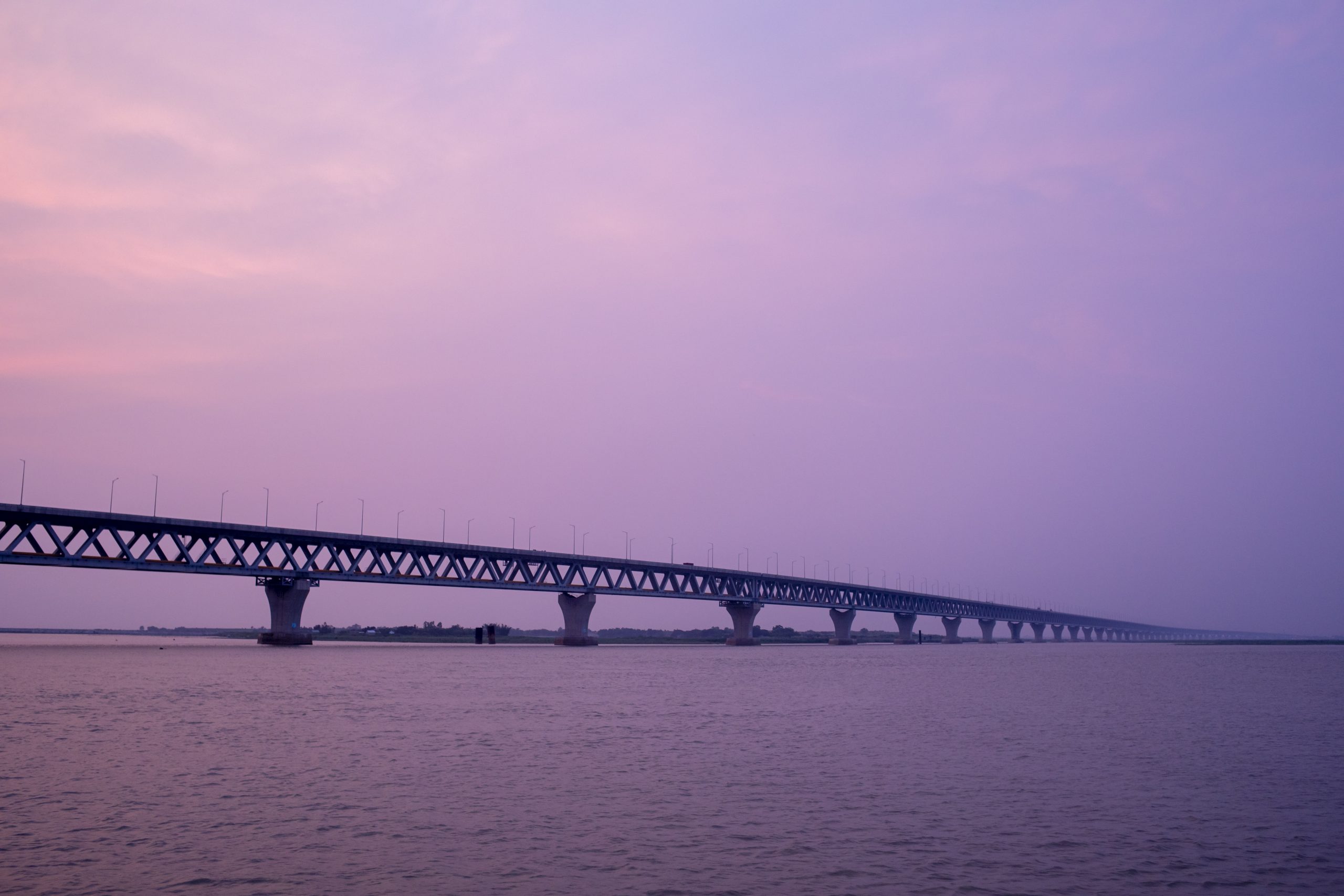
DHAKA — Toll collection on the Padma Bridge, built at a cost of 300 billion taka (about $2.5 billion), has crossed 30 billion taka (about $250 million) in 43 months since its opening, the Bangladesh Bridge Authority said.
The authority said the revenue has been earned from June 25, 2022, when the bridge was inaugurated, through Tuesday.
All vehicles using the Padma Bridge must pay a toll. Separate toll rates are set for motorcycles, private cars, buses, trucks and other types of vehicles.
Bridge authority sources said about 22,000 vehicles cross the bridge each day, and average daily toll collection is 25 million taka. About 820 million taka was collected in December.
The country’s longest bridge, connecting Munshiganj and Shariatpur, links the southern and southwestern regions with the capital. People in 21 districts of those regions benefit from the bridge.
Since opening nearly four years ago, both the number of vehicles crossing the bridge and revenue have risen steadily, the authority said.
The authority said the bridge has cut travel time, created jobs and had a positive impact on the country’s GDP growth. The transport of agricultural, fisheries, livestock and industrial goods has changed dramatically.
Electronic toll collection (ETC) is in operation at the toll plazas on both ends of the bridge, at Mawa and Jajira. The system allows vehicles to pay tolls automatically without stopping. As a result, vehicles do not have to wait in long queues at toll plazas. Automatic toll collection through radio frequency identification (RFID) cards has made travel faster and easier.
In a notice, the bridge authority thanked vehicle owners, drivers, workers, law enforcement personnel on both sides of the bridge and the institutions involved in the bridge’s operation and maintenance for the “milestone” in toll collection.
The total cost of the Padma Bridge project was 307.7 billion taka.
বাংলায় মূল প্রতিবেদন পড়ুন · Read the original Bengali report