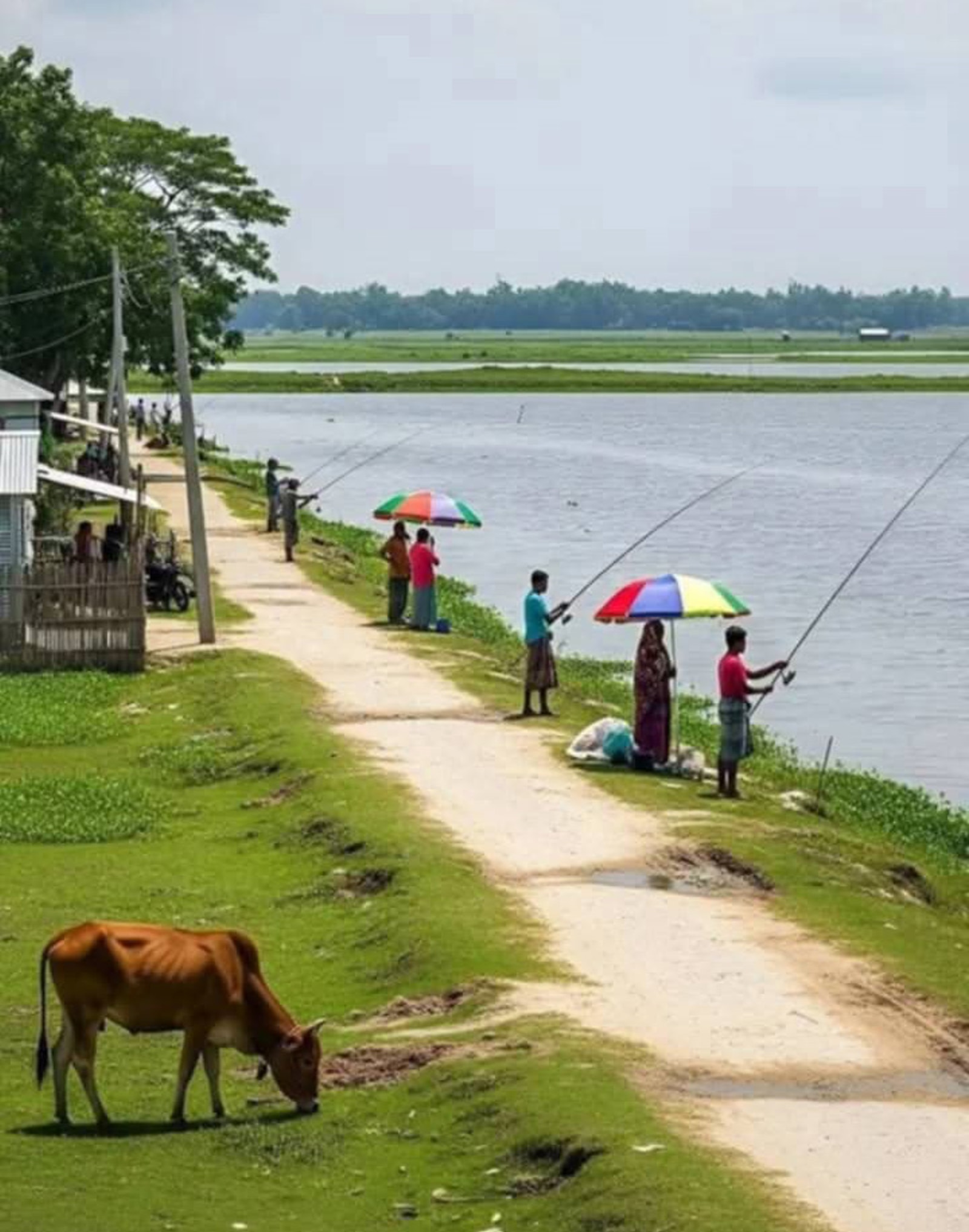
PHULBARI, Kurigram — Fishermen and farmers in Phulbari upazila of Kurigram once lined the village ponds with rows of bamboo and jute sticks fitted with hooks as the monsoon waters began to recede. The traditional fishing method, known locally as nol borshi, is now nearly extinct. The familiar scene has disappeared from rural life with the spread of modern nets and traps and the loss of wetlands.
Local residents said that in the monsoon and autumn months, hooks were tied to dry jute sticks or thin bamboo strips with thread and planted in waterways. There was no extra expense and no complex equipment was needed. The simple method yielded shol, boal, taki, ayre and other native fish.
Ajibor Rahman, a fish trader at the Paschim Phulmoti Baromasia River in Phulbari, said he sets several dozen nol borshi every evening. In the morning he sometimes finds one fish, sometimes none. He scrapes by with nol borshi and a net.
Dhirendra Nath Roy, a farmer from the border-area Kurushaferusha region, said he had not heard of nol borshi in at least 20 years. People used to carry their catch home in baskets, he said. Now there are no canals or pools, no fish — nol borshi is history.
Another farmer, Delwar Hossain, said that as a child he would set out with hundreds of hooks and bring back chang, changti, shol, magur and many other native fish. There is hardly anything left now, he said.
The Dharla, Baromasia and Nilkamal rivers in Phulbari upazila and the wetlands and canals of the Shimulbari and Bhangamor areas once saw widespread use of nol borshi, but fish shortages have largely ended the practice. Many in the new generation have never heard the name.
বাংলায় মূল প্রতিবেদন পড়ুন · Read the original Bengali report