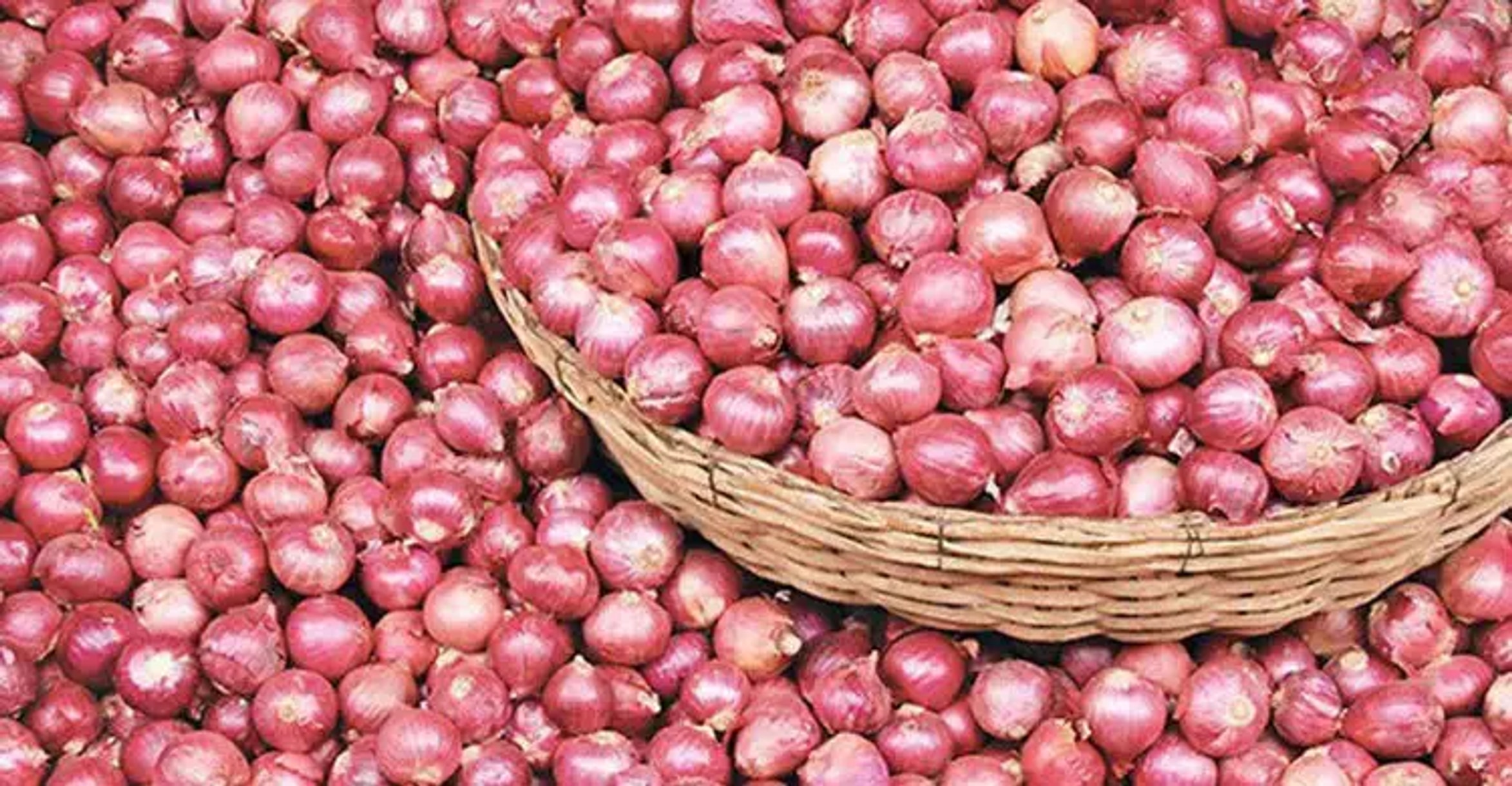
DHAKA — Onion prices fell by 20 to 30 taka per kilogram in markets across Dhaka on Sunday after a week-long surge that had driven prices up by as much as 70 taka, traders said.
Onions, which had sold for 120 to 140 taka per kg in recent days, dropped to 100 to 110 taka in several markets in the capital. The decline began Saturday, after the Bangladesh Trade and Tariff Commission recommended that the government allow imports from India.
Abdul Kader, a trader at Karwan Bazar, said wholesale prices began easing after reports of imports from India spread through the market.
“After several days of upward pressure, I was able to buy at lower prices on Sunday, so I am selling at 10 to 20 taka less,” Kader said. Wholesale prices at Karwan Bazar were 100 to 110 taka on Sunday, he said. Sellers said prices could fall further over the next day or two. Traders at Shantinagar, Noyabazar, Hatirpool and Polashi markets reported similar declines.
Commerce Adviser Sheikh Bashir Uddin told reporters at a briefing at the commerce ministry on Sunday that the government would approve imports if prices did not fall to acceptable levels within the week.
“The country has had a bumper onion harvest. There is no shortage — stocks are sufficient,” Bashir Uddin said. “New onions will reach the market within two weeks. If the market does not stabilize within four to five days, we will decide to issue import approvals.”
The ministry has received 2,800 applications to import onions, he said. Approvals will be issued if prices do not come down to a tolerable level within the next four or five days.
Bashir Uddin called the sudden price increase unjustified and attributed it to several factors: the end of the harvest season, sudden heavy rains and weight loss in onions during storage. “Prices rose abruptly. We are monitoring the market. There are sufficient stocks in the country,” he said.
Asked whether hoarders or syndicates were behind the price rise, the adviser said he had no specific information on either. “A temporary crisis has developed. I hope it will pass quickly,” he said, adding that the ministry had received reports that onions were being stockpiled across the border for export to Bangladesh.
If 10 percent of the 2,800 import applications were approved, the market would be flooded and farmers would be hurt, Bashir Uddin said. “That is why we are observing the situation in its entirety,” he said.
Dr. Md. Jamal Uddin, additional director for monitoring and implementation at the Department of Agricultural Extension’s field service wing, said there was no onion shortage in the country.
“Farmers still hold 300,000 tonnes of onions. Market supply is normal,” Jamal said in a statement Sunday night. “But a dishonest group is creating an artificial crisis to maneuver for imports. Prices have already started to fall and will come down further within two to three days.”
On the tariff commission’s recommendation, Jamal said its members may have been motivated by importers. “In reality, there is no onion crisis in the country,” he said. He said the importers had previously filed a writ petition against the agriculture secretary over the denial of import permits but were not granted permission to import by the court. “They are now trying to obtain permits by manufacturing a crisis in the market,” he said.
The Bangladesh Trade and Tariff Commission had recommended on Thursday that the government quickly allow imports after kg prices in the market touched 110 taka. The recommendation was sent to the commerce and agriculture secretaries before Sunday’s briefing.
S.M. Nazer Hossain, vice president of the Consumers Association of Bangladesh, or CAB, said farmers would suffer if onions were imported without first stopping market manipulation. “The country has had good production, but an artificial crisis has been created and import maneuvers are under way,” he said.
বাংলায় মূল প্রতিবেদন পড়ুন · Read the original Bengali report