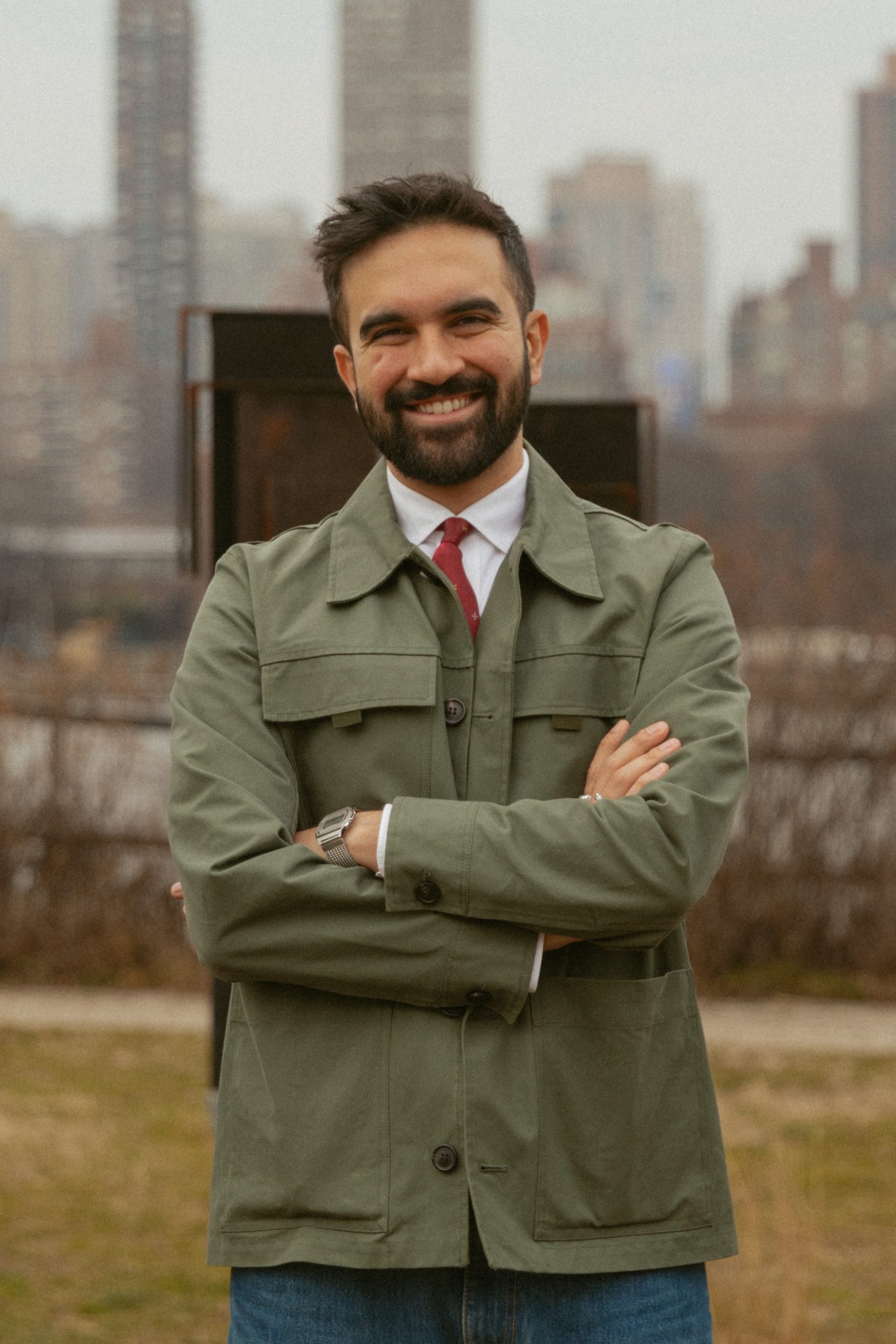
NEW YORK — Zohran Mamdani, 34, a Democratic Party candidate, has been elected the first Muslim mayor of New York City, marking several firsts in the city’s electoral history. He is the youngest mayor New York has had in 100 years, the first of South Asian descent and the first born in Africa.
When he entered the race on the last day of last year, few people knew him. He had little money and no institutional backing.
He won the Democratic Party’s nomination by defeating former New York Gov. Andrew Cuomo in the primary. Mamdani’s success grew out of broad grass-roots support and a bold left-leaning campaign.
His victory over a once-influential figure like Cuomo is an important moment for progressives and signals a shift in the city’s political center of gravity.
In his first speech after his election, Mamdani said New Yorkers had voted for change.
From Uganda to Queens
Mamdani was born in Kampala, Uganda, and moved to New York with his family at age 7. He attended the Bronx High School of Science and earned a bachelor’s degree in Africana studies from Bowdoin College, where he co-founded the campus chapter of Students for Justice in Palestine.
The millennial-generation progressive has built his political base by highlighting the diversity of his roots. He produced one campaign video entirely in Urdu that included scenes from Bollywood films. In another, he spoke Spanish.
Mamdani’s wife is Rama Duwaji, 27, a Brooklyn-based Syrian artist. His mother, Mira Nair, is a celebrated film director, and his father, Mahmood Mamdani, is a professor at Columbia University. Both his parents are Harvard graduates.
Mamdani presents himself as a representative and organizer of ordinary people. His state Assembly profile says: “Whether life took an inevitable turn through film, rap or writing, organizing has always functioned as a force in him. That is why the events of the world push him toward action, not despair.”
Before entering politics, he worked as a housing consultant, helping low-income residents in Queens fight evictions.
Mamdani has made his Muslim identity part of his campaign. He attends mosque regularly and released a campaign video in Urdu on the city’s high cost of living.
“We know that as a Muslim, going public means sacrificing safety,” he said at a rally.
Jagpreet Singh, political director of the social-safety group DRUM, said: “I have not seen anyone running for mayor like Zohran, someone who reflects the issues we think about as a whole.”
Mamdani’s affordability fight
Mamdani said voters in America’s most expensive city want Democrats to focus on affordability. “This is a city where one in four people lives in poverty. It is a city where 500,000 children go to sleep hungry every night,” he said.
In an interview with the BBC, he added: “This is a city at risk of losing the very qualities that once made it special.”
His proposals include free citywide bus service, freezing rents and holding landlords to account, creating city-owned grocery stores focused on affordability, free childcare across the city for children ages six weeks to five years, and tripling the supply of affordable housing through union construction.
His plan also includes a “restructuring” or reform of the mayor’s office to keep property owners accountable and to expand the permanent stock of affordable housing.
Mamdani highlighted these policies with eye-catching, viral gestures. He took a dip in the Atlantic to draw attention to rents. To illustrate food insecurity, he broke his Ramadan fast on a subway train with a burrito. He also walked the length of Manhattan the day before the election, taking selfies with voters.
Although Mamdani insists the city can be made more affordable, critics say his highly ambitious promises will be hard to deliver. The New York Times, which does not endorse mayoral candidates, in general criticized the field. In its editorial, the paper said Mamdani’s plans “do not match the city’s challenges” and “dismiss the necessary compromises of governance,” and that strict rent controls could worsen the housing crisis.
Critics question experience
Cuomo and his supporters said Mamdani is too inexperienced and too radical for a job overseeing a $115 billion budget and more than 300,000 municipal workers.
Cuomo, who had the backing of major donors and moderates including Bill Clinton, said experience matters: knowing how to get the job done, how to work with Trump, how to work in Washington, and how to deal with the state legislature.
Political strategist Trip Yang said “experience” alone no longer carries the day, and that Mamdani’s campaign accomplished things many had thought impossible, even before his win.
“Zohran was backed by thousands of volunteers and hundreds of thousands of donors. That kind of grass-roots interest in a local Democratic primary in a city as large as New York is rare,” Yang said.
Mamdani supporter Lokmoni Roy said: “He understands us, he is one of us, he is part of our immigrant community.”
Israel and Palestine
The recent scene at a Jackson Heights park during Mamdani’s campaign — children playing, Latin food stalls and ice cream vendors — was, for many Democrats, a symbol of New York’s diversity and strength. But the city is not free of racial and political bitterness.
Mamdani said he encountered Islamophobia daily during the campaign and that his family was also targeted. Police are investigating those threats as hate crimes.
The candidates’ positions on the Israel-Gaza war likely also weighed on voters. Mamdani’s strong support for Palestinians and his criticism of Israel have put him at odds with most Democratic Party leaders.
As an Assembly member, he proposed a bill that would have stripped New York tax-exempt status from charities tied to Israeli settlement construction, which the bill said violates international human rights law.
He has also said Israeli Prime Minister Benjamin Netanyahu should be arrested. Reporters have repeatedly asked Mamdani whether he supports Israel’s right to exist as a “Jewish state.”
“I am not comfortable supporting any state that has a hierarchy of citizenship based on religion or anything else,” he said. “I believe that the rights we have in this country should be established equally in every country in the world. That is what I believe.”
Mamdani also said there is no place for antisemitism in New York City and that, if elected, he would increase funding to prevent hate crimes.
বাংলায় মূল প্রতিবেদন পড়ুন · Read the original Bengali report