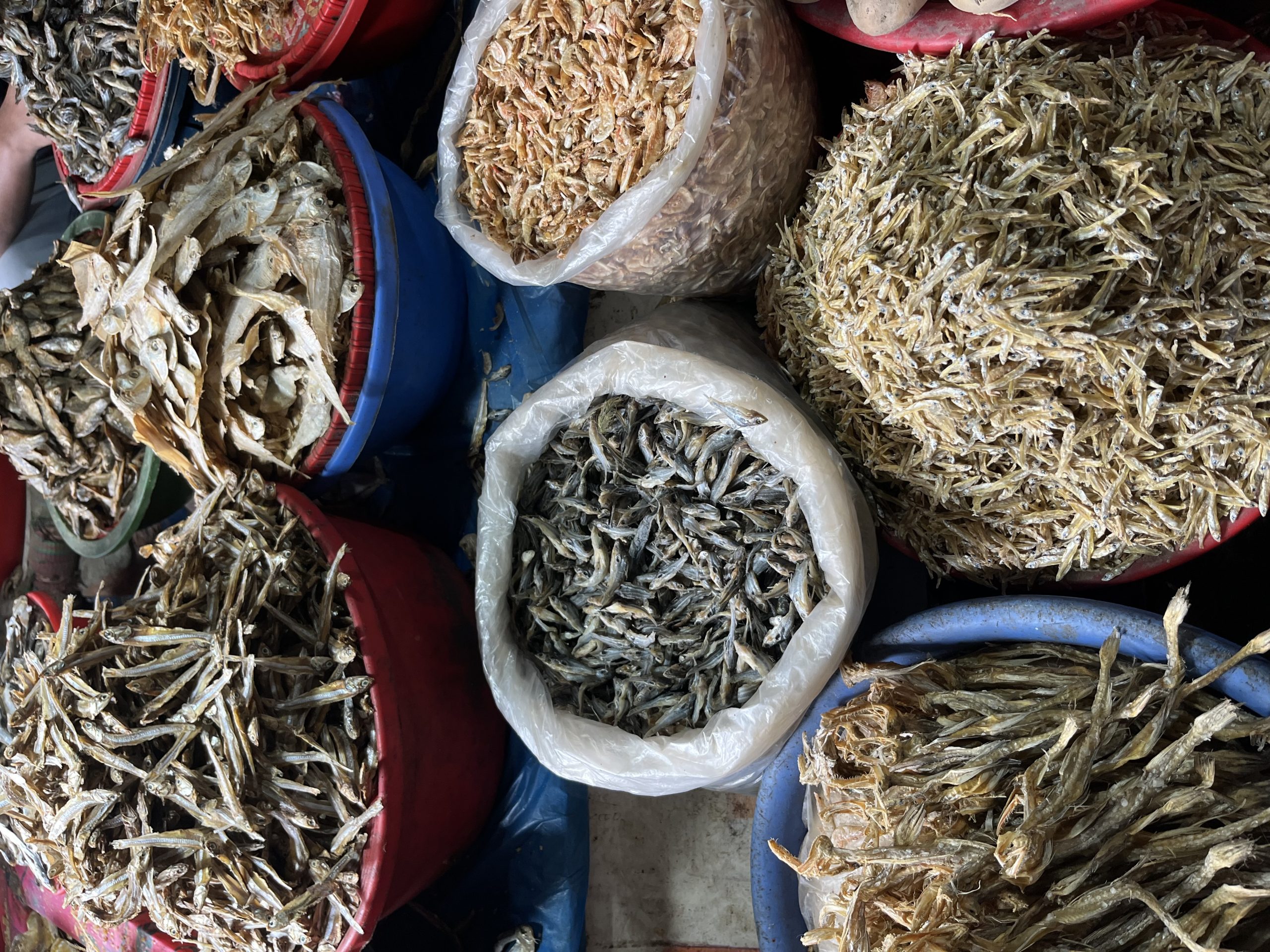
The traditional dried-fish industry in Natore’s Chalan Beel holds strong potential and demand both across Bangladesh and abroad, and the district fisheries department has set a production target of 320 metric tonnes this year, though declining native fish stocks, banned nets, agrochemicals, unplanned pond digging and rapidly receding water levels have raised concerns over meeting the goal.
Once abundant with native fish during the monsoon season, the vast wetland of Chalan Beel used to bustle with fishermen, traders and workers catching, drying and selling fish as floodwaters receded. While Chalan Beel’s dried fish has earned a reputation at home and overseas, the traditional industry now faces mounting pressures that affect production, trade and the livelihoods of working people.
One of the biggest challenges facing the dried-fish sector is the shortage of raw fish. Across Chalan Beel, the widespread use of banned China duari and current nets is disrupting natural breeding by trapping brood fish alongside small fry and diverse native species, threatening future stocks during the spawning season.
In addition, excessive chemical fertilisers and pesticides applied to farmland around Chalan Beel wash into canals, beels and water bodies with rainwater, harming fish reproduction, fry survival and the aquatic environment. There are also allegations of fishing by applying poison in several parts of the wetland.
At the same time, unplanned pond excavation inside the beel, filling of waterways with earth and construction of structures have obstructed natural water flow, severing links between beels, canals and rivers and shrinking the natural habitat for fish movement and breeding during the monsoon while also hurting farming.
Falling fish supply and rising production costs
Nayan, owner of a fish-drying yard at Ningoin in Singra upazila, said his father ran the business for many years before he joined the trade in 2007. He said several native species in Chalan Beel, including kachki, kaikla and khoira, are now close to disappearing, and fish supplies this year are much lower than last year.
He added that nine women work at his drying yard, earning extra income for their households by drying puti, shol, boal, tengra and other species. On current market prices, Nayan said dried tengra is selling at Tk 1,000 per kilogram, taki at Tk 1,000, boal at up to Tk 1,200, chanda at Tk 500 to Tk 600, guchi at Tk 1,200 and batasha at Tk 1,200 per kilogram, though yard owners say higher raw fish costs have prevented expected profits.
Women earning livelihoods at drying yards
Chalan Beel’s drying yards have created jobs for local women. Worker Runa Begum, whose two sons study at a madrasa and whose husband drives a van, said she has worked at a drying yard for four years and earns a daily wage of Tk 290. According to yard owners, 15 to 20 women work across four to five yards in the area, helping support their families.
Chalan Beel dried fish reaching districts across the country
Yard owner Shahidur Islam said fresh fish such as puti, tengra, boal and shol is bought from wholesale markets in the morning, salted for two to three hours and dried in the sun before being sent to Rangpur, Saidpur, Brahmanbaria and other districts, as well as to India. He noted that rapid water recession this season reduced fish supply and pushed up raw fish prices without a matching rise in dried-fish prices.
Strong demand among buyers
Dried-fish seller Azhar Ali, who has been in the trade for nearly 20 years, said many buyers from Bogura and Rangpur purchase washed, salted and sun-dried Chalan Beel fish from the local market. Truck helper Rana of Nandigram and ambulance driver Galib said they regularly buy Chalan Beel dried fish for their families when travelling through Natore and Singra.
Environmental crisis and fisheries department support
SM Raju Ahmed, president of the Chalan Beel Environment Development and Nature Conservation Forum, said unplanned roads, embankments, ponds and houses are shrinking the wetland, while poison fishing, herbicides used against water hyacinth and China nets are destroying spawning grounds. The Chalan Beel Protection Committee warned that falling fish output threatens fishermen, wholesalers, yard owners and male and female workers alike.
Natore District Fisheries Officer Md Omar Ali said Natore is rich in open-water and closed-water fisheries where surplus catch is traditionally turned into dried fish. Although lower water levels in October could slightly reduce output against this year’s 320-metric-tonne target, entrepreneurs have started production and the fisheries department continues to provide training and technical advice to maintain quality.
বাংলায় মূল প্রতিবেদন পড়ুন · Read the original Bengali report