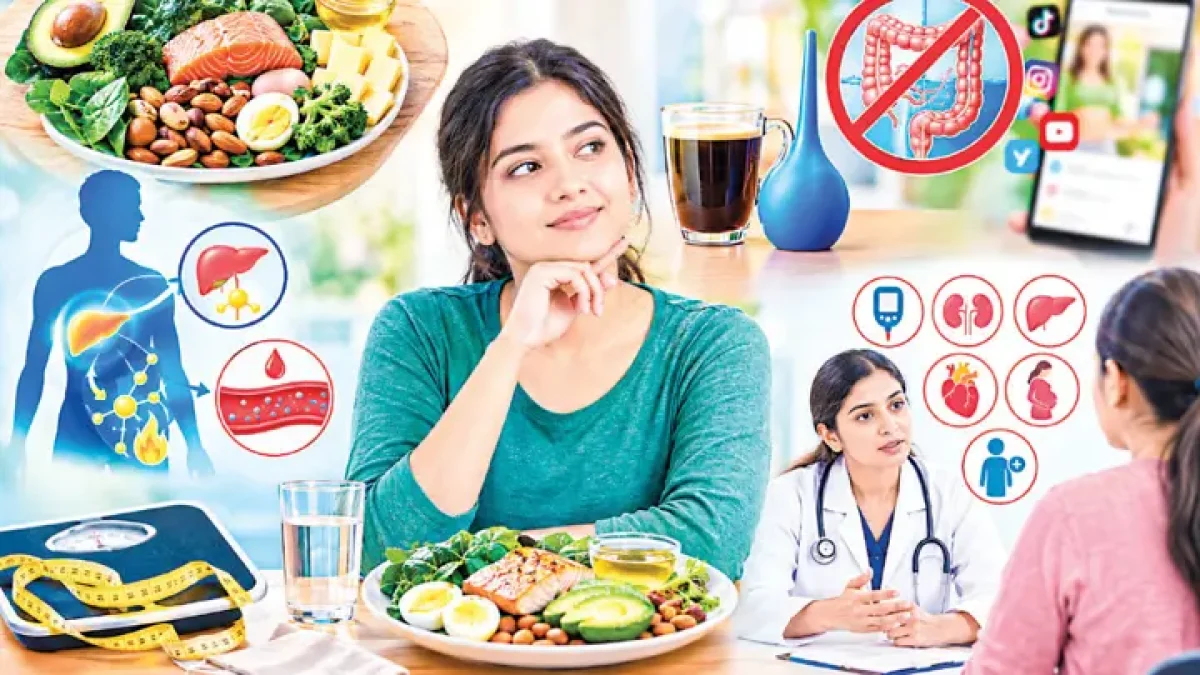
Is the keto diet always dangerous?
No. The keto diet has medical uses, particularly for certain patients, such as those with drug-resistant epilepsy. But the kind of claim common on social media, “Everyone should go on a keto diet and disease and fat will quickly vanish”, is not scientifically acceptable. In particular, anyone with diabetes, kidney disease, liver disease, cardiovascular disease, a pregnancy or any other long-term illness should not start extreme carbohydrate restriction without the advice of a doctor or dietitian. One more thing to remember: losing weight does not necessarily mean losing weight in a healthy way.
‘Detox’ and coffee enemas
On social media, statements such as “toxins have built up in the body”, “the colon must be cleansed” and “the liver must be detoxed” are made in very appealing ways. But the question is: which toxin? How was it measured? How much was there before the treatment and how much less afterwards? In scientific medicine, such questions have to be answered to prove that a treatment works.
In a coffee enema, coffee is introduced through the anus into the rectum and colon. It has been promoted mainly as part of some “detox” or alternative medicine regimens. But there is no strong clinical evidence to support its claimed benefits for detoxification or curing disease. There is, rather, documented evidence of its harmful effects.
Does coffee go straight from the rectum to the liver?
The body’s anatomy and physiology cannot be simplified to the point of saying that coffee put into the rectum travels along some “superhighway” straight to the liver and starts a special detoxification there. The liver and kidneys themselves constantly play an important part in processing and removing the body’s metabolic waste and various harmful substances. For a healthy person there is no scientific basis for the idea that regular coffee enemas are needed to remove “toxins built up in the colon”.
Why do people feel better after a coffee enema?
Anyone may well feel better after trying a method. But feeling good and being effective in the medical sense are not the same thing. Behind it may be:
- the natural feeling of lightness after a bowel movement;
- the temporary stimulant effect of caffeine;
- the placebo effect;
- changes in diet and sleep at the same time;
- the natural rise and fall of a disease’s symptoms.
So when someone says, “I used it and got better”, that may be their personal experience, but it is no substitute for clinical evidence.
How should I lose weight?
The safest way to lose weight is not some “magic diet”. The aim should be to reduce excess body fat slowly, in a controlled and sustainable way. Some simple rules:
- There is no need to cut out rice or roti completely. Reduce the amount and balance the meal.
- About half the plate can be vegetables, a quarter protein (fish, egg, chicken, lentils) and a quarter rice or roti.
- Leafy and other vegetables, lentils, fish, eggs, chickpeas, nuts and a moderate amount of yoghurt help you feel full.
- Limit soft drinks, sweets, too much fried food, fast food and packaged sugary drinks.
- Exercise regularly. Try to do at least 150 minutes of moderate-intensity physical activity a week and muscle-strengthening exercise on at least two days a week.
- Regular and adequate sleep supports healthy eating and weight control.
- Avoid crash diets. Going without food for long periods or methods of very rapid weight loss are not sustainable in the long run.
বাংলায় মূল প্রতিবেদন পড়ুন · Read the original Bengali report