Analysis
India and China have resumed discussions on their long-standing border dispute. But questions are being raised in diplomatic circles about whether India may ultimately be moving to accept China’s proposal on border demarcation, following a recent meeting between India’s National Security Adviser Ajit Doval and Chinese Foreign Minister Wang Yi.
The meeting, held in Beijing ahead of the upcoming BRICS summit, covered the India-China border in detail. Comparing the language of the statements issued by the two countries afterward has fueled this discussion in diplomatic circles.
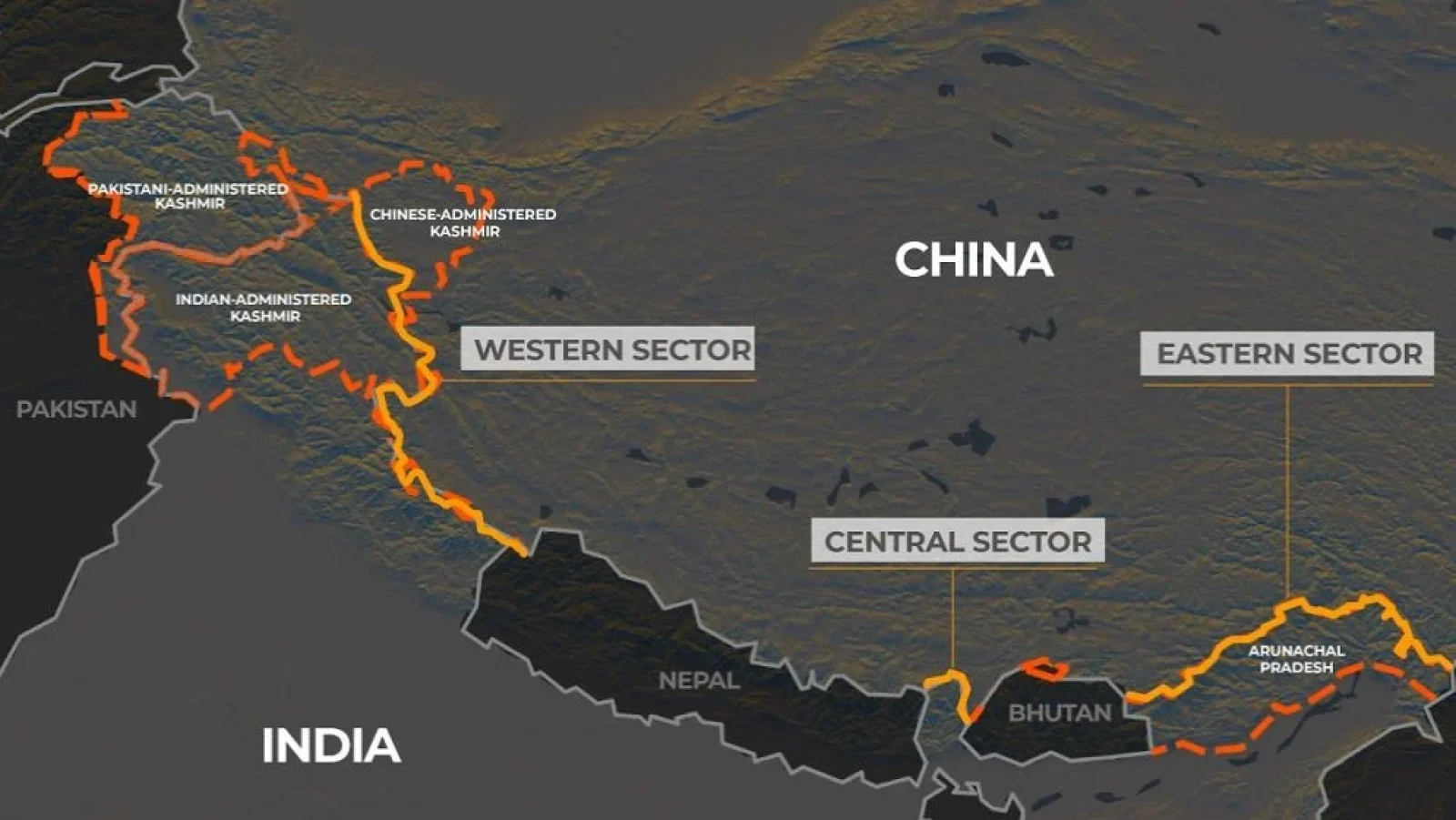
India and China have had a long-running dispute over a border stretching roughly 3,500 kilometers. The border is generally divided into three sectors — the western sector, which includes Ladakh; the middle sector, covering Uttarakhand and Himachal Pradesh; and the eastern sector, covering Sikkim and Arunachal Pradesh.
For several years, China has argued that sections of the border where there is comparatively less dispute could be demarcated first. In diplomatic terms, this approach is seen as a policy of “harvesting the easy fruit” of the border dispute.
In other words, rather than resolving the entire border dispute at once, this approach would demarcate sections where agreement is possible first. But India’s position on this approach had long been uncertain, since a 2005 border-related agreement between India and China emphasized a comprehensive resolution of the border dispute. India had objected to breaking up the overall border dispute through piecemeal resolution of individual sections.
Now, following the Doval-Wang Yi meeting, India’s statement refers to discussions between the two sides on advancing the work of border demarcation. The statement said the two sides discussed moving forward the border-demarcation process.
China has offered a similar signal. A statement from its foreign ministry said the two sides held detailed talks on realigning the border.
Diplomatic circles see significant meaning in this wording. India’s statement did not explicitly reaffirm a framework for a comprehensive resolution of the border dispute. This raises the question of whether India has agreed to renewed discussion on the sections of the border where a quicker settlement might be possible.
It cannot yet be said, however, that India has accepted all of China’s demands. Talks on border demarcation do not necessarily mean India is withdrawing its claim to any specific territory. Rather, the discussion may concern a new approach within the broader process of resolving the long-unsettled border dispute.
Relations between India and China were severely strained following the 2020 eastern Ladakh clash. Since then, multiple military and diplomatic-level meetings between the two countries have sought to normalize the situation. Alongside easing tensions at the border, efforts are gradually under way to normalize political and diplomatic relations as well.
Against this backdrop, diplomatic circles are attaching particular importance to the Doval-Wang Yi meeting, especially since the question of border demarcation came up directly in discussions. The two countries are looking for a new path to resolve the border dispute.
Whether that path ultimately protects India’s interests, or amounts to accepting China’s long-standing proposal in a new form, remains to be seen.
বাংলায় মূল প্রতিবেদন পড়ুন · Read the original Bengali report