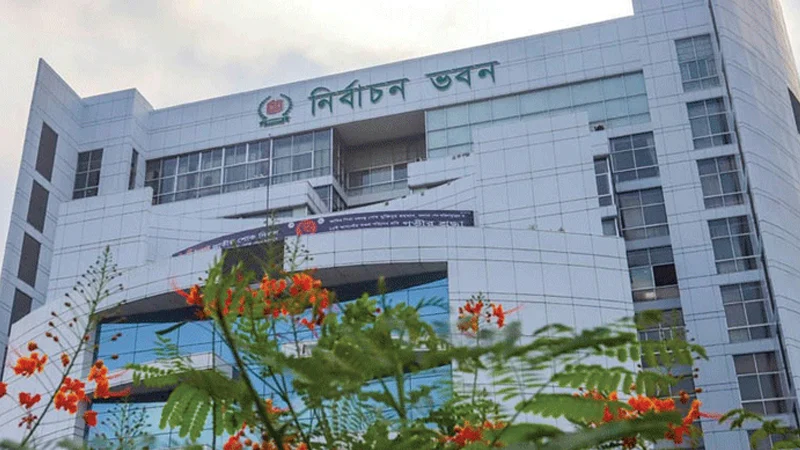
About 1.5 lakh (150,000) National Identity (NID) card correction applications are stuck, most of them concerning dates of birth, age and parents’ names. The Election Commission (EC) wants to avoid a complex situation with these “category D” correction applications, and has formed a committee to make the NID correction process easier, including handing the power to settle such applications down to the field level.
The information emerged in a recent report by the EC’s NID registration wing. It said the EC launched the NID correction process through a “card management system” in 2020. From that year to July this year — about six and a half years — the EC received 6,378,370 applications to correct various NID details. Of these, it settled 6,230,592: 4,935,138 were approved and 1,295,454 rejected. In all, 147,778 applications are still awaiting settlement.
According to the report, in this period the EC received an average of 981,287 correction applications a year, or about 2,688 a day, and settled about 958,000 a year on average.
EC officials said correction applications are processed in six categories: A, A-1, B, B-1, C and D. Category A covers spelling corrections; category B-1 covers marriage-related changes; category C covers a complete change of a person’s and their parents’ names; and category D covers changes to date of birth, age and parents’ names. Of these, category D applications are the most complex to settle.
The EC says most correction applications are submitted with the necessary evidence or documents, such as a passport, birth certificate, travel documents and parents’ NIDs. But when officials match the documents against the information applied for, they often find inconsistencies. Many applicants have even reapplied online for the same correction after being rejected five or six times, adding to the backlog — which is why the complications are greater.
The EC has now decentralised category D applications — that is, date-of-birth and age corrections — back to the field level. From now on, dates of birth and age can be corrected at the EC’s district or upazila/thana offices on the basis of public-examination certificates, including SSC, JSC and PSC. Citizens will not have to rush to the central office in Dhaka. The EC issued a notification on this on Monday.
The EC has also formed a four-member committee to ease the settlement of NID correction applications, including category D. In the committee, formed on 16 July, the NID wing’s director (registration and expatriate) will be convener and the assistant director (correction and replacement) member-secretary. The members are the deputy director (registration and expatriate) and the assistant director (printing and distribution unit). The committee has been asked to recommend how to ease the settlement of other categories, and what to do about category D applications rejected for insufficient evidence and reapplications that later provide adequate evidence.
The NID registration wing’s director (operations), Saiful Islam, said they were taking various steps to spare citizens suffering and harassment over NID corrections, and that once the committee’s recommendations came, further steps would be taken to make it easier.
According to the EC’s latest voter-list update, the country has 128,323,240 voters in total — 65,212,731 male, 63,109,266 female and 1,243 third-gender (hijra) voters.
বাংলায় মূল প্রতিবেদন পড়ুন · Read the original Bengali report