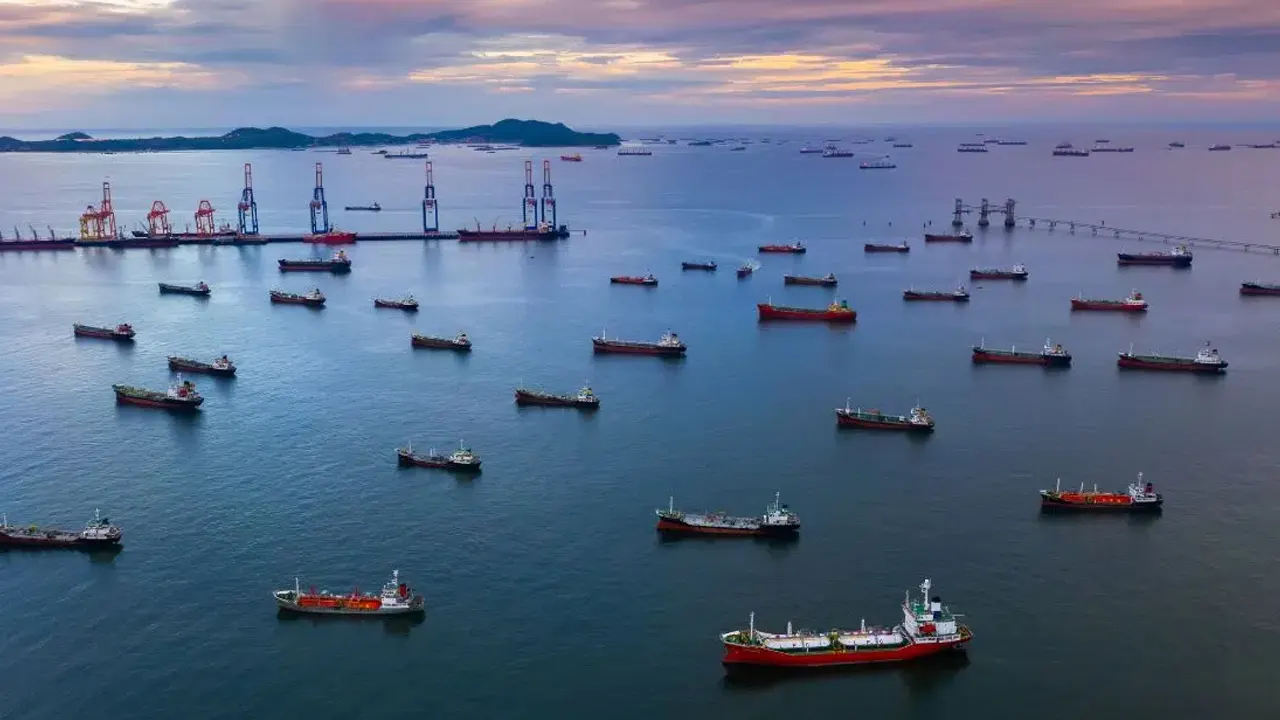
Most shipowners are still avoiding the Strait of Hormuz amid uncertainty over whether the waterway has fully reopened following the blockade imposed during the Iran war. Reuters reported the development Wednesday, citing data from analytics firm Kpler.
According to Kpler’s figures, only six cargo vessels transited the Strait of Hormuz on Tuesday. The previous day, the figure was nine. Over the past 10 days, an average of roughly 11 vessels have used the strait each day — meaning current traffic remains significantly below normal levels.
Vessels entering the strait on Tuesday included an empty supertanker, two oil tankers and other cargo ships. In the opposite direction, two medium-sized fuel tankers and one large post-Panamax vessel exited through the strait.
Before the war, roughly one-fifth of the world’s total crude oil and liquefied natural gas (LNG) was transported through the Strait of Hormuz. As a result, the reduced shipping traffic through this waterway has also raised concerns over global energy supply.
Meanwhile, two major Chinese shipping companies are still avoiding both the Strait of Hormuz and the Bab-el-Mandeb Strait. Before the war, the two companies together transported roughly half of China’s oil imports from the Middle East, according to tanker-tracking firm Vortexa and a shipbroker.
The United States and Iran also differ in their accounts of the current situation in Hormuz. US President Donald Trump said Tuesday that the United States is not holding any talks with Iran and that the Strait of Hormuz is open. Iran, however, claims the strait remains closed to shipping. As a result, uncertainty persists among shipowners over whether the waterway has fully returned to normal.
বাংলায় মূল প্রতিবেদন পড়ুন · Read the original Bengali report