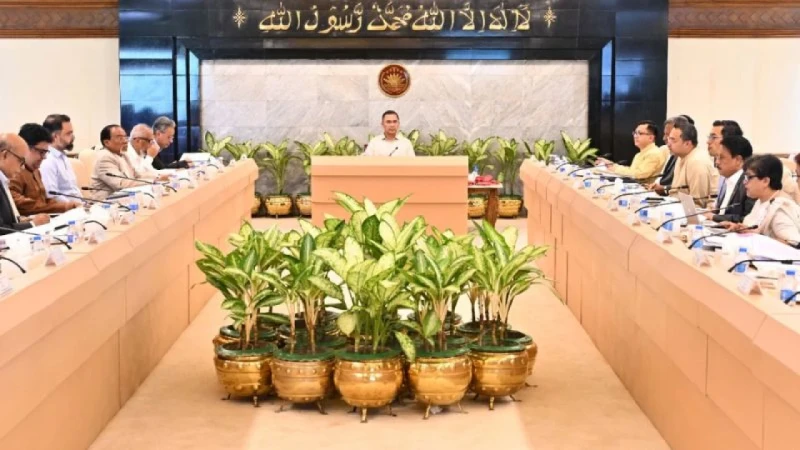
Prime Minister Tarique Rahman has ordered that the training programmes of the country’s various ministries be brought under a single coordinated framework, with training and certification provided under a common syllabus, in order to build skilled human resources based on the demands of the national and international labour markets.
The prime minister gave the instruction on Saturday while chairing the third meeting of the governing body of the National Skills Development Authority (NSDA) at 10am at the prime minister’s office in Tejgaon.
At the meeting, the prime minister said: “The NSDA is playing an important role in building skilled human resources based on the demands of the national and international labour markets. It is also an important platform for increasing demand for Bangladesh’s skilled workforce in the international labour market.”
He added: “Developing the skills of the country’s young people is extremely urgent. Although many training programmes are run under various ministries towards that end, for want of proper coordination this training and certification is in many cases unable to play an effective role. As a result, our young generation is not receiving the recognition it should at national and international level against these certificates.”
Tarique Rahman said: “The NSDA’s governing body must, within a short time and through a small committee, frame the necessary policy and bring the skills development and training programmes of the various ministries under a single coordinated framework.”
He stressed the importance of arranging training and certification through a common syllabus. “If uniform training and certification of international standard can be introduced, it will develop the skills of the country’s young people and also increase their acceptability and recognition in the national and international labour markets,” the prime minister said.
The meeting briefed the prime minister on the NSDA’s administrative structure, staffing and functions. There was also discussion of national skills development policy and strategy papers, the creation of skilled human resources according to national and international labour market demand, sector-based analysis of skills demand, and short, medium and long-term action plans. Improving the quality of training, certification and the mutual recognition of certificates were also discussed.
Those present at the meeting included finance minister Amir Khasru Mahmud Chowdhury; public administration ministry adviser Md Ismail Zabiullah; industries minister Khandaker Abdul Muktadir; education minister Dr A N M Ehsanul Haque Milon; expatriates’ welfare and overseas employment minister and labour and employment minister Ariful Haque Chowdhury; the prime minister’s adviser and spokesman for the prime minister’s office, Mahdi Amin; state minister for public administration Md Abdul Bari; state minister for youth and sports Md Aminul Haque; the prime minister’s principal secretary A B M Abdus Sattar; Bangladesh Investment Development Authority executive chairman Chowdhury Ashik Mahmud Bin Harun; chief coordinator for SDG affairs Professor S M Abdul Awal; the NSDA’s executive chairman; and secretaries and other senior officials of various ministries.