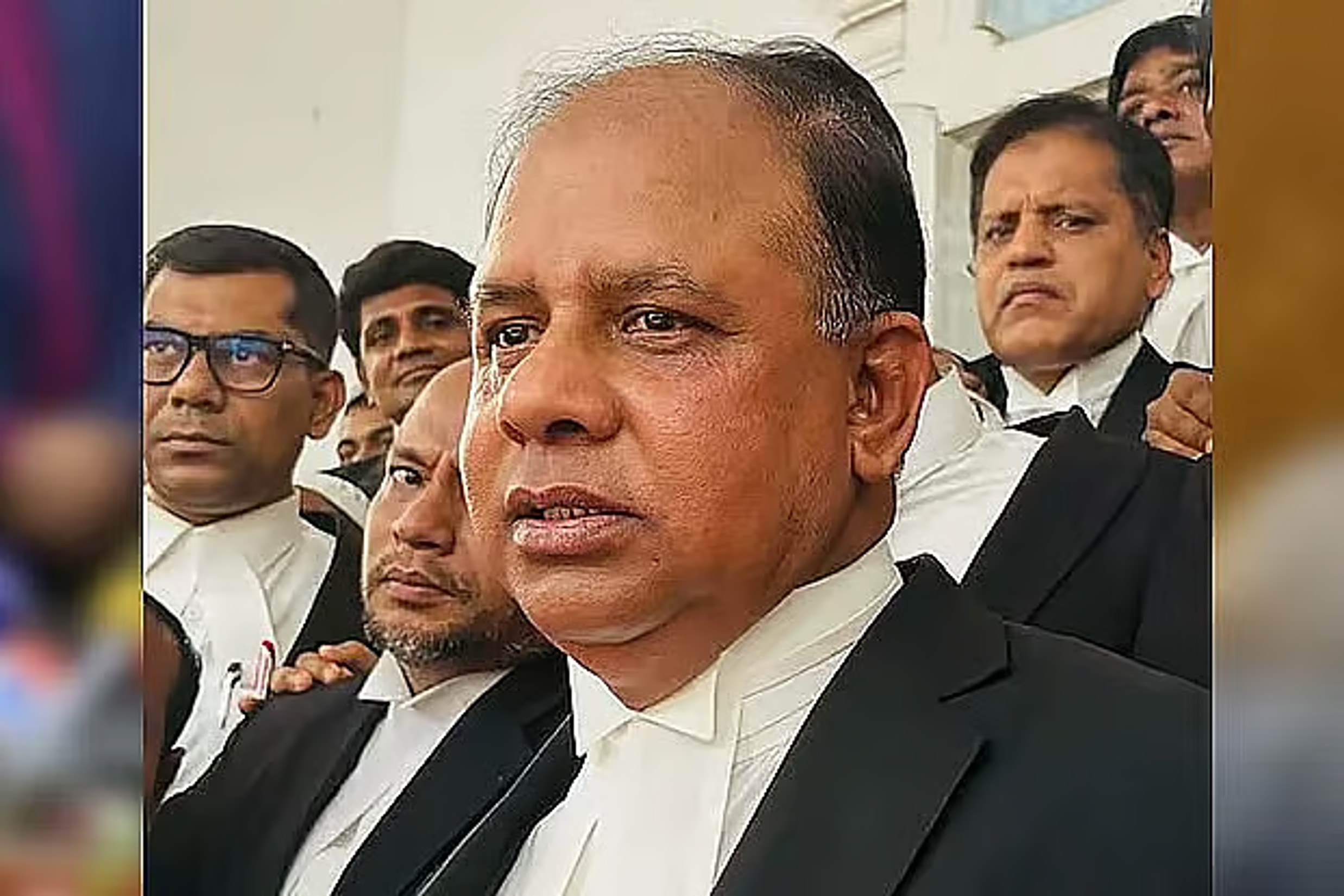
There is no alternative to carrying out the death sentence on Sheikh Hasina if she returns to the country, the chief prosecutor of the International Crimes Tribunal, Md Aminul Islam, said. He spoke a day after reports that the ousted former prime minister had applied for a passport so that she could come home.
At a briefing on the tribunal premises on Tuesday, chief prosecutor Aminul Islam said: “The tribunal law says an appeal will not be accepted 30 days after the verdict is published. For Sheikh Hasina there is now no alternative but for the verdict to be carried out.”
International Crimes Tribunal-1 sentenced Sheikh Hasina and her home minister, Asaduzzaman Khan, to death on 17 November last year in a case over crimes against humanity committed during the mass uprising. Another accused in the case, former inspector general of police Chowdhury Abdullah Al-Mamun, who turned approver, was sentenced to five years in prison.
The full verdict was published on 13 January, 57 days after it was delivered. The law provides for an appeal within 30 days of the full verdict’s publication, and the verdict states that an appeal will not be accepted after 30 days.
Sheikh Hasina, who was ousted in the 2024 uprising and fled to India, has been a fugitive in the case from the start. She has said in interviews with international media that she wants to return home in December at any cost. The matter has been debated afresh since reports that she had applied for a passport and a national identity card to be issued.
At Tuesday’s briefing, reporters asked whether Sheikh Hasina would get the chance of a legal fight if she came to Bangladesh. Aminul Islam replied: “Whether she will get a legal opportunity or not, and by what process she will or will not take a legal opportunity… that will be settled if she is found in Bangladesh.”
The chief prosecutor said that under the International Crimes Tribunal law Sheikh Hasina has no scope to appeal.
He also addressed a question many people raise: whether a death sentence can be carried out without a hearing for the condemned person. The tribunal has three judges, he said, each of whom is qualified to be a High Court judge, is a High Court judge or has been one. When a murder case is tried in the country, a sessions judge or additional sessions judge can try it and hand down a death sentence. There the law requires the sentence to be confirmed by the High Court, which means a bench of two High Court judges is formed, and the sentence is carried out subject to their confirmation. That condition does not apply to carrying out a sentence from the International Crimes Tribunal, he said.
The reason, the chief prosecutor said, is that the tribunal is of equal standing with the High Court. More than that, a High Court bench is made up of two judges, while a tribunal bench has three, so the tribunal’s bench is larger. When a case is tried at the tribunal, there is no appeal to the High Court; the appeal is filed directly with the Appellate Division of the Supreme Court. A verdict of the tribunal can be appealed only directly to the Appellate Division.
Aminul Islam added that some people make misleading claims on social media that a death sentence cannot simply be carried out and that a hearing is needed first. The tribunal law is a special law, he said, and the Limitation Act does not apply to special laws. That being so, the tribunal law says clearly that no appeal can be made after 30 days, which means Sheikh Hasina’s appeal will not even be admitted. Having analysed the tribunal law, he said, there is at present no alternative to the verdict against Sheikh Hasina being carried out.
One reporter then asked how Jamaat-e-Islami leader Abul Kalam Azad had been able to appeal against a death sentence in a case over crimes against humanity committed during the Liberation War. The chief prosecutor replied that Abul Kalam Azad had appealed out of time. As that matter is before the court, he said, he did not wish to say anything more about it for now.
বাংলায় মূল প্রতিবেদন পড়ুন · Read the original Bengali report