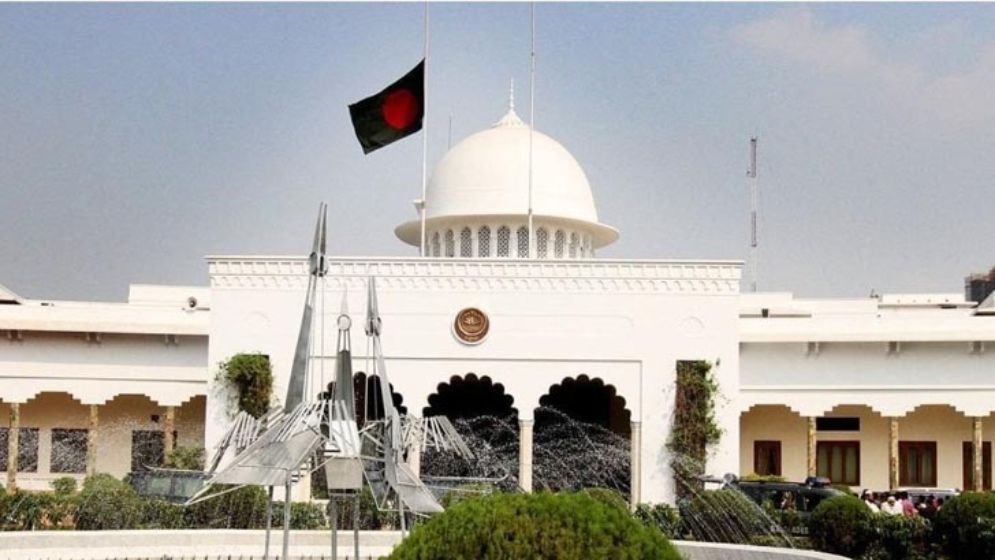
Bangladesh is heading for a presidential election for the first time in decades after more than one nomination was filed with the Election Commission. But the decision by the Jamaat-e-Islami-led alliance to field a candidate whose defeat is a foregone conclusion has drawn considerable discussion.
Under article 48(1) of the constitution, the president is elected indirectly by members of parliament. That makes it certain that the candidate nominated by the majority party in parliament will be elected.
Only once before, in 1991, has the country held a presidential election with more than one candidate. On that occasion the then opposition Awami League fielded a candidate against the governing BNP.
In the eight presidential elections held over the 35 years since, a single candidate each time meant no vote was needed. In the 13th parliament the governing BNP holds 247 seats, an absolute majority.
Had MPs been free to vote outside their party lines, some uncertainty might have remained. But article 70 of the constitution closes that route. In effect, whoever the BNP nominates is all but certain to become the 23rd president.
Against that backdrop, questions have been raised about why the Jamaat-led alliance entered the race at all, and whether there is a political calculation behind it or the participation is nominal.
Many analysts see political strategy as the main driver. They say the decision lets Jamaat signal its opposition to the government, while the choice of a recognised freedom fighter as its candidate is a calculated political message to the wider public.
What the Jamaat alliance says
Speculation about the next president has run since President Md Sahabuddin resigned on July 24. Speaker Hafiz Uddin Ahmed has served as acting president since then. The constitution requires a new president to be elected within 90 days.
The formal process began with the filing of nominations. Col (retd) Oli Ahmad, chairman of the Liberal Democratic Party, was nominated by the 11-party alliance led by Bangladesh Jamaat-e-Islami; the BNP nominated its secretary general, Mirza Fakhrul Islam Alamgir.
An alliance delegation submitted Oli Ahmad’s nomination papers to Chief Election Commissioner A M M Nasir Uddin at the Election Building in Agargaon, Dhaka, at about 11:30am on Thursday.
Jamaat leader Hamidur Rahman Azad told reporters the alliance had decided to contest “to bring democracy back on the right track”.
“Whether we win or lose here is not the point. We do not want any election to take place without a contest. That is the beauty of democracy,” he said.
Referring to article 70, Azad said the constitutional restriction was an obstacle to democratic practice. “On article 70 – that MPs should be able to express their opinion and vote freely except on no-confidence motions and money bills – we all sought this at the consensus commission. But out of stubbornness and party narrowness they are not implementing the referendum verdict.”
He also criticised a meeting of the BNP’s party forum held at the Prime Minister’s Office in the secretariat. “The secretariat is an executive space. We know of no past record of a political party’s top forum meeting being held here,” he said.
A BNP delegation submitted Mirza Fakhrul Islam Alamgir’s nomination papers to the Election Commission later on Thursday. Gayeshwar Chandra Roy, a member of the party’s standing committee, welcomed the Jamaat alliance’s participation.
“This is by no means an election held merely to observe the formalities. What is happening is what should happen under the constitution and the Representation of the People Order,” he said. The party’s candidate had been announced earlier by BNP senior joint secretary general Ruhul Kabir Rizvi, after a meeting of senior leaders at the Prime Minister’s Office.
Under the Election Commission’s schedule, nominations were filed on Aug 13, scrutiny is set for Aug 16 and withdrawal for Aug 18. Unofficial results will be announced after the vote in parliament on Aug 20.
The first presidential election after the return to parliamentary democracy was held in 1991, when the Awami League fielded Justice Badrul Haider Chowdhury against the BNP’s Abdur Rahman Biswas. In the 35 years since, presidential elections have been held but never contested, because only one candidate stood each time. That pattern is now breaking, making this the first contested presidential election since 1991.
Even so, political analysts see no real prospect of a contest under the constitutional rules governing the election.
বাংলায় মূল প্রতিবেদন পড়ুন · Read the original Bengali report