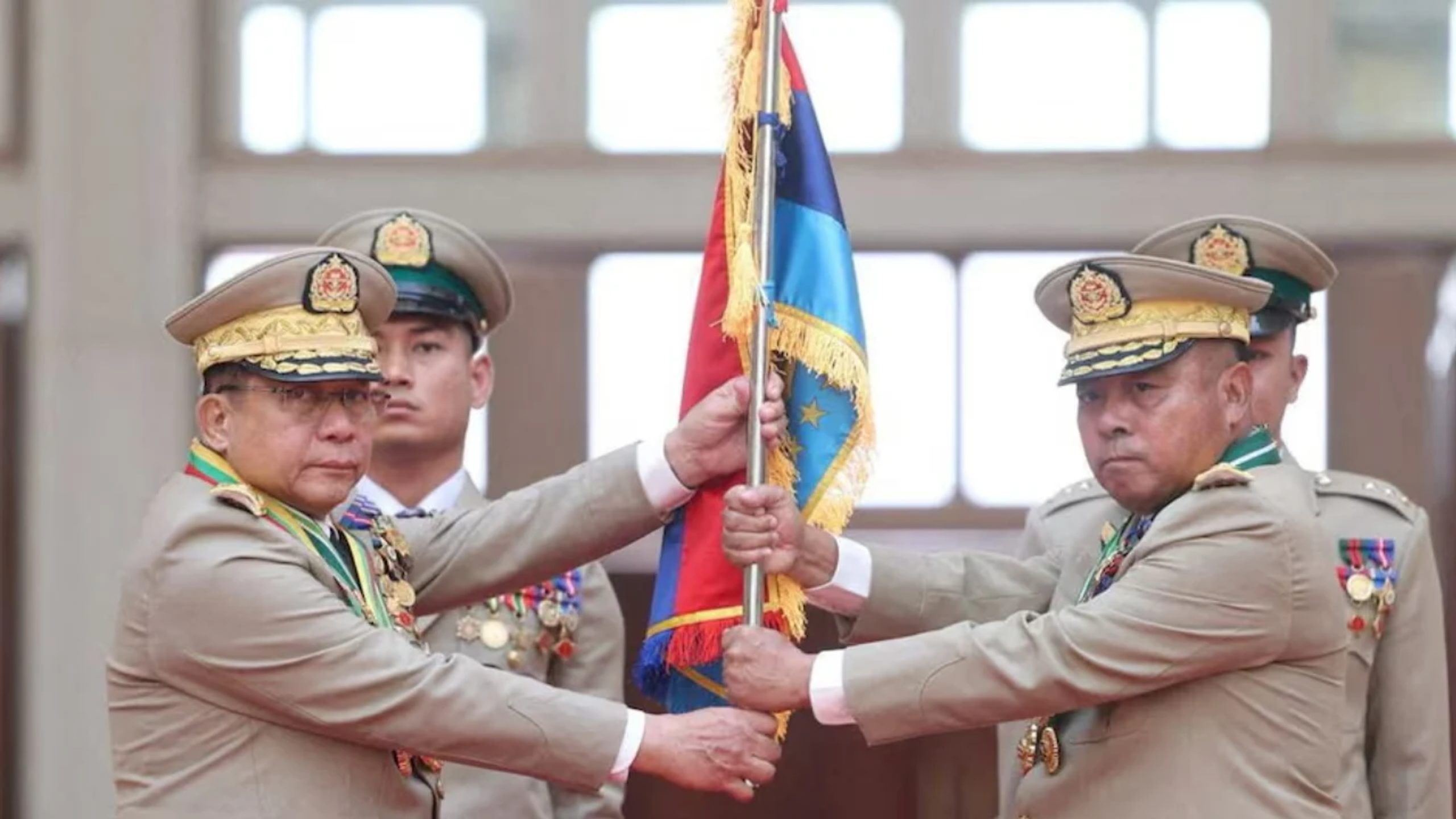
Military repression and air strikes on civilians in Myanmar have risen significantly since the new military leadership took charge, the international conflict monitoring organisation the Armed Conflict Location and Event Data Project (ACLED) has said.
In a report published on Monday, the organisation said the junta’s repression has grown more intense since the reorganisation of the military command structure in March. Under the new army chief, the tactic of successive air strikes on the same target using specialised warplanes is being applied regularly.
The report said Myanmar has been mired in civil war since the army seized power in February 2021, ousting Aung San Suu Kyi’s elected government. About one hundred thousand people have been killed in the conflict so far and several million displaced.
In March, Min Aung Hlaing appointed a long-standing close associate and former intelligence officer, Ye Win Oo, as army chief. A few days later he became the country’s president through an election held with opposition parties banned. Under the new army chief, military operations have been stepped up in various border regions, particularly in areas near rare mineral resources and important trade routes.
According to ACLED, at least a dozen mass killings were documented in the first six months of 2026. More than 450 civilians were killed in these incidents, about 40 percent of them in the dry central region of Myanmar known as the Anyar.
The report also mentions an operation in May. Local residents told Reuters that hundreds of junta troops raided Myit Che township, across from the ancient city of Bagan, and killed at least 40 people. A 35-year-old resident, Ye Naung, claimed that about 700 troops entered the town, looted residents’ property, beat them and later killed them. Reuters could not independently verify the allegations. The incident is included in ACLED’s database, where it records at least five people killed.
ACLED said that although there was a change in the military’s tactics in 2026, the level of repression against civilians has not fallen at all; rather it has become more organised and more intense.
Regional diplomatic activity has also increased since Myanmar’s political reshuffle. Min Aung Hlaing has already visited neighbouring India and China since becoming president. ACLED fears, however, that with the military junta focused on consolidating its power further, there is very little prospect of civilians’ suffering easing in the near future.
বাংলায় মূল প্রতিবেদন পড়ুন · Read the original Bengali report