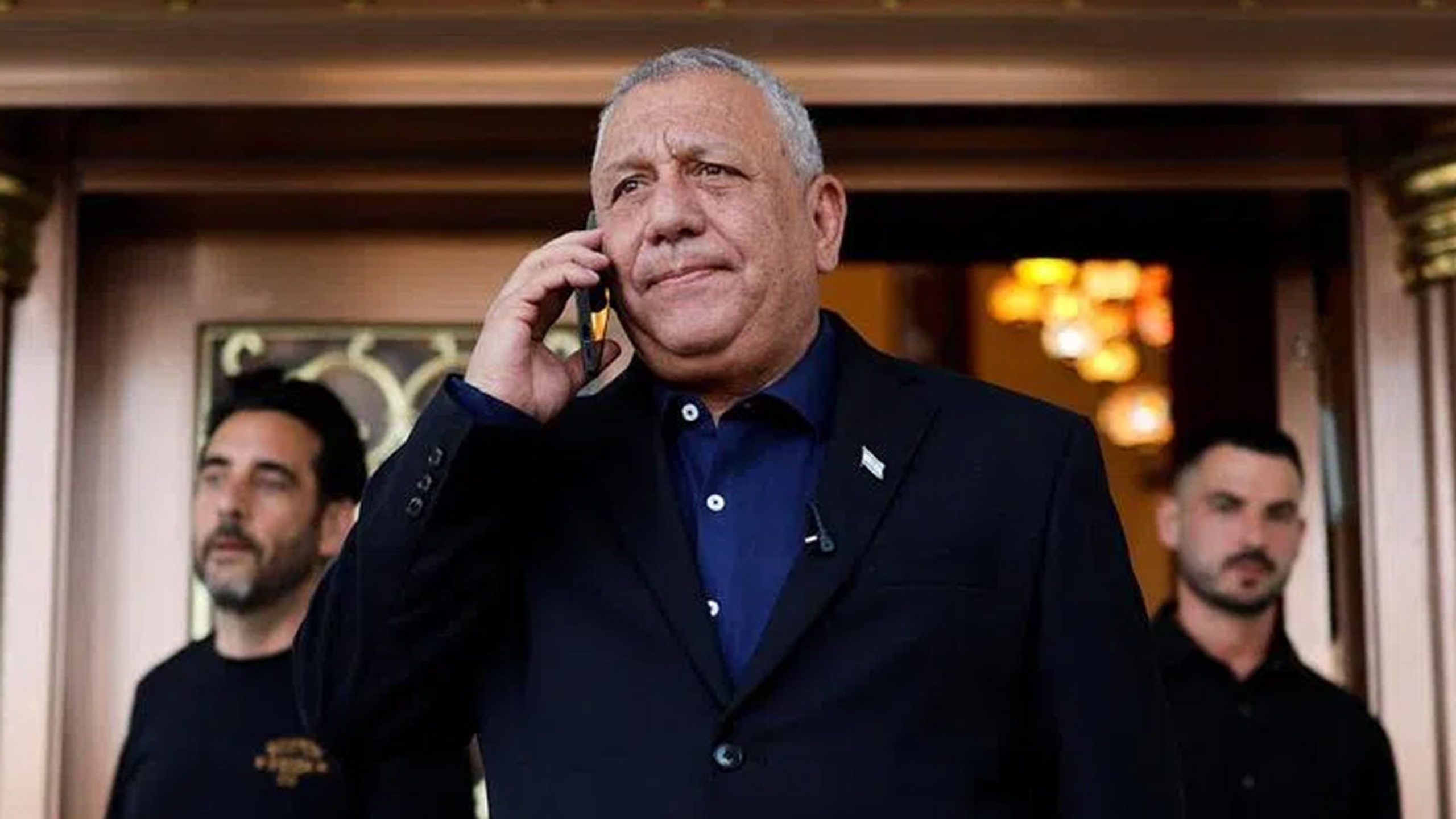
Israel’s former army chief Gadi Eisenkot has emerged as the main challenger to Prime Minister Benjamin Netanyahu ahead of the tightly contested general election on 27 October.
The vote is widely seen as an election on Netanyahu’s leadership against the background of the crisis created after the Hamas attack of 7 October 2023. Eisenkot’s rise has come at such a critical moment.
A recently published Channel 12 opinion poll showed Eisenkot’s new party, Yashar, ahead of Netanyahu’s Likud party in the 120-member Knesset. The poll forecast 23 seats for Yashar and 22 for Likud.
In the same poll, 43 percent of respondents considered the 66-year-old Eisenkot the most suitable person to be prime minister. Thirty-four percent said Netanyahu.
Eisenkot, who dismissed the demand for a future Palestinian state as irrelevant after the 7 October attack, was also one of the architects of Israel’s strategy of disproportionate military response in Lebanon.
He is campaigning on a 10-point election programme. He contends that it will make it possible to rebuild Israel’s security, national unity and democratic institutions.
Eisenkot, who served as chief of the Israeli army from 2015 to 2019, is credited with playing an important part in framing the “Dahiya doctrine.” The doctrine takes its name from the Dahiya suburb of the Lebanese capital, Beirut, a Hezbollah stronghold.
Framed on the premise that Hezbollah fighters and weapons are hidden among civilian homes and infrastructure, the doctrine holds that in the event of long-range attacks on Israeli population centres, devastating counter-attacks will be carried out on populated areas on the enemy side.
At the top of his civilian programme is a pledge to set up a state commission of inquiry into Hamas’s bloody cross-border attack of 2023. That attack began the Gaza war, which later grew into a regional conflict. Allegations of intelligence failure were raised against the Netanyahu government over it.
Thousands of Israelis have protested repeatedly demanding such a commission of inquiry. Netanyahu’s coalition government has, however, proposed a commission whose members would be chosen by politicians.
Eisenkot has also promised to strengthen the army further and to frame a “new long-term national security policy” aimed at reinforcing the country’s border security.
He has also pledged to protect the independence of the judiciary, the rule of law, the rights of minorities and a free press.
Eisenkot’s campaign says: “Through these steps we will ensure that Israel develops as a Jewish, democratic, strong, developed and secure state.”
His overall position on the Israeli-Palestinian conflict is not yet entirely clear, however.
Public support for Eisenkot has risen comparatively since his son Gal and two nephews were killed during the war in Gaza.
The demand for universal military service has become one of the main issues of his campaign. He is therefore also at the forefront of opposition to Netanyahu’s coalition with ultra-Orthodox Jewish parties.
Eisenkot has criticised Netanyahu for advancing, with his coalition partners, a law that would allow many Haredi Jewish men to be exempted from military service.
In a post on social media he wrote: “This is a government that has chosen the path of weakening the army in the midst of a brutal war, while the finest sons and daughters of this country are serving on every front.”
Unlike Netanyahu, Eisenkot does not come from an elite Israeli family; he was born into a family of immigrants from Morocco and grew up in the country’s periphery.
In a recent blog the columnist Nadav Eyal wrote: “Amid the crowd of politicians who want to be like Netanyahu, Eisenkot is a man of a different generation. His connection with the traditional security thinking of Zionism is far stronger.”
In the researcher Elovitz’s view, Eisenkot’s restrained personality may become his greatest political strength.
The opposition leaders Yair Lapid and Naftali Bennett are still in the contest. But current opinion polls show that none of them is as strongly placed as Eisenkot to defeat Netanyahu.
বাংলায় মূল প্রতিবেদন পড়ুন · Read the original Bengali report