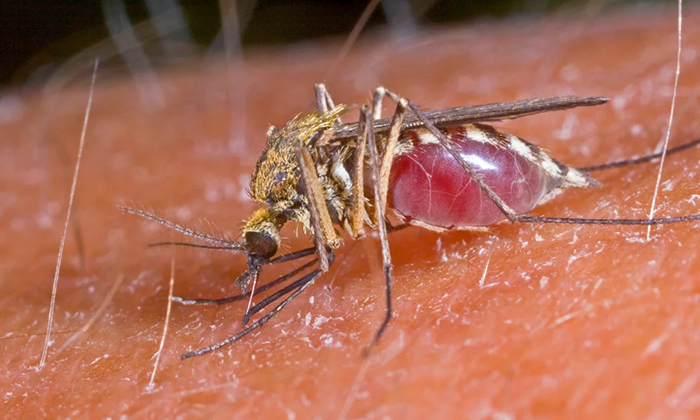
Mosquitoes can read the signals a human body gives off from far away and use them to decide whom to bite. So why are some people seemingly always on a mosquito’s ‘hit list’ while others are barely touched? Scientists say it comes down to a mix of the carbon dioxide we exhale, our body heat and, above all, the odor of our skin.
Only female mosquitoes bite, because they need the protein in blood to produce eggs, and they can detect a human from about 10 meters away using sight and smell. One of the most important signals is the carbon dioxide in a person’s breath and skin, which activates the mosquito’s sense of smell and triggers host-seeking behavior. Because adults exhale more carbon dioxide than children, they tend to be more attractive to mosquitoes – which is also why dry ice or bottled carbon dioxide is used to bait mosquito traps.
Research shows mosquitoes are drawn not only to carbon dioxide but also to body heat and moisture. For this reason, pregnant women are about twice as attractive to mosquitoes as other women: during pregnancy the body’s metabolism rises, producing more heat and exhaling more carbon dioxide. “A pregnant woman’s body is like a small furnace – it stays warmer,” said Steve Lindsay, a professor of public-health entomology at Durham University in Britain. People also become temporarily more attractive during or just after exercise, when they are hotter, sweatier and breathing out more carbon dioxide, and those with a larger body size may draw relatively more attention too.
When a mosquito gets close, however, the odor of the skin plays the biggest role. “The key thing is smell,” Lindsay said. “Tiny volatile chemicals make the difference. Mosquitoes really live in a world of chemical signals.” He and his colleagues have disproved the common belief that people with ‘sweet blood’ get bitten more; what matters, their research found, is the skin’s own scent. The microbes living on our skin – the skin microbiome – break down carbohydrates, fatty acids and proteins to create hundreds of volatile compounds that spread into the air, where mosquitoes easily detect them. There are more than 500 such chemical compounds on human skin, and ammonia, lactic acid and especially carboxylic acid attract mosquitoes most. In a study at Rockefeller University in the United States, researchers collected the skin odor of 64 people and presented it to mosquitoes; those with more carboxylic acid on their skin drew the most mosquitoes, and the most attractive person was 100 times more attractive than the least. “How attractive you are to mosquitoes is largely innate and stays much the same over a long time,” Lindsay said.
So how can you avoid bites? Heather Ferguson, a professor of medical entomology at the University of Glasgow in Scotland, said there was no strong scientific evidence that eating garlic or taking vitamin B supplements keeps mosquitoes away. She advised using effective repellents containing DEET, picaridin or PMD, wearing insecticide-treated long sleeves and trousers, and reapplying repellent after sweating or after some time.
Skin bacteria matter too. A study at Wageningen University in the Netherlands found that people more attractive to malaria-carrying mosquitoes had a different type of skin bacteria, which largely shape body odor. Even studies of twins have shown that identical twins are similarly attractive to mosquitoes while fraternal twins differ – suggesting that part of what makes someone attractive to mosquitoes may be hereditary.
Not everyone reacts to bites the same way. Research shows that certain genes linked to the immune system determine how much swelling, redness or itching a bite causes. “Many people think they are being bitten more, but really their body’s reaction is stronger,” Ferguson said, while others may be bitten many times and show almost no reaction. In other words, while some people are biologically more attractive to mosquitoes, no one is entirely safe from them – so, Ferguson advised, protect yourself even if you think mosquitoes do not bite you.
বাংলায় মূল প্রতিবেদন পড়ুন · Read the original Bengali report