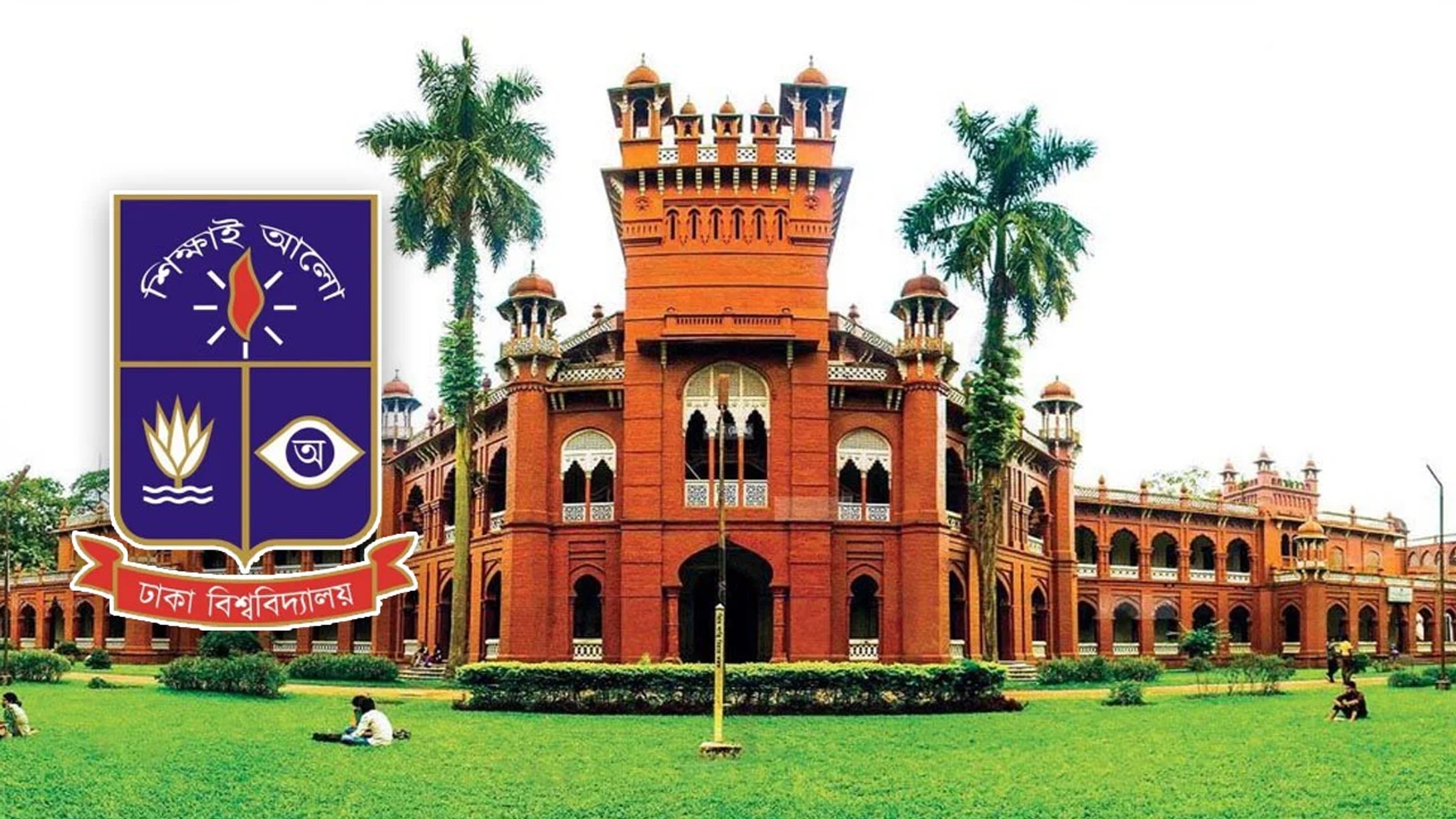
EDUCATION DESK:
The administration of Dhaka University has undergone significant changes shortly after the new government assumed power. Within a short span, several key positions have witnessed substantial changes. The trend began with the resignation of former Vice-Chancellor Prof. Dr. Niaj Ahmed Khan and extended to crucial administrative levels such as Pro-Vice-Chancellor, Proctor, and Assistant Proctor. These continuous changes have created an atmosphere of instability and uncertainty within the university administration, according to sources familiar with the matter.
University administrative sources indicate that the reshuffle is not merely limited to personnel changes but is part of a process to establish a new power structure. The most discussed aspect of this process is the concern over the potential spread of political influence.
Five days after the new government took office, Dhaka University Vice-Chancellor Prof. Dr. Niaj Ahmed Khan resigned. On February 22, he submitted his resignation letter to the President through the Education Minister. Earlier, on February 10, he had expressed his willingness to step down during a press conference.
He stated that a phase of his responsibility had ended and that it was appropriate to make way for new leadership. He assumed the role of Vice-Chancellor on August 27, 2024, following the political changes of that year. Following his resignation, Prof. Dr. A.B.M. Obaidul Islam was appointed as the new Vice-Chancellor.
The series of administrative changes continued with the removal of Prof. Dr. Saima Hossain Bidisha from the position of Pro-Vice-Chancellor (Administration). She was succeeded by Prof. Dr. Mohammad Alamozzadedi Alfachani of the Botany Department.
Prof. Dr. Saima Hossain Bidisha was appointed to this position on September 2, 2024. However, recent changes have led to her removal as part of efforts to restructure the administrative framework.
On the heels of these developments, Prof. Saifuddin Ahmed, the Proctor of Dhaka University, resigned on Sunday, citing personal reasons.
He remarked that after overcoming numerous challenges over an extended period, the university is now in a relatively stable condition, making it logical for new leadership to take over.
Following his resignation, Mohammad Israfil Prang (Israfil Ratan), an Associate Professor in the Faculty of Fine Arts, was appointed as the acting Proctor. Upon assuming his duties, he pledged to ensure a democratic environment and impartial enforcement of discipline within the university.
The day after the Proctor’s resignation, Assistant Proctor Shehrin Amin Monami also stepped down. She confirmed the matter in a Facebook post on Monday.
Uncertainty has also arisen regarding the position of the university’s Registrar. Multiple sources have indicated that discussions are underway to replace the current acting Registrar with a new appointment.
Not only the top tier but various administrative levels, including the Registrar’s building, have already experienced extensive reshuffling. Several officers have been transferred, promoted, and new appointments have been made to reconstruct the administrative structure.
Concerns Over Political Influence
Amid these continuous administrative changes, concerns have been raised about the prevalence of political appointments. It is alleged that adherents of a specific political party are being exclusively placed in key administrative positions, raising fears of political bias.
A segment of teachers and officials has expressed apprehensions, stating that if individuals from a particular political ideology continue to occupy key administrative posts, the decision-making process could lose its balance. This might lead to the formation of a one-dimensional power structure centered around the syndicate, undermining the university’s autonomy.
They argue that a public university’s administration requires representation of diverse opinions, experiences, and perspectives. Without this, policy decisions may become biased, potentially harming the educational system and research environment in the long run.
However, these allegations have been refuted by the new Pro-Vice-Chancellor (Administration), Prof. Dr. Mohammad Alamozzadedi Alfachani.
He stated that those who resigned did so voluntarily and that no pressure was exerted on anyone.
Dhaka University Vice-Chancellor Prof. Dr. A.B.M. Obaidul Islam emphasized that appointments are based on experience, seniority, and competence rather than political affiliation.
He added, ‘Every administration has its own way of functioning. Those with whom the work can be smoothly managed are the ones selected.’
BY A STAFF CORRESPONDENT
বাংলায় মূল প্রতিবেদন পড়ুন · Read the original Bengali report