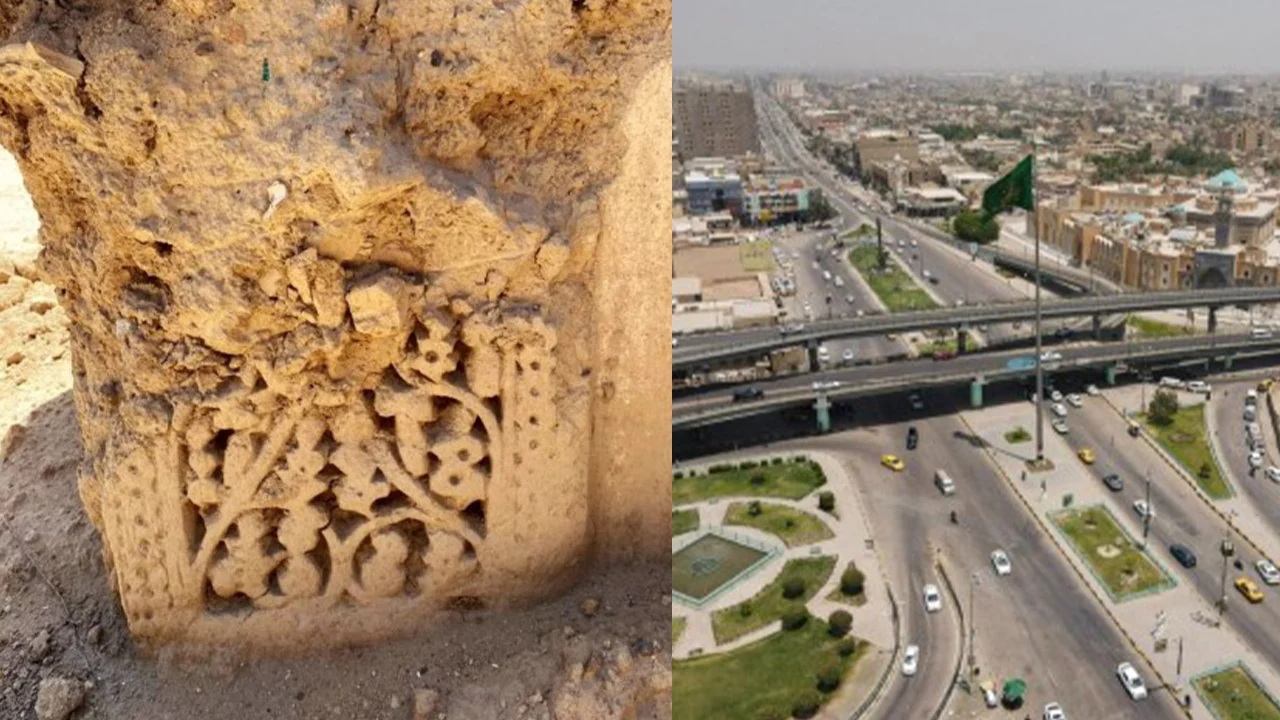
After ending the Battle of Ullais, Khalid ibn al-Walid advanced toward Amghishiya. Because of his sudden arrival, the inhabitants there had no chance to prepare. They abandoned the city and scattered across the Sawad (the fertile farmland of Iraq). From that point their fields and gardens were absorbed into the agricultural land of the Sawad.
Khaled ordered Amghishiya and all the structures under its control destroyed. Amghishiya, like Hira, had been a prosperous city. A branch of the Furat Badaqli (a tributary of the Euphrates, or the Badaqli canal) ended there. Ullais had been a frontier garrison of Amghishiya. The Muslims gained vast spoils there — more wealth than they had ever taken before. Of all the campaigns the Muslims had fought from Dhat al-Salasil to Amghishiya, the spoils taken at Amghishiya were the greatest. Beyond the rewards given in recognition of valor, each mounted warrior received 1,500 dirhams.
When news of the conquest of Amghishiya reached Medina, Caliph Abu Bakr addressed the Quraysh: “Listen, people of the Quraysh tribe! Your lion has pounced upon another lion and defeated him in his own den. Can women still give birth to anyone like Khalid?”
The blockade of the Furat Badaqli estuary
Azazbeh had been the marzuban (frontier chief) of Hira since the time of the Kisra (the Persian emperor). In those days no frontier chief could help another without the emperor’s permission. He was a high-ranking official; even his cap was worth 50,000 dirhams.
When Khalid ibn al-Walid destroyed Amghishiya, its inhabitants took refuge with the rural dehqans (local landlords or estate holders). Azazbeh then understood that he too would be shown no mercy. So he began preparing for war against the Muslim army.
Azazbeh sent his son ahead as the vanguard, then set out himself and made camp outside Hira. He ordered his son to dam the Euphrates and cut off the flow of water.
Meanwhile, Khalid ibn al-Walid also set out from Amghishiya toward Hira. He loaded the spoils and heavy baggage onto boats and sent them by river. Moving ahead, he suddenly saw that the boats were stranded for lack of water. The Muslims grew uneasy. The boatmen said: “The Persians have changed the river’s course. The water is flowing another way. Unless the river’s mouth is opened again, no water will come here.”
The Muslim commander moved quickly with his cavalry to confront Azazbeh’s son. At the mouth of the Atik river, part of his cavalry came face to face with the enemy. Azazbeh’s soldiers were completely off guard; they had not even imagined a sudden Muslim attack. The Muslim army defeated them there. Then, without delay, they pressed forward. Before word could reach them, the Muslims arrived before Azazbeh’s son and his troops at the mouth of the Furat Badaqli. A battle followed between the two forces. The Persian force was defeated. The river’s dam was then opened, and water began to flow through the Euphrates again.
The siege of Hira
After defeating Azazbeh’s son at the mouth of the Euphrates, Khaled advanced on Hira. He gathered the scattered forces and took up position between Khawarnaq and Najaf.
By the time Khaled reached Khawarnaq, Azazbeh had already fled across the Euphrates without giving battle. The main reasons for his flight were the death of Ardashir (the third Persian emperor) and news of his son’s defeat. His camp lay between Algharbiyan and the White Fort.
Khaled’s soldiers assembled at Khawarnaq. He advanced and took up position in Azazbeh’s abandoned camp. Meanwhile, the people of Hira took refuge in various forts to defend themselves.
Commander Khaled entered the city with the Muslim army and assigned a commander to besiege each fort. The leader of the White Fort (al-Qasr al-Abyad) was Iyas ibn Qabisa; Dirar ibn al-Azwar laid siege to it. Adi ibn Adi was the leader of the Adasiyyin fort, which was besieged by Dirar ibn al-Khattab. The fort of the Mazin clan was led by Ibn Akal; Dirar ibn Muqarrin besieged it. The Bani Buqaila fort was besieged by Muthanna ibn Haritha. Its leader was Amr ibn Abdul Masih.
The commanders invited everyone to Islam and gave them one day to surrender. But the people of Hira refused to surrender. They stood firm in their positions, and war became unavoidable.
Khalid ibn al-Walid had instructed his commanders: “First invite them to Islam. If they accept the call, good. If they refuse, give them one day. Do not give the enemy a chance to learn your situation, or they will try to exploit your weakness. Rather, confront them quickly. Do not hold back from fighting the enemies of the Muslims.”
When the grace period ended, the first to begin fighting was Dirar ibn al-Azwar, who was in charge of besieging the White Fort. The next morning, after the grace period ended, he addressed the people standing on the fort’s wall: “Three paths are open before you: accept Islam, pay the jizya, or war.”
They chose war and shouted: “We have khazajif [throwable balls of baked clay] ready against you!”
Commander Dirar told his soldiers: “Step back and stand beyond the range of their thrown balls. That way you can avoid being struck. Let us see what they mean.”
Soon the fort’s wall filled with people. They began hurling basketfuls of khazajif — hard, round lumps of baked clay.
Dirar then ordered: “Rain arrows on them.” The Muslims advanced and loosed arrows, and the fort wall emptied. They pressed the attack this way.
The Persians’ offer of terms
The other commanders used the same tactic against the forts they were besieging. They seized the surrounding houses and small monastery-shrines and killed many people. The priests and monks then began to cry out: “O people of the fort! It is your obstinacy that is getting us killed!”
At last, seeing no other way, the people of the forts called out to the Muslims: “Listen, men of the Arabs! We are willing to accept one of the three offers you have made. Take us to your leader and stop the fighting.”
Then Iyas ibn Qabisa came with his brother to Dirar ibn al-Azwar. Adi ibn Adi and Zaid ibn Adi went to Dirar ibn al-Khattab. Amr ibn Abdul Masih and one of the men of Ibn Akal went to Dirar ibn Muqarrin, and another to Muthanna ibn Haritha. Finally all of them were sent to commander Khaled. The Muslim army held firm in its positions.
The terms were first put forward by Amr ibn Abdul Masih, known as Ibn Buqaila. To conclude the treaty, the fort leaders sent him, along with one trusted representative on behalf of each of them, to Khaled. Khaled spoke with each fort’s representatives separately, out of the others’ presence. He began the talks with Adi and his companions.
He told them: “Shame on you! Are you not Arabs? If you are Arabs, what is your complaint against the Arabs? And if you are non-Arabs, what is your objection to justice and fairness?”
Adi said: “Among us some are pure Arabs, and some are Arabized Arabs.”
Khaled said: “If you were as you say, you would not oppose us or dislike our call.”
Adi replied: “The proof of what we say is that we have no language but Arabic.”
Khaled said: “You have spoken the truth.”
Then he said: “Three paths are open before you. Enter our faith — then, whether you migrate or remain in your own land, in either case our rights and duties and yours will be equal. Or pay the jizya. Or prepare for war. By God, I have brought against you a people who love death more than you love your lives.”
Adi said: “We will pay you the jizya.”
Khaled said: “Shame on you! Disbelief is a misleading desert. Whoever walks this path is the most foolish of the Arabs. If two guides come before him — one an Arab and the other a non-Arab — and he leaves the Arab and follows the non-Arab, no one can be more foolish than that.”
In the end a treaty was concluded in return for 190,000 dirhams a year. The others followed suit. They also gave Khaled various gifts. Khaled sent the news of the victory and the gifts to Caliph Abu Bakr.
The caliph instructed Khaled by letter: “The gifts and offerings they have presented — set them against their jizya, if they were not already part of the jizya. Then collect whatever remains due from them, and with that money meet your soldiers’ needs and strengthen them.”
(Source: Tarikh al-Tabari, single-volume edition, pp. 538-53)
বাংলায় মূল প্রতিবেদন পড়ুন · Read the original Bengali report