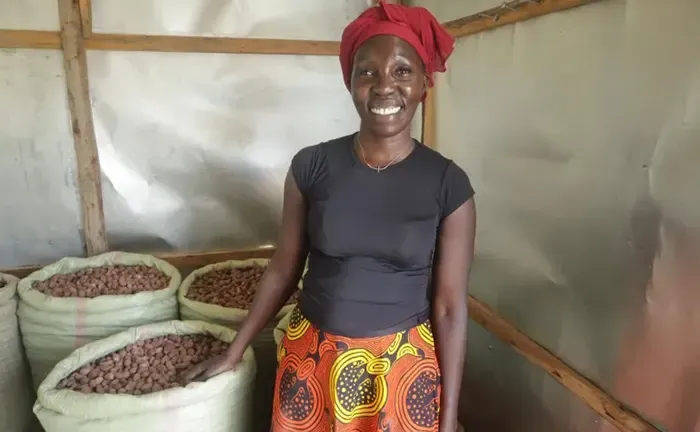
Lucy Everlyn Atim worked for six years as a child-rights worker in refugee camps in South Sudan. When she returned to her own country, she found that the shea tree tied to her childhood memories was gone. Known locally as “moyao,” the tree had coloured Atim’s childhood — she and her friends would eat its sweet, creamy fruit on their way to school. But it was not only her favourite tree: countless such shea trees have been cut down for charcoal across northern Uganda, Al Jazeera reported online.
The climate activist, who is in her thirties, told Al Jazeera the destruction of the shea trees was deeply worrying. The trees had to be protected, she said, but people also needed alternative sources of fuel. Every year, charcoal production and tree-felling wipe out an estimated 1,22,000 hectares of forest in Uganda, and with about 90 percent of households relying on charcoal for cooking, native species such as shea and Afzelia africana are vanishing fast.
A study by Makerere University found that the number of shea trees on fallow land, which stood at 20 in 2008, had fallen to between 10 and 15 by 2017. Accurate figures for the decline are hard to obtain, because charcoal producers uproot the trees, roots and all, leaving no stump to count.
While working in South Sudan, Atim had met a woman who made fuel briquettes from discarded shea husks. Inspired by the idea, she founded a social enterprise called the Moyao Africa Initiative in 2023. Alongside turning shea waste into fuel briquettes, the organisation helps women earn a living by making shea butter.
The briquettes are made by grinding dried shea husks, mixing them with clay and cassava flour into a paste, and drying it in the sun. Catherine Akello, 47, a mother of five, said she used to make butter only from shea seeds and throw the husks away; now she makes briquettes from those husks herself, freeing her from having to buy charcoal for cooking, while her group saves the proceeds of sales to help families in emergencies.
Demand for the fuel has risen sharply, but production remains limited by the seasonal shea harvest. To solve this, Atim is saving to buy a crusher and briquette-making machine worth about $530, which would keep production running all year round. Renewable-energy expert Bosco Odyek told Al Jazeera that turning shea husks into briquettes was an excellent use of waste and a realistic alternative to charcoal.
But humanitarian and development expert Paul Murishia believes clean fuel is still out of reach for rural households, and that the government should support local organisations such as Atim’s. Beyond producing fuel, Atim’s organisation runs environment clubs in 20 schools and works to restore nature by distributing saplings.
বাংলায় মূল প্রতিবেদন পড়ুন · Read the original Bengali report