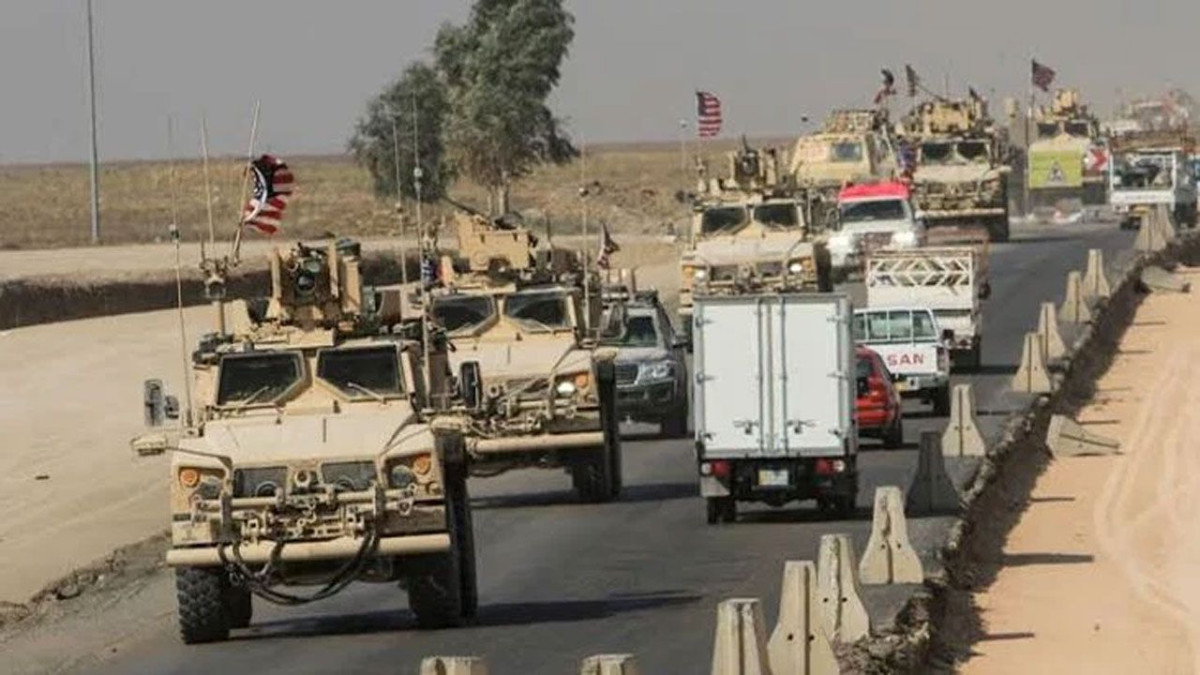
The US-led coalition deployed to Iraq more than a decade ago to fight armed groups ended its mission on Wednesday (September 30). Iraq’s leaders and President Donald Trump welcomed the move, but it is feared that pro-Iran armed groups could grow stronger as a result.
Coalition troops were deployed to Iraq and Syria in 2014 to fight the Islamic State (IS) group. IS was defeated in Iraq in 2017 and in Syria in 2019, but coalition troops stayed on to fight its remnants. In 2024, the United States and Iraq agreed to wind down the mission gradually, and the United States withdrew troops from various bases in phases until its presence was limited to the autonomous northern Kurdistan region.
“This day is a victory for the United States, a victory for Iraq and a clear victory over IS,” Trump said in a post. “I had a choice between staying there or leaving. And without question, I felt it was time for America to come home.”
‘Sovereignty’
The US-led coalition did not defeat IS alone. Kurdish Peshmerga fighters played an important role, as did several powerful Iraqi groups, including some close to Iran, some of which have still not surrendered their weapons.
The Iraqi government believes that with the coalition’s withdrawal, Iran-backed groups will lose the pretext they have used to keep their arsenals. But many fear the US withdrawal could strengthen pro-Iran groups and draw the country deeper into the Middle East war.
Hours after the United States announced the completion of the withdrawal, supporters of these groups gathered to celebrate at a venue decorated with flags, where speeches were made from a stage adorned with model drones. Jafar al-Husseini, military spokesman for Kataib Hezbollah, said the groups had been in talks about bringing their weapons “under control” but had “not yet received any response from the Iraqi government”. As a result, they are “not bound by any deadline or agreement” on surrendering weapons and have “the right to respond directly to any US or Israeli action that violates” Iraq’s sovereignty, he said.
“A new phase has begun. This phase will be defined by Iraq’s sovereignty, the strength of its institutions and the readiness of the country’s forces,” said Iraqi Prime Minister Ali al-Zaidi.
Attacks have increased
Zaidi, who came to power this year with US backing, has pledged to make armed groups hand over their weapons. His government had set a September 30 deadline for the groups to disarm, but later withdrew it as talks on bringing weapons under control continued.
Kurdish military commander Sirwan Barzani voiced concern about the withdrawal, saying: “We have no system to protect Kurdistan’s skies.” But he told AFP that the Peshmerga are ready to face any threat and that their capabilities have “increased significantly” thanks to coalition training, support and weapons. Kurdish leader Masoud Barzani also said on Wednesday that there is “very good coordination with Iraq’s central government to face any kind of threat”.
With some Iran-backed groups refusing to disarm, senior politicians are now trying to reach a compromise. The groups’ conditions include not only the withdrawal of foreign troops but also an end to US political and economic interference. Kataib Hezbollah said the withdrawal of “occupation forces” was “a beginning on the path to full sovereignty”, but also threatened Zaidi’s government, saying: “A government that does not work for the people’s welfare will be overthrown by all possible means.”
Pro-Iran groups have long demanded the withdrawal of US troops and have attacked them with drones and missiles, prompting US retaliatory strikes that have killed several of the groups’ commanders over the years. During the Middle East war that began with US and Israeli strikes on Iran, Tehran and its allied groups stepped up attacks in Iraq, targeting US-led coalition troops in the Kurdistan region.
বাংলায় মূল প্রতিবেদন পড়ুন · Read the original Bengali report