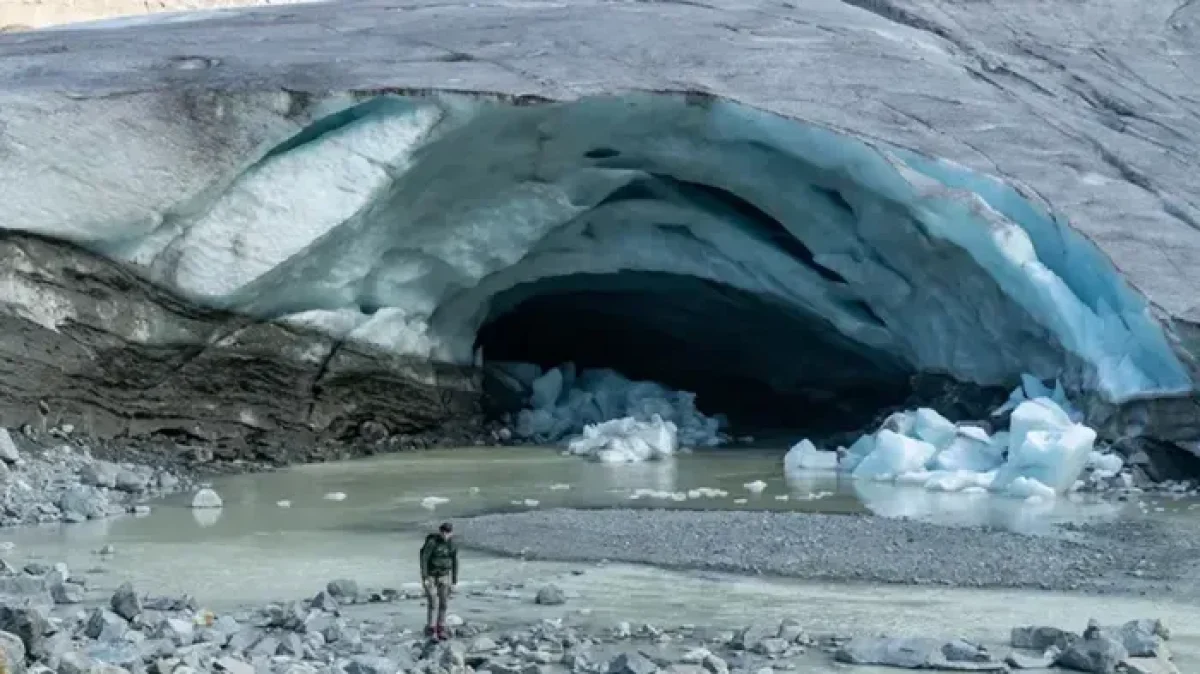
Heatwaves have caused Switzerland’s glaciers to melt rapidly in 2026, at the second-highest rate on record. More than 5.5 percent of the country’s glacier ice has vanished in the past 12 months alone.
Scientists say climate change has made the rate of melting alarming, and it could cause severe shortages of fresh water for agriculture, hydropower and shipping in Europe in the coming decades, the BBC reported.
According to new data from the Swiss glacier monitoring network, after low winter snowfall, early heatwaves in May and June left the glaciers exposed. Because bare ice absorbs more of the sun’s heat than fresh snow, melting then sped up several times over. Only a few years ago, an annual loss of 2 percent in the Alps was considered “extreme”, but this year it has exceeded 5.5 percent. Dr Matthias Huss, director of Swiss glacier monitoring, called it “catastrophic”.
Scientists say Swiss glaciers released about 2.2 trillion litres of meltwater from July to September this year. While it helped ease water shortages this season, in the long run it is depleting Europe’s water reserves. “The water melting in heatwaves is essentially an ancient store built up over hundreds of years. As glaciers shrink, that supply will no longer be there in future droughts,” Huss warned.
Record low water levels are already severely disrupting cargo shipping on the vital Rhine and raising transport costs. More worrying still, even monitoring stations at 3,500 metres above sea level had no fresh snow left at the end of summer, where several metres of winter snow would normally remain and later turn into new ice; instead, up to four metres of ice was lost. Scientists say the Alps’ familiar glaciers are vanishing before people’s eyes like a block of ice taken out of a freezer, and climate experts are calling for rapid cuts in fossil fuel emissions before the crisis spreads beyond Europe.
বাংলায় মূল প্রতিবেদন পড়ুন · Read the original Bengali report