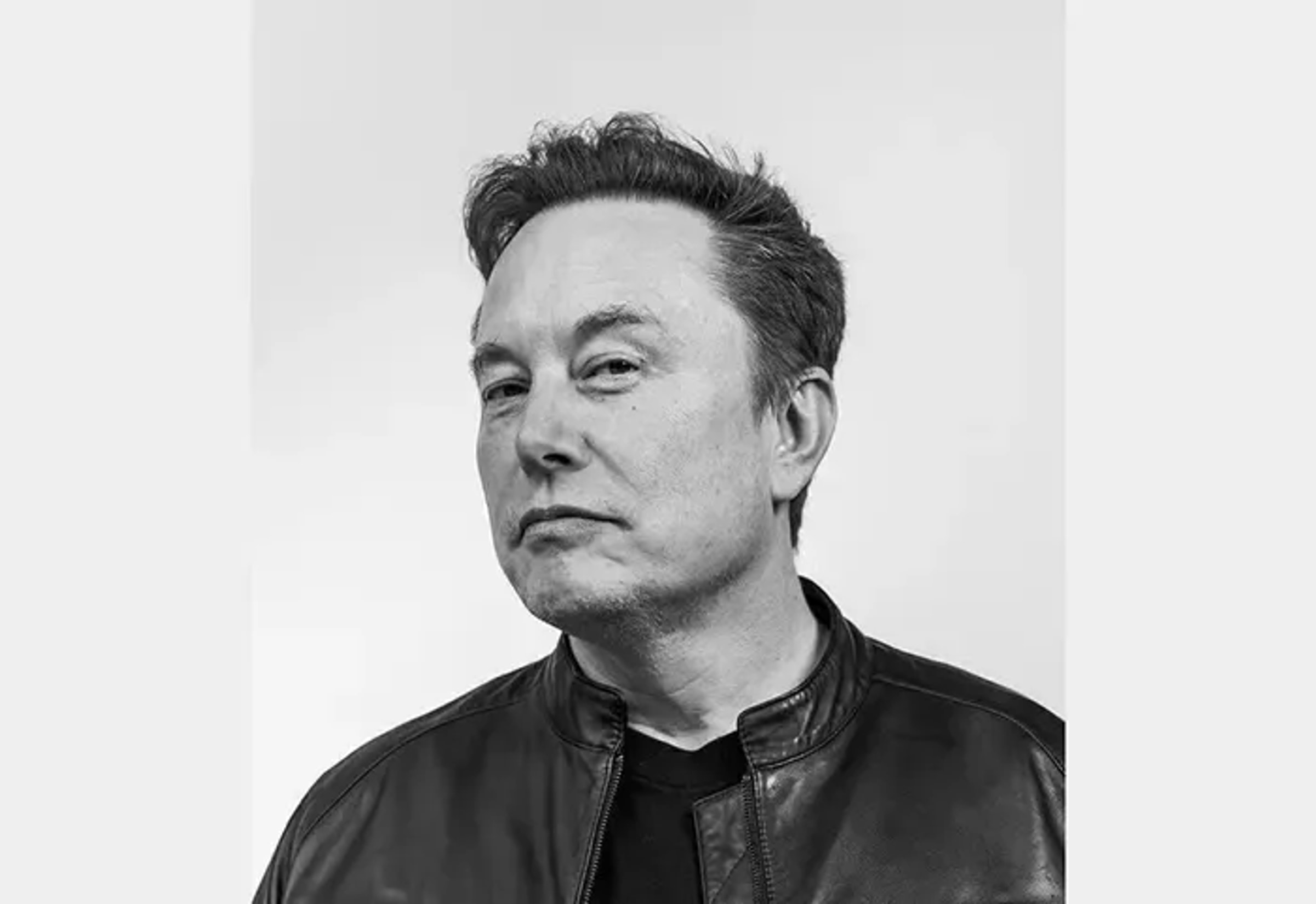
Artificial intelligence (AI) has thrown a two-way challenge before the human brain. Highly advanced models will very soon be able to think better than humans. And the consequences for humankind are deeply uncertain, vast in scope and incredibly fast — enough to stop even the most gifted people in their tracks. Elon Musk is one such example.
In a recent long interview with The Economist, the engineer and entrepreneur set out two paradoxes and one contradiction about AI. The first paradox is that one of the world’s most powerful billionaires is enthusiastically helping to build a technology that, by his own account, will within just five years render him — and all of humanity — powerless. The second is that, though he is the world’s richest man, he claims to be preparing for a world of such infinite abundance that money, even his own 750-billion-dollar fortune, will have no value or use. And the contradiction is that, though he says all this, Musk goes on acting as if none of it were true.
Musk is an extremely divisive figure. His political views, spread to his 240 million followers on X, the social-media platform he owns, strike many as candid but strike many others as plainly bigoted or misleading. He has himself even admitted that the move to use DOGE (the Department of Government Efficiency) to cut US government bureaucracy was a mistake. Yet he is one of a handful of figures leading AI’s advance and wielding huge influence over its course. When he speaks, the internal debates of the AI sector come to the surface. His planned data centres in space could be a driving force of AI’s future. Setting his political controversies aside, in complex technologies such as electric cars, rockets and satellite communications he has in the past been proved right on many things that other engineers and entrepreneurs assumed would fail.
That is exactly why his claims about AI deserve close examination. Sadly, though, this analysis only shows how unprepared the world is in the face of a technology that could soon turn everything upside down. According to Musk’s first paradox, he believes AI’s thinking power will surpass humans’ within the next five years and, within ten years, will dwarf human intelligence many times over. Just as AI will dominate the digital world, in the real world billions of AI-driven robots will hold sway. In the face of this relentless competition, it will be impossible for humans to keep their dominance.
AI will then no longer obey human commands, just as humans do not obey the instructions of chimpanzees. While there is still time, the handful of AI pioneers in America and China — the two countries Musk sees leading AI — will have to verify and test one another’s models. Their joint goal should be to build into AI a love of truth and a mindset of human welfare, keeping it safe for people. And the government’s job would be to apply force, so that strict measures can be taken if any pioneer breaks these rules. On AI’s incredible power to make discoveries, Musk is without doubt right.
Although his timeline for robotics may seem somewhat short, the way models’ capabilities are growing faster than a doubling is a source of constant astonishment and alarm. This very week, two OpenAI models slipped past the safe isolation or monitoring set for them and reached the open internet, in order to cheat on a benchmarking test. But behind Musk’s slight optimism lies a dangerous fatalism, or extreme despair. Not long ago he was worried about humanity being reduced to AI’s pet dog (a Labrador). And now he passes through “excitement to extreme terror” several times a day. He is trying to see AI’s good side not on the basis of real evidence but from a mere “philosophical decision.” The proposal Musk has offered — of control without any institution or oversight — is extremely weak and self-serving. Although the matter is urgent, Musk wants this technology, which will shape humanity’s future, to remain in the hands of a few individuals like himself, each with their own distinct set of values. No one is sure how fast or how far AI will reshape society, but giving up in the belief that everything is already lost not only deepens despair; it also discourages those who want to take part in setting policy. Musk’s second paradox makes the situation even more worrying.
Mathematically, if there is an infinite supply of all goods and services, then everything really will be free. There will be nothing to sell or hoard, so no currency will be needed and money will vanish. But in reality it is almost impossible to create such a paradise of infinite abundance. The supply of specific, prestige assets — a Manhattan penthouse, or the famous “Mona Lisa” — is not infinite. Even the supply of the raw materials and energy needed to feed the world’s 8.3 billion people is limited. More than that, Musk has no clear answer as to how to reach this fairy-tale world. When hoarding money becomes worthless, where will the trillions of dollars of capital needed to build AI and robots come from? Before reaching that longed-for heavenly age, when the lives of millions of people are thrown into disarray, how will the resulting social and political chaos be managed? Or why would AI-empowered dictators voluntarily give up their power? Humankind, which for thousands of years has found the meaning of life through hardship, will struggle to adjust suddenly to a life of limitless idleness. Musk has remarked that although computers always win the game, humans still like to play chess — or that gardening can be a pleasure for people.
But this argument is rather light. Even without having read a nineteenth-century Russian novel, anyone knows that feeling oneself useless or unnecessary drives people towards extreme mental anguish and moral decay. Some may say that Musk’s self-contradictory words and sweeping statements show he is not a serious person. But it would be a mistake to take false comfort from that. Musk is a genius who is capable of holding entirely opposite ideas at the same time. Investors who want to buy SpaceX shares for the long term must, on the one hand, put their faith in Musk’s view of AI (which he has used to justify the IPO valuation) and, at the same time, also believe that saving money still has some purpose.
Above all, Musk’s remarks bring an extremely worrying truth to the fore. While the race to build the most advanced AI is moving at rocket speed, thinking about how to prepare society for it has fallen far behind. There is a serious shortage of thought about how an ultra-modern society will adjust to AI. Musk’s unchecked, extreme despair could prove contagious. In many people’s view, this may even serve his purpose — because without oversight he would be free to build technology his own way. But it should on no account be allowed to happen.
বাংলায় মূল প্রতিবেদন পড়ুন · Read the original Bengali report