The body of a climber that has lain under the ice near Everest’s summit for 30 years may finally come home. India’s border force, the ITBP, is looking for a special high-altitude rescue team for the task.
The body lying on Everest is known to climbers as “Green Boots”. For a long time it was thought to be that of Indian climber Tsewang Paljor, who died on Everest in 1996. But searches by rescuers and officials in recent years suggest the body is in fact that of another Indian climber, Dorje Morup.
The body lies at about 8,500 metres on Everest, near the summit, beneath a rocky overhang. Frozen in the ice there year after year, it has become a kind of grim landmark for climbers on the way up.
Three died in a blizzard
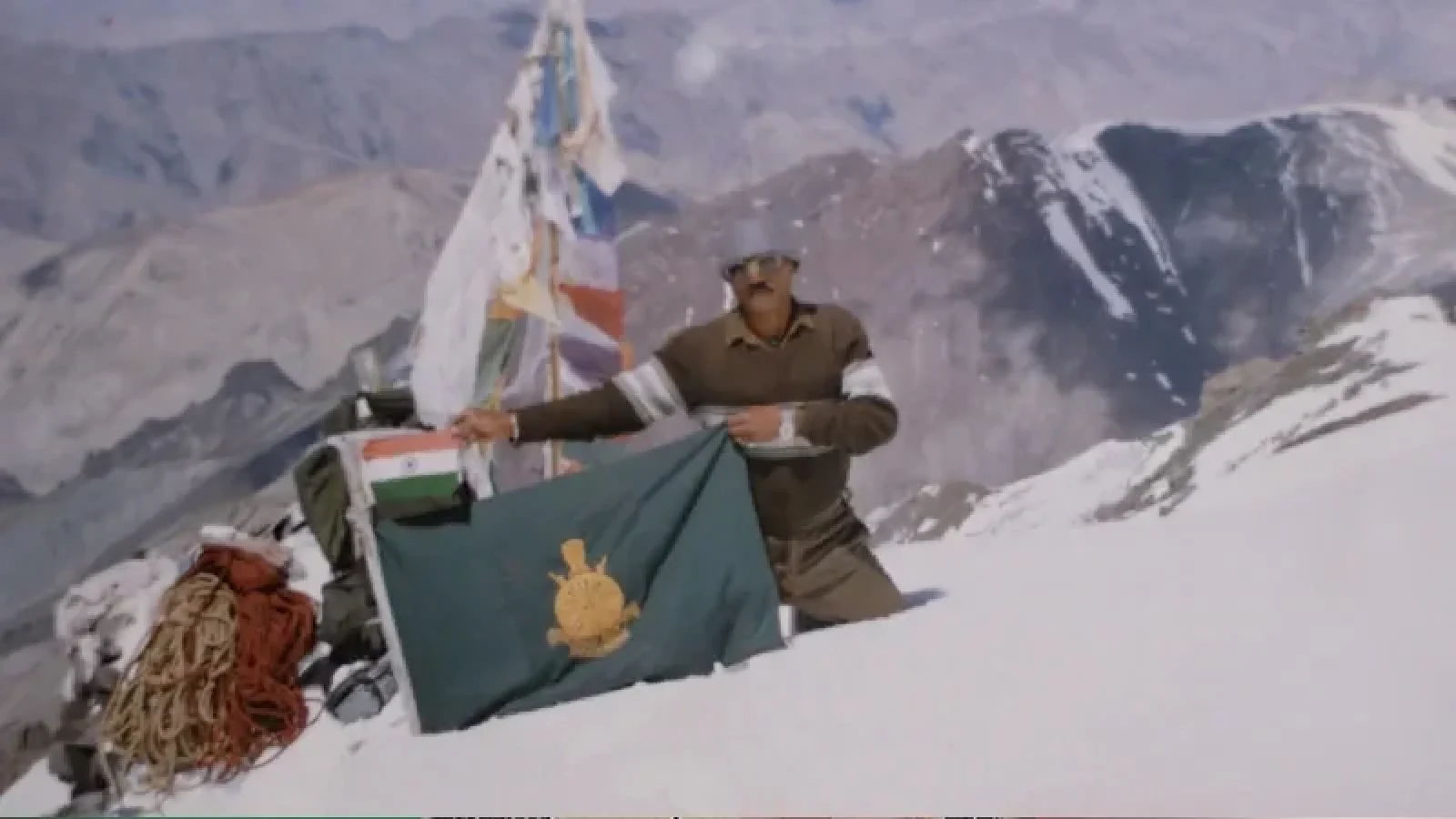
In 1996, Dorje Morup took part in a historic ITBP expedition to climb Everest. The goal was to summit from the Chinese-controlled Tibet side — the first Indian expedition by that route.
Six climbers were on the expedition. Because of a blizzard, three turned back. Morup and his two companions, Tsewang Smanla and Tsewang Paljor, pressed on toward the summit and managed to reach the 8,849-metre peak.
But on the way down, a fierce blizzard struck, killing all three.
More than 300 people have died in the Everest region over the past century. The bodies of many still lie on the mountain. “Green Boots”, believed to be Morup’s body, has lain there for the past 30 years.
How the identity changed
For a long time “Green Boots” was thought to be the body of Tsewang Paljor. But analysing the accounts of survivors of the 1996 expedition and the location of the climbers’ last radio contact, Indian authorities now believe the body is Morup’s.
An ITBP official, speaking on condition of anonymity, told the BBC that in recent years officials had become confident of identifying the body by examining Morup’s clothing and climbing gear.
To confirm the identity, however, a DNA test will be done after the body is brought back to India.
How hard the recovery is
Recovering a body from Everest is an extremely risky task. The area where Morup’s body lies is what climbers call the “death zone”. Temperatures there can drop to minus 40 degrees Celsius, and oxygen is only about a third of that at sea level.
Prominent Nepali climber Tshering Jangbu Sherpa said weather and snow conditions would be the most important factors for a recovery mission. Although Everest’s north side has relatively fewer crevasses, there is no way to evacuate quickly by helicopter if an accident happens there.
Climbing guide Pemba Ongchu Sherpa said bringing the body down is extremely difficult even in the popular spring season, potentially requiring 10 to 12 climbers capable of reaching the summit.
The body must be brought down from such a height to a place a helicopter can reach. In some cases yaks may be used. A body frozen in ice can become several times heavier than an ordinary person, and once brought down to lower altitude it may start to thaw and decompose.
Indian climber Kuntal Joisher said the first thousand metres or so of bringing the body down could be the hardest. He warned that lowering the body down steep, rocky paths could put the lives of the rescuing Sherpas at risk.
Such recovery missions also need a great deal of money. Experts say even a relatively easy recovery can cost between $40,000 and $80,000.
Aiming to return the body in September
The ITBP is funding the recovery of Dorje Morup’s body. The force wants to complete the mission by this September, and is looking for a Sherpa team experienced in high-altitude body recovery.
After the body is brought back to India, a DNA test will be done. If the identity is confirmed as Morup’s, his body will be handed to the family.
‘I did not believe he had died’
For Morup’s wife, Konchok Yangskit, accepting the news of her husband’s death was not so easy, because she never saw his body.
The night before he left for the Everest expedition, Morup had told his wife he would return a hero and a source of national pride. He had asked her to take care of the children and to go to the airport when he returned home.
Yangskit said she had received news of the storm on the mountain during the expedition. Funeral prayers for her husband were even held at home. But her heart never wanted to believe that Morup had died.
In her words: “I did not see his body. So it was hard to believe.”
The family now has a few of his photographs, medals and awards, and a certificate given by the Chinese government. That certificate states that Morup reached Everest’s summit at 5:30pm on 10 May 1996.
Morup’s son, Panchok Dorjai, said that if the body can be recovered, his father’s funeral will be held near Martyrs’ Park in Leh, the capital of Ladakh. He said his father gave his life for the country and should be remembered as a martyr.
But the most important keepsake for the family will be something else. Morup’s son said they plan to preserve the memory of “Green Boots” alongside the Everest summit certificate at their home.
বাংলায় মূল প্রতিবেদন পড়ুন · Read the original Bengali report