A fertilizer shortage that has persisted for several days shows no sign of easing. Farmers are unable to get the fertilizer they need at the field level, leaving them in dire straits and creating repeated setbacks for agricultural production. The ongoing shortage could have a negative impact on this year’s Aman rice harvest — and if production falls short of target, it would deepen the government’s reliance on imports.
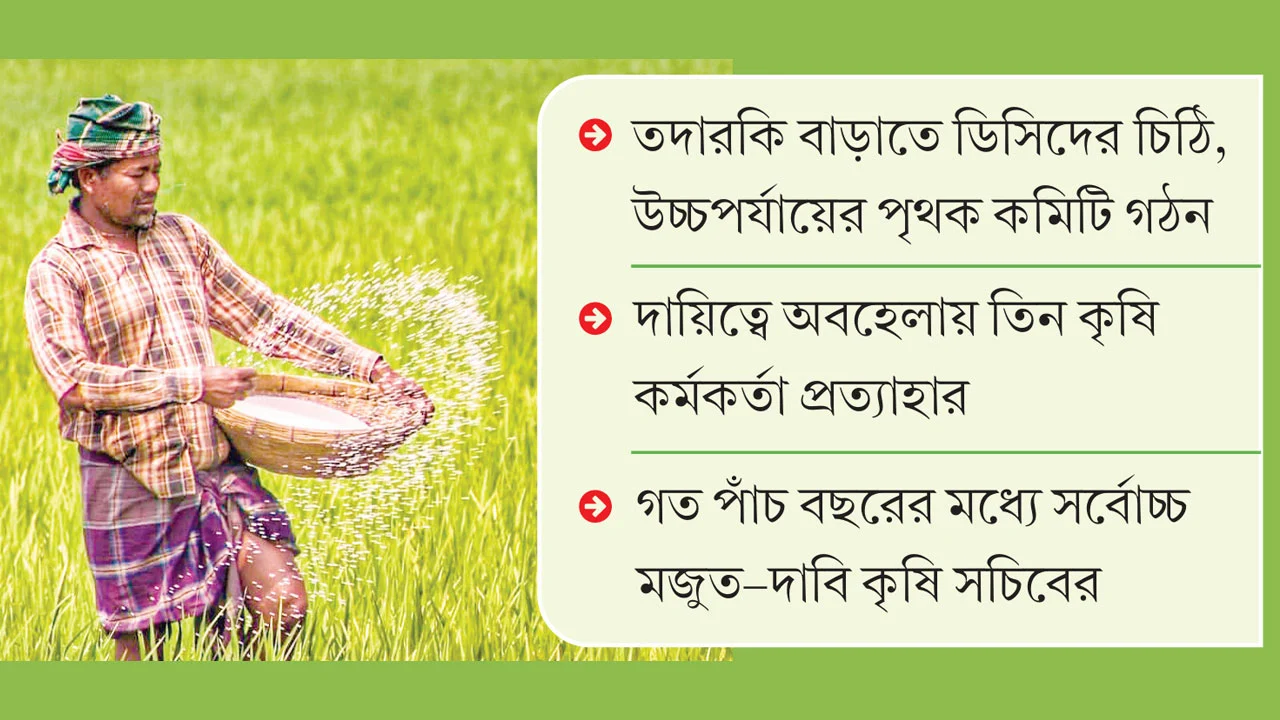
The Ministry of Agriculture issued a directive last Saturday instructing district commissioners (DCs) to step up monitoring to address the fertilizer crisis, and formed another high-level monitoring committee the same day.
Sources say that alongside urea, there is a severe shortage of non-urea fertilizers — TSP and DAP — at the field level. Farmers typically mix one of these two fertilizers with urea to improve soil fertility for transplanted Aman paddy and seedbeds, arguing that doing so boosts crop yields. As a result, they are lining up for TSP and DAP. But the two fertilizers remain unavailable even at higher prices, and farmers themselves fear this could hurt crop production.
Farmer Roknuzzaman, from Aditmari in Kurigram, said TSP and DAP fertilizer remains unavailable even after standing in line. Dealers say they simply aren’t being supplied, he said. Urea currently costs 1,350 taka per bag (27 taka per kilogram), TSP 1,350 taka per bag (27 taka per kilogram), and DAP 1,050 taka per bag (21 taka per kilogram) — but when farmers try to buy, they’re told there’s no stock. Even paying 500 to 700 taka more per bag gets them less than what they need, he said, even though transplanted Aman seedbeds require no fertilizer other than urea.
Asked about the situation, another Kurigram farmer, Alam, alleged that dealers are using the excuse of being unable to supply fertilizer. He said mixing non-urea fertilizer with urea boosts soil fertility and increases crop yield beyond normal levels, and that with TSP and DAP in short supply, farmers are being forced to mix potash-type substances with urea instead.
Azmeri Alam Palash, owner of Mesers Azmeri Traders, a fertilizer dealership, said the government supplies fertilizer early in the month, which can meet farmer demand for about 15 days. After that, a shortage sets in. He said there is currently something of a crisis. Denying allegations of overpricing, he said many customers are known to him personally, and out of that relationship, they buy small amounts of fertilizer daily from him — but some of them, he said, buy fertilizer at the government price and resell it elsewhere at a higher price, which he said is not his responsibility.
Sources connected with the Ministry of Agriculture say transplanted Aman rice and its seedbeds require urea, and that supply of urea is adequate — but TSP and DAP are not needed at this time. Yet farmers are demanding those two fertilizers anyway, driving an uproar over shortages at the field level. They say dealers are responsible for creating this chaotic situation.
The current BNP-led government has introduced a new policy for appointing fertilizer dealers. In response, sources say, some old dealers are creating an artificial fertilizer shortage to destabilize the market and put the government in a difficult position. The situation has been made worse by the involvement of prospective party-backed candidates ahead of the upcoming local government elections.
Agriculturist Sirajul Islam, deputy director of the Rangpur Department of Agricultural Extension, said demand for TSP and DAP typically rises during the rabi season, when demand for urea also remains high. He said fertilizer stocks are adequate, but some dealers are creating an artificial shortage to put the government in a difficult position, destabilizing the market. Fearful farmers are consequently rushing to buy TSP and DAP in advance, he said, and with demand for non-urea fertilizer now outstripping supply, farmers are not getting the fertilizer they expect.
বাংলায় মূল প্রতিবেদন পড়ুন · Read the original Bengali report