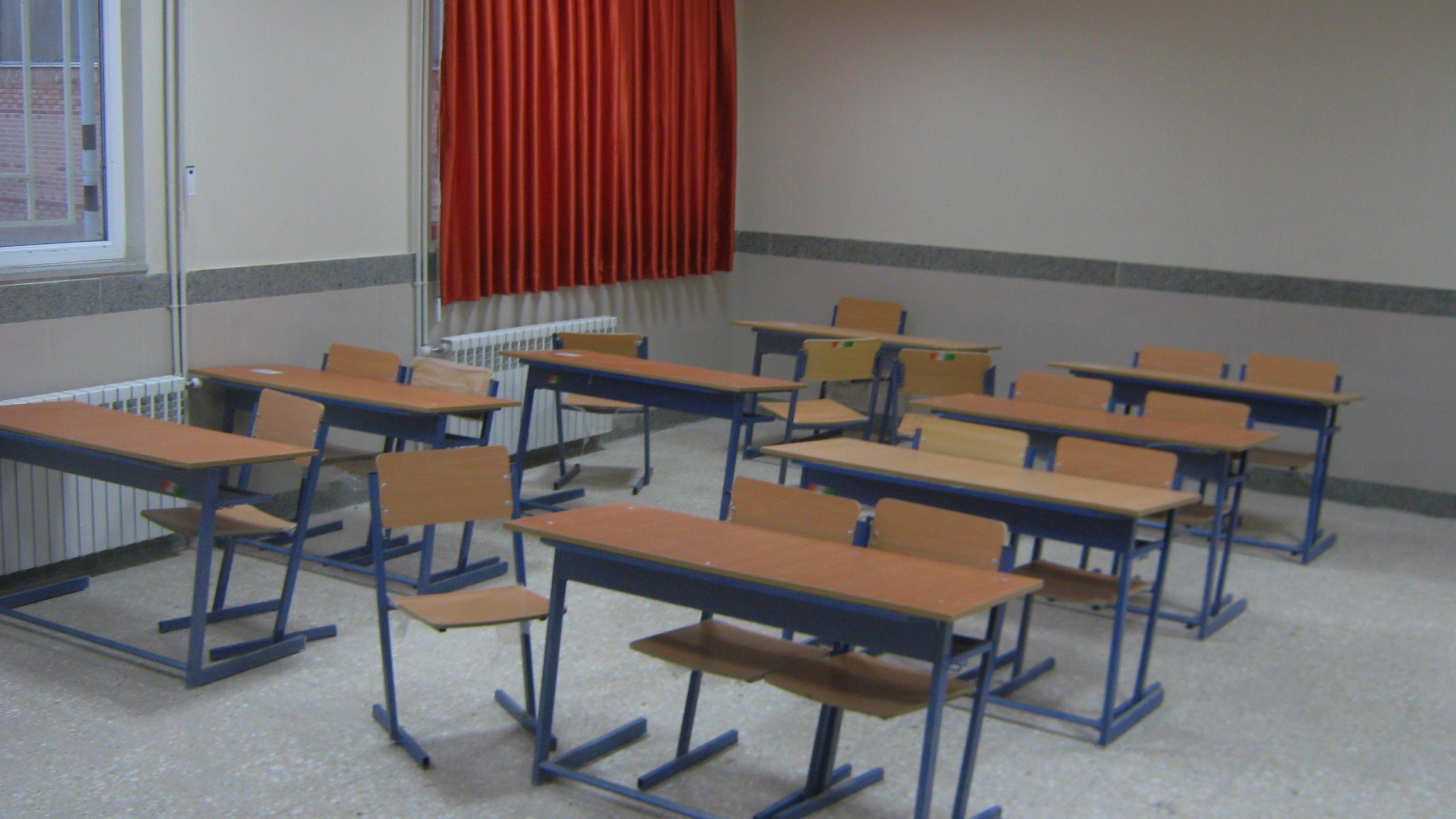
Months after the missile strike on the Shajare Tayyebe primary school in Minab, a small town in southern Iran, teacher Amineh Nademi still cannot forget the horror of that day as she stands among the ruins.
A total of 156 people, including 120 children, were killed in the US-Israeli strike in the early part of the war against Iran. The Minab prosecutor’s office has confirmed the casualty figures.
The school became rubble in moments
Amineh Nademi, 33, said the day’s classes had begun like any other. As it was Ramadan, the pupils first recited the Quran in the prayer room. She then began teaching the first-year girls a new letter of the Persian alphabet. At that very moment the first strikes of the war began in various parts of Iran.
The school authorities announced a closure and parents were asked to collect their children. Amineh said that of her 15 pupils only five were then in the classroom. After hearing a sudden explosion she went back to fetch the children.
“Just as I was coming out, a missile hit the school. My head and the children’s heads were struck. We were all thrown to the ground,” she said.
The whole classroom was then covered in black smoke and it became hard to breathe. A little later the entire building collapsed. “Blood was running from my body and from the children’s,” she said.
When the smoke cleared a little she lowered the injured children down to people below. Making her way out through the rubble to the school gate, she found countless parents who had run there barefoot. Even then she did not realise most people were buried under the debris.
Teachers and many pupils among the dead
Amineh, who had taught at the school for six years, said those killed in the strike included her first-year pupil Adrina, the second-year pupil Fatemeh, several sixth-year pupils, the head teacher, the assistant head teacher, the physical education teacher and the Quran teacher.
What the rescuers found
Reza Basharati, a rescue worker with the Iranian Red Crescent Society, said they reached the site within minutes of the strike. “We thought we might find someone alive. But unfortunately we found no one alive,” he said.
Many bodies were so badly damaged, he said, that only hands, feet or fragments were recovered. Many families identified their children by their shoes or clothes.
“A relative of mine kept saying, find my son. But I could not tell him his son was no longer alive. We were all weeping,” he said.
What the investigation found
After the strike, US President Donald Trump initially blamed Iran for the incident without evidence. US Defence Secretary Pete Hegseth said the incident was being investigated and that US forces never deliberately strike civilian sites.
US media reported, however, that a preliminary inquiry suggested the school had been identified as part of an IRGC military installation because of outdated US Defence Intelligence Agency information.
Video analysis by experts showed that the IRGC complex beside the school was struck with Tomahawk cruise missiles. Satellite imagery also showed evidence of strikes on the school and several neighbouring buildings.
Historical satellite imagery, on the other hand, shows that since 2016 the school had been separated from the IRGC complex by its own wall and had its own entrance and playground. That it was a school was also publicly available online before the strike.
The US Defence Department said the investigation is still under way and no new information has been released.
A nine-year-old identified by her socks
A short distance from the destroyed school is the graveyard where many of the pupils and teachers killed are buried. Masumeh Mehran Sheikhabadi goes there every day. Her nine-year-old daughter Setayesh was killed in the strike.
“There was nothing left that you could call a school. All around there was only smoke, children’s hair, a hand on one side, a leg on the other. Everyone had been torn to pieces,” she said.
Masumeh said her daughter’s death was not confirmed until dawn the next day. Her body was identified by her cream-coloured socks. “Setayesh wanted to be a teacher when she grew up. She would line up her dolls at home and say, ‘I am your teacher,’” she said.
Grief and anger
The Iranian government has raised the strike repeatedly in international forums. An aircraft carrying negotiators was even named “Minab-168,” a reference to the earlier official death toll.
Local people say the strike has caused deep grief and anger among Iranians. Many consider it one of the war’s worst civilian tragedies.
Sitting beside her daughter’s grave, Masumeh said: “What was these children’s crime? Did they have weapons in their hands? In their hands there were only pencils, books, exercise books and school bags. They did not go to fight a war; they only went to learn.”
বাংলায় মূল প্রতিবেদন পড়ুন · Read the original Bengali report