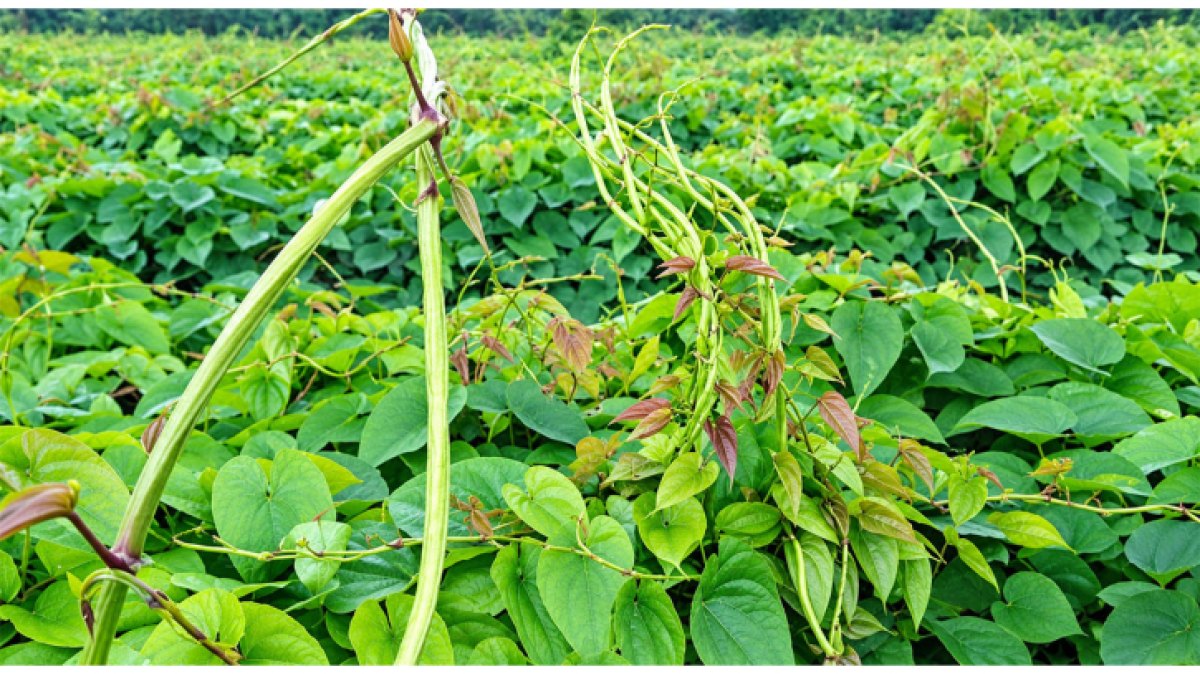
Jashore, one of southwestern Bangladesh’s main vegetable-producing districts, has recorded a bumper harvest of early yam this season. Prices are also high for the tuber crop, which reaches markets before winter. Cultivation has expanded across several upazilas because the crop offers good returns with low costs and relatively little care.
According to the Department of Agricultural Extension in Jashore, vegetables were grown on 6 thousand 665 hectares in the district during the 2026-27 Kharif-2 season. Yam accounted for 680 hectares, up from about 520 hectares last year. The production target is about 18 thousand metric tons. Commercial cultivation is most extensive in Jashore Sadar, Jhikargachha, Chougachha and Sharsha.
Visits to Jashore Baro Bazar and markets in Chougachha, Jhikargachha and Sharsha found early yam selling for Tk 70 to Tk 80 a kg. The price at the same time last year was Tk 45 to Tk 50. Larger yams are selling for as much as Tk 90 a kg.
Kamrul Hasan, a wholesale vegetable trader at Jashore Baro Bazar, said customers buy the crop as soon as early yam reaches the market. Curries made with yam and shrimp or hilsa are popular in the region, he said. Hasan is now selling 1 to 2 maunds a day and expects prices to ease as winter advances.
Higher profit at lower cost
Abdul Majid, a farmer from Churamonkati village in Jashore Sadar Upazila, has cultivated yam for three years. This year he planted it on 40 decimals of land. He said cultivating one bigha costs Tk 12 thousand to Tk 15 thousand, mainly for seed, bamboo trellises and organic fertilizer, with no pesticide needed. A bigha yields 40 to 50 maunds, and early sales can leave more than Tk 1 lakh, he said.
Majid said another advantage was that cattle and goats do not eat the crop. The aerial tubers hang from trellises and are less likely to rot, while tubers weighing 5 to 10 kg also grow underground, providing returns both above and below ground.
Amir Hossain, a farmer from Phulsara village in Chougachha, has profited by growing yam on unused land in the homestead. Hossain planted 20 vines on 10 decimals and said the crop requires little fertilizer or water when planted during the monsoon. Last year the farmer sold Tk 15 thousand worth of yams and expects a larger return this year.
Rich in nutrients
Tanvir Islam, a professor in the Department of Food and Nutrition Science at Jashore University of Science and Technology, said yam contains carbohydrates, fiber, potassium, calcium and antioxidants. It is easily digested, can provide energy and may be eaten in moderation by people with diabetes, he said.
However, specific claims about the crop’s nutritional value and role in preventing disease require separate scientific verification and context.
Efforts to expand cultivation
Abul Hasan, acting deputy director of the Department of Agricultural Extension in Jashore, said local soil is suitable for yam cultivation, with particularly good yields on high ground and sandy loam. The department is providing improved seed varieties and encouraging farmers to use trellises.
Hasan said yam is profitable and that seed planted once can be reused in later years. The department wants every homestead to have at least two or three yam vines, which could improve both household nutrition and income, he said.
People involved in the sector say better storage and processing facilities could further expand the yam market. Demand for Jashore-grown yam has already developed in Dhaka and other cities across Bangladesh.
বাংলায় মূল প্রতিবেদন পড়ুন · Read the original Bengali report