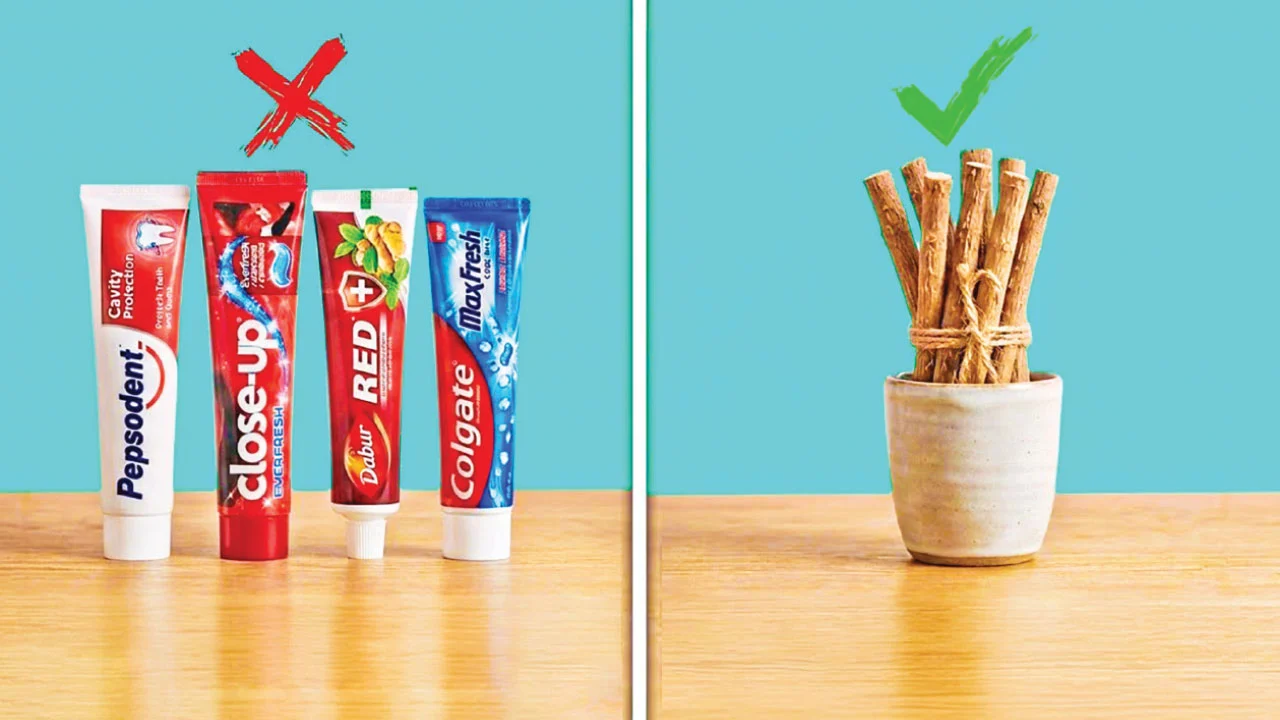
A recent study by the Environment and Social Development Organization (ESDO) found microplastic particles in 76.5 percent of toothpaste products tested. The particles are used for cleaning and polishing teeth, and the finding prompted questions about which products to use.
Islamic tradition has promoted the miswak, a teeth-cleaning twig, for about 1,450 years. Muslims regard its use as a Sunnah taught by Prophet Muhammad, peace be upon him, and as a practice with religious and hygienic value.
A hadith quotes the Prophet as saying, “Were it not that it would be difficult for my ummah, I would have ordered them to use the miswak at every prayer.” The article cites Sunan an-Nasa’i, hadith 7.
The source interprets the hadith as showing the importance of the practice, saying it was not made obligatory out of consideration for believers. It lists the following faith-based and traditional virtues associated with regular use:
1. Earning the pleasure of Allah.
2. Removing bad breath and strengthening the teeth.
3. Relieving headaches and coughs, supporting the stomach and strengthening the body.
4. Improving eyesight, memory and knowledge.
5. Purifying the heart and enhancing beauty.
6. Being greeted by angels, honored when going to prayer and receiving prayers for forgiveness from the angels who carry the Throne after prayer.
7. Displeasing Satan, crossing the Sirat as quickly as lightning and receiving one’s record of deeds in the right hand.
8. Gaining strength in worship, being able to recite the declaration of faith at death, having the gates of Paradise opened and the gates of Hell closed, and leaving the world in a state of purity.
The article attributes this list to Maraqi al-Falah, page 54, and says hadith literature describes other virtues of using the miswak.
Health claims in the source
The article discusses gingivitis, dental caries and pyorrhea. It says gingivitis can cause bleeding gums, decay and odor; dental caries erodes teeth; and pyorrhea can cause swollen, bleeding gums.
It claims that miswak alone can eliminate those conditions, but it does not cite clinical evidence for that assertion. It also says using a tree twig is the Sunnah, rather than using a toothbrush.
The article says dentists may advise gentle pressure on swollen gums and argues that a miswak provides more effective pressure and cleaning than a brush. It concludes by urging Muslims to use the miswak regularly and revive the Sunnah.
বাংলায় মূল প্রতিবেদন পড়ুন · Read the original Bengali report