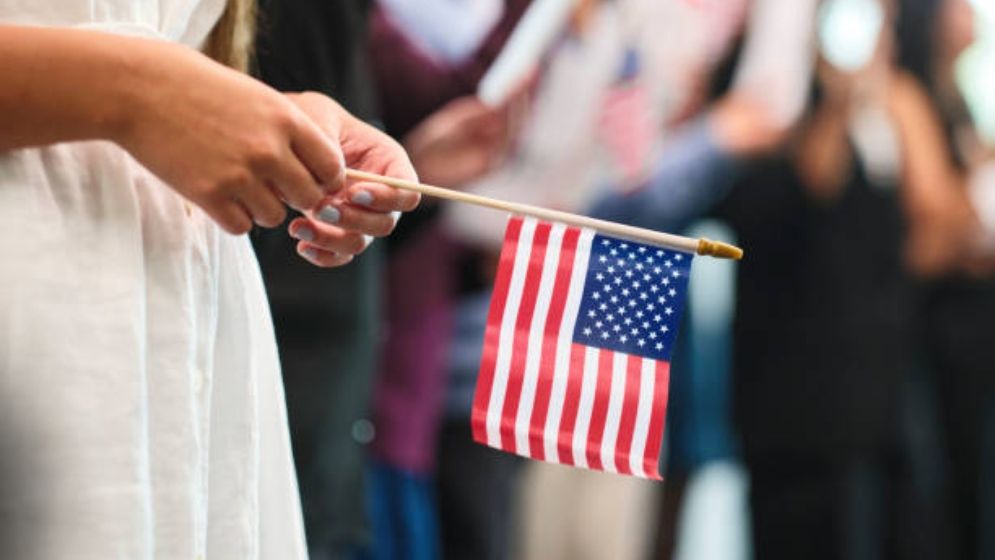
When Erin Klatt moved to New Zealand on a working-holiday visa 10 years ago, she realised within six months that she wanted to make the country her permanent home. For a mix of personal and political reasons, she left the United States in 2016 in the hope of living ‘in a different environment.’
A decade on, Klatt, 34, has formally severed all ties with the United States. Just before the US State Department cut the official renunciation fee by about 80 percent, she paid $2,350 to take the oath renouncing her US citizenship. She had firmly decided to give up her US passport after obtaining New Zealand citizenship in May 2015. The country’s political direction under Donald Trump and the tax burden on US citizens living abroad were the two reasons that made renouncing feel like the most natural decision to her.
Thousands of Americans like Klatt renounce their citizenship every year, though accurate annual figures are hard to obtain from the US government. Neither the State Department nor the IRS publishes a definitive annual tally.
According to an organisation called Americans Overseas, 4,889 Americans renounced their citizenship in 2025, the highest number since 2020. The group estimates the figure will rise a further 15 percent in 2026. Around 40,000 dual-national Americans in Europe and elsewhere are currently seeking the organisation’s advice on the renunciation process or related information.
The biggest single reason behind the rush is US tax law. Under FATCA, the United States taxes its citizens on income earned anywhere in the world and requires them to file returns. Only two countries impose such rules — the United States and Eritrea, in East Africa. Because of the law, European banks often refuse to open accounts or lend to US citizens, making everyday life difficult for expatriates. The tax burden is especially nightmarish for so-called ‘accidental Americans’ — people born in the United States who never lived or worked there.
Beyond financial and political factors, an ‘identity crisis’ is a major reason for many. Take Caroline Ciricella, who lives in Italy. Though she considers herself a proud American, she is now thinking of giving up her US citizenship. Her children and husband are Italian, and her whole life now revolves around Italy.
According to Caroline, dual citizenship means she can think of herself as neither fully Italian nor fully American. To escape that limbo, she is considering keeping only her Italian passport.
বাংলায় মূল প্রতিবেদন পড়ুন · Read the original Bengali report