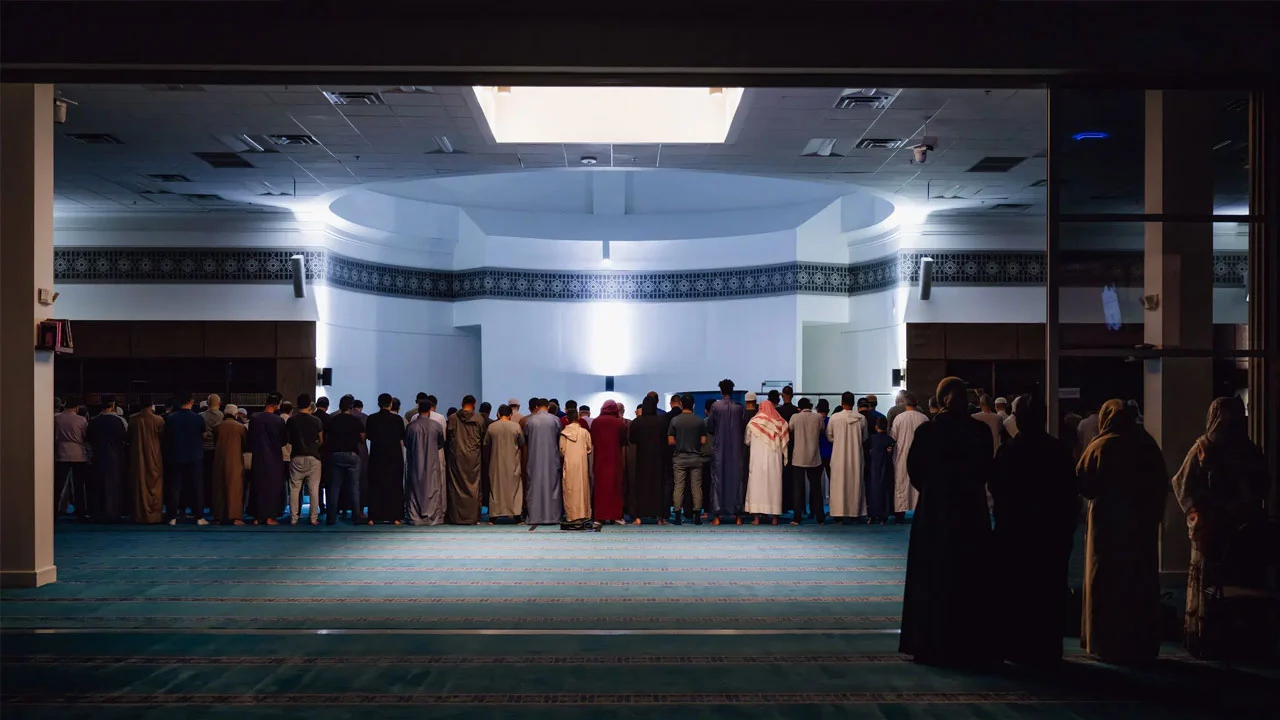
For decades, Texas’s Muslim community has been growing, particularly around Dallas. Good schools, relatively affordable housing, and a strong Muslim community have drawn Muslim families to the area from across the country. Dozens of mosques and Islamic institutions have sprung up in the Dallas-Fort Worth area. But as the Muslim community has expanded, anti-Islam rhetoric, social hostility, and political campaigning have intensified in the state as well.
US outlet The New York Times reported the news Wednesday.
In early June, Ghulam Kehar woke before dawn. After offering the day’s first prayer at his local mosque, the Valley Ranch Islamic Center in Irving, Texas, he was set to leave for several months of duty with the US Coast Guard.
He had deployed before. But this time felt different. He was anxious about leaving his wife and four children behind in Texas.
Anti-Muslim rhetoric from Texas’s top leaders had grown sharper at the time, and its effects seemed to be spreading among ordinary people as well. Worshippers and religious leaders at various mosques were sharing experiences of vulgar remarks directed at them while praying in public or sitting in parks.
In recent months, a man was arrested on charges of making terrorist threats against a major Islamic center in Houston. In the city of Conroe, a woman told Muslim customers they were “not welcome in this state or this country.” After video of the remark spread widely, the woman lost her job. She later received roughly $250,000 from supporters.
During a heated city council hearing over a mosque expansion in the Dallas suburb of McKinney, a woman slipped a note with an anti-Islam message into a former mayor’s shirt.
“It was somewhat worrying to leave them alone in an environment like that,” Kehar said of his family. “What was being said out there was frightening.”
He later arranged for his family to join him as quickly as possible at his posting.
Like Kehar, the number of Muslims who have settled in Texas has grown over the past few decades. Institutions such as the “DeSoto House of Peace,” south of Dallas, are also emerging as new centers of the Muslim community.
“This is the best place for American Muslims to live,” said Tammam Alwan, who moved to Irving from Detroit. “I prayed: ‘God, send me to Irving.'”
But as the Muslim community has grown, so has resentment against it.
Promising to counter “radical Islam” has long been part of Republican politics. That rhetoric has also intensified at the national level, becoming more pronounced alongside major election wins by Muslim politicians and growing Muslim political visibility.
Texas politicians, however, have not confined themselves to rhetoric alone. They have also used state power against certain Muslim institutions and groups.
A key turning point came in early 2025. Fierce opposition erupted after members of the Islamic Center of East Plano, or EPIC, unveiled plans for a mosque-centered residential and commercial development on roughly 400 acres of land east of Dallas. The project was named EPIC City. It was later renamed “The Meadow.” The project envisions more than 1,000 homes along with a mosque, school, shops, healthcare facilities, and recreational amenities.
Anti-Islam influencer Amy Mekelburg launched a social media campaign against the project. She warned that Texas barbecue restaurants were being replaced by “Arab shopping plazas” as part of a coordinated “takeover.” Of EPIC City, she wrote: “This is how the Western world falls.”
Her campaign drew the attention of Texas Governor Greg Abbott. Abbott subsequently launched a state investigation into the proposed project and the Muslim institutions connected to it. Attorney General Ken Paxton also opened an investigation into the project.
Critics of the project have portrayed it as “Sharia-controlled” or a separate enclave for Muslims, but the project’s developers say it is open to people of all faiths and backgrounds.
Anti-Sharia propaganda at the Republican convention
The spread of anti-Muslim rhetoric was also evident at the Texas Republican Party’s convention.
At the Texas State Republican Convention held in June, keeping Texas “Sharia-free” became a prominent political slogan. Multiple panels warned of Muslim “aggression,” and banning Sharia law was presented as a key legislative priority. Governor Greg Abbott also called for a ban on Sharia law at the convention.
The convention venue included a booth for the Texas House’s new “Sharia-Free Caucus.” Amy Mekelburg’s organization also campaigned there.
One woman held a placard reading: “Don’t let my Texas be ruled by Sharia law. Protect freedom. Protect Texas.”
Meanwhile, state-level Republican candidate Beau French wrote on social media: “I will not stop until every Muslim is gone.”
Anti-Sharia politics since 2015
Political controversy over Muslims in Texas is, however, nothing new. In 2015, then-Irving Mayor Beth Van Duyne drew national attention with her fierce criticism of Sharia law. She is now a member of Congress.
Two years later, Texas Republicans passed anti-Sharia legislation as part of a package of bills promoted by the Washington-based hard-right think tank the Center for Security Policy.
For a time after that, the issue of Islam lost some prominence in hard-right politics, with immigration, the pandemic, and gender politics taking greater precedence.
But later, a section of the hard right revived a controversial idea: that Islam is not a religion at all, but a political ideology.
It was on this premise that the renewed campaign against EPIC City began.
Political pressure on Muslims
According to Republican political consultant Anthony Holm, Republican voters’ anxiety about Islam is largely an extension of their fears over illegal immigration. Explaining Governor Abbott’s various actions, he said: “Whatever he does is driven by opinion polls.”
Abbott has also threatened to cut off state funding for Texas airports that provide facilities for Muslim travelers’ religious ablutions. He has also ordered the cancellation of a private water park event organized for a Muslim religious festival.
At the same time, Abbott designated the national civil rights organization the Council on American-Islamic Relations (CAIR) a terrorist organization. The organization has challenged that decision in court.
Muslim leaders allege that, alongside targeting CAIR, other Islamic institutions are also being subjected to political pressure.
বাংলায় মূল প্রতিবেদন পড়ুন · Read the original Bengali report