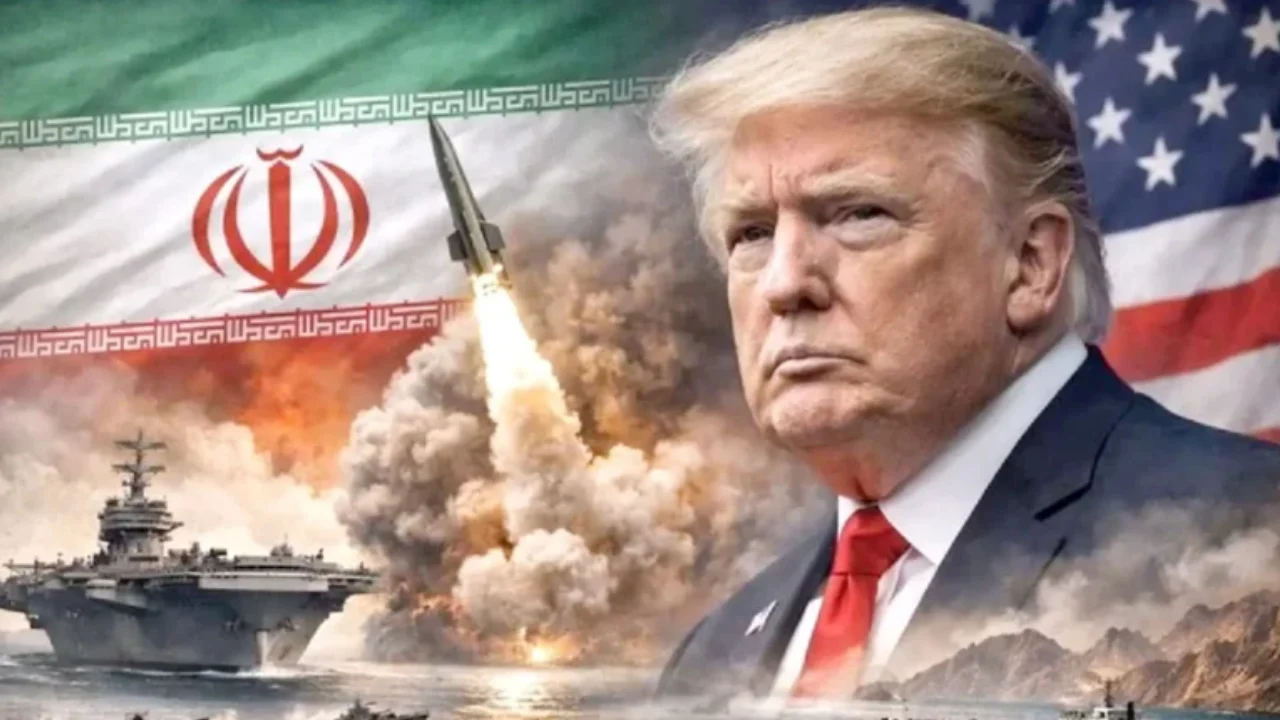
No country, when it starts a war, thinks the war will go on forever. But since the Vietnam War, many US presidents have been drawn into wars that dragged on for years, until a later president, unable to bear the cost and political pressure, declared victory and brought the troops home. According to critics, President Donald Trump too could find himself in the same situation in the case of Iran.
During his election campaign, Trump said he would not start new wars but would end them, and that he particularly did not want to get drawn into a long war in the Middle East. But now his own policy could lead him into a prolonged war with Iran.
Israel and the United States started the war with powerful strikes. Since then it has proceeded in phases of talks and renewed strikes. But so far they have achieved neither of Trump’s stated goals — regime change in Iran or an end to the country’s nuclear programme. Instead, the war has created a major new problem: the Strait of Hormuz has been rendered virtually inoperable.
With diplomatic talks having failed for now, Trump finds himself back on the battlefield. The ceasefire has collapsed, the Strait of Hormuz is blocked, and the memorandum of understanding he had called a success has fallen apart within a month.
Analyst Ali Vaez said both sides saw the understanding not as a bridge to peace but as another way to continue the war. So, without a plan for lasting peace, this war too could become a “forever war.”
The idea of a ‘forever war’ essentially began after 9/11, when the United States waged long wars in Afghanistan and Iraq. Although those countries’ governments were toppled at first, many years were then spent trying to suppress insurgencies and restore stability. In the end, despite enormous cost and loss of life, no clear success came.
War expert Lawrence D. Freedman said powerful countries often think they will win a war very quickly, but fail to understand the limits of military power, so wars become much longer.
He said that just as with Trump in Iran, so too in Ukraine Russian President Vladimir Putin failed to grasp the limits of his own military power, so they set goals that could not be achieved quickly.
Having a powerful army alone does not win a war. Turning battlefield success into lasting political and diplomatic success requires a clear plan. In Trump’s case the problem is greater, because he does not want to send ground troops and is relying only on air and naval forces.
In the 1991 Gulf War, President George H.W. Bush had a limited goal — driving Saddam Hussein’s forces out of Kuwait — so that war ended quickly. But his son, George W. Bush, later tried to change the government in Iraq, which ultimately only increased Iran’s influence. In Afghanistan too, the attempt to build a new society after removing the Taliban failed, and the Taliban later returned to power.
According to some analysts, Trump believes he wanted to end the US-Iran conflict that has run since the 1979 Iranian revolution and the US hostage crisis.
Vali Nasr, a professor at the Johns Hopkins School of Advanced International Studies, said this US-Iran ‘forever war’ is another phase of a conflict that has sometimes turned hot and at other times seen understandings such as the 2015 nuclear deal — which Trump scrapped in 2018.
Aaron David Miller, a senior fellow at the Carnegie Endowment for International Peace, said that at Israel’s instigation Trump has become deeply entangled in another prolonged war, a conflict also being fought through Iran’s allied groups in Lebanon, Palestine and Yemen.
Trump could still present this war to his supporters as a victory and step away. But instead he is getting more deeply involved, with no clear plan to establish peace. And the US commitment to keeping the Strait of Hormuz open, set against Iran’s determination to maintain control over the waterway, is raising the risk of a long military conflict between the two sides.
This war, however, is not like the wars in Afghanistan or Iraq, where thousands of US troops were stationed for many years, fighting militias and militants opposed to US-backed new governments. In Iran’s case, the United States is essentially fighting a powerful state.
বাংলায় মূল প্রতিবেদন পড়ুন · Read the original Bengali report