In British politics, the seemingly inevitable has finally happened. In the face of long speculation, intense internal party pressure and falling popularity across the country, Prime Minister Keir Starmer has formally resigned.
His resignation has cleared the way for a major change in the leadership of the Labour Party and in the running of the country. The clear frontrunner to be the next resident of Downing Street is the mayor of Greater Manchester, Andy Burnham, who is now seen as almost certain to become Britain’s next prime minister.
Starmer’s departure was not at all unexpected to political analysts. Public support for his government had begun to collapse soon after it took office in July 2024. Voters began to grow angry when the government, confronting economic crises it had skirted during the election campaign, adopted unpopular policies such as raising taxes and cutting public spending to fill the budget deficit.
The final nail in the coffin of his government, however, was driven in February 2026. The decision to appoint Peter Mandelson, the controversial friend of Jeffrey Epstein, as Britain’s ambassador to the United States triggered a storm of fierce criticism across the country. That had a direct impact on the May local elections, in which the Labour Party suffered a historic rout. As a result, around 100 of the party’s MPs, including former health minister Wes Streeting, publicly demanded Starmer’s resignation.
Starmer’s resignation now sets in motion the formal process of electing a new Labour leader. According to prediction and betting markets, Burnham’s chance of becoming prime minister now stands at a record 95 percent. Known as Labour’s ‘King of the North,’ Burnham has recently given a major demonstration of his political strength.
On June 18, he secured a stunning win in the Makerfield by-election. Although the right-wing populist party Reform UK had won this seat outright in the local elections, Burnham defeated them easily in the by-election with 55 percent of the vote. Through this win, he entered Parliament and acquired the legal qualification needed to lead the party.
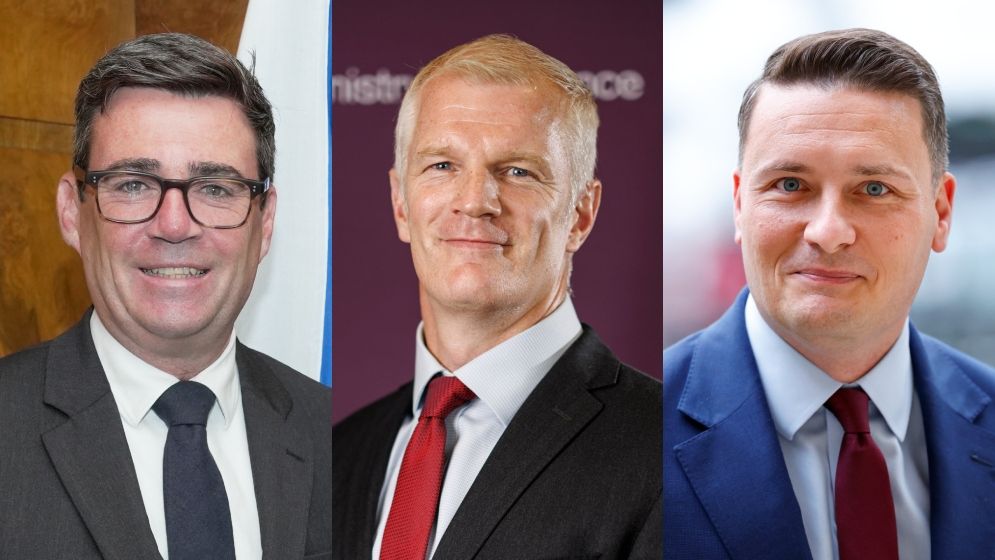
Alongside Burnham, leaders such as Wes Streeting and former armed forces minister Al Carns are also thought likely to enter the leadership contest. But according to analysts, Streeting’s chance of winning is just 3 percent. Under the rules, to become the new leader a candidate must secure the support of at least 81 of Labour’s 403 MPs to be nominated. The final decision then comes through a direct vote of the party’s ordinary members and the members of affiliated trade unions. Various recent surveys suggest Burnham is hugely popular among ordinary party members and would win the contest comfortably.
But even with the keys to 10 Downing Street in hand, Andy Burnham’s path ahead will not be strewn with roses. A recent YouGov survey found that, between May and June, the rate of aversion to Burnham among ordinary British citizens rose from 30 percent to 41 percent, a warning sign for him. Immediately after taking office as prime minister, he will have to confront a huge challenge.
On the one hand, the difficult task of reviving the country’s stagnant economic growth will fall on his shoulders; on the other, he will have to manage very carefully a highly complex international situation, particularly maintaining Britain’s diplomatic and trade relations with an unpredictable American president. The whole of the UK is now watching to see how successful Burnham will be in this new chapter of running the country.
বাংলায় মূল প্রতিবেদন পড়ুন · Read the original Bengali report