Who will be the new secretary-general of the United Nations? There is curiosity about it worldwide, and some anxiety has arisen along with it. There are currently seven candidates for the post. Whether the world powers will finally be able to agree on a successor to secretary-general Antonio Guterres from among them is being analysed minutely. Three rounds of secret voting have been held so far. No candidate is clearly ahead, however. Perhaps only three candidates still hold a realistic prospect of gaining the necessary support. The Guardian reported this online.
The new secretary-general, due to take office next January, will take charge of an organisation that is about to begin a major cost-cutting reform programme, and which is now seen as largely marginal in the world’s big conflicts. Surveys nonetheless still show strong international public support for the United Nations. People blame not only the UN for recent failures but the world’s leaders equally.
A GeoPoll survey conducted last week for the UN Foundation found that six in every ten people believe the United Nations can play an effective role on the issues that matter to them. But 85 percent said they knew nothing, or very little, about the process for choosing a new secretary-general.
The successful candidate will need the support of at least nine of the 15 current members of the Security Council. At the same time they must ensure that none of the council’s five permanent members — France, Britain, China, Russia and the United States — casts a veto. The breadth of political division makes building consensus among those five extremely difficult. Guterres’s term ends on December 31.
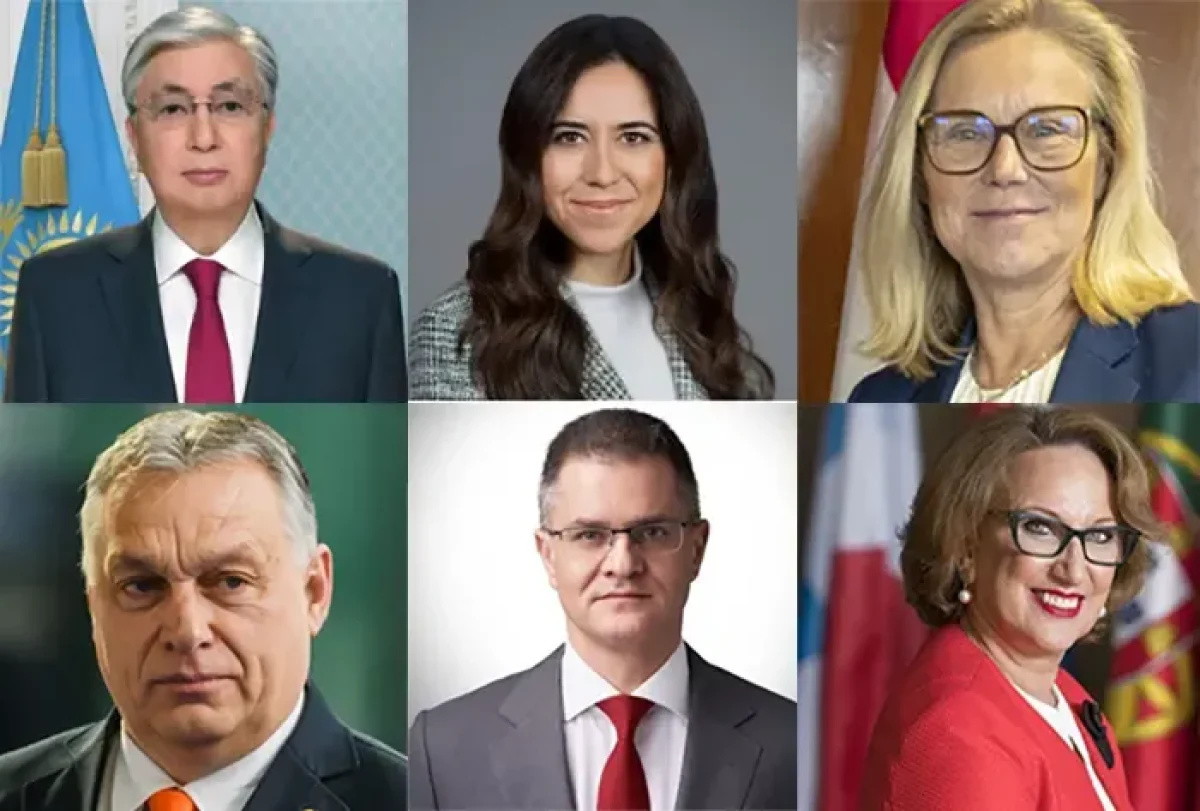
Among the names that have come up as possible late candidates are Lana Nusseibeh, a minister of state for the United Arab Emirates and its former ambassador to the UN, and Sigrid Kaag, a former UN under-secretary-general and centrist Dutch politician. Kaag served for a short period as the UN’s senior humanitarian and reconstruction coordinator in Gaza, and later joined the advisory committee of Donald Trump’s Board of Peace.
Other candidates under discussion include Kazakhstan’s multilingual president Kassym-Jomart Tokayev, and, in terms of demonstrating loyalty to the United States, Hungary’s former prime minister Viktor Orban. Trump still likes Orban well enough, though many European leaders criticise him sharply as a divisive populist. The name of Vuk Jeremic, Serbia’s former foreign minister and a former president of the UN General Assembly, has also come up. He finished second to Guterres in the 2016 contest. None of these possible candidates has said publicly that they wish to stand.
Twenty-one countries took part in the BRICS summit held towards the end of this month, 10 of them full members. A statement issued after the summit said: we note that no woman has been chosen as secretary-general to date, that only one citizen from Latin America and the Caribbean and only two each from Africa and Asia have served in the post. Adding a candidate to the contest late, however, may leave many dissatisfied whatever that person’s country or region.
That is because extensive efforts have already been made to make the selection process more democratic, through direct exchanges with candidates at regional and global level. Annalena Baerbock, the most recent president of the UN General Assembly, played an important part in the effort to open the process up.
But the need to avoid displeasing any of the Security Council’s five veto-wielding members is forcing candidates into statements that are somewhat colourless and read as an attempt to be acceptable to everyone — when what the UN needs at this moment is firm leadership. All the candidates have said they want to return the United Nations to an active role in establishing peace.
Some inexperienced American diplomats close to Trump also frequently demand that the UN play this role. In Friday’s third and final informal vote of the Security Council’s 15 members, Costa Rica’s Rebeca Grynspan again moved ahead. Nine council members voted to encourage her, five voted to discourage her and one gave no opinion. Grynspan fears Russia and China may be among the countries voting to discourage. She will have to overcome that opposition.
In the second informal vote held on August 21 she fell behind the Guyanese politician Carolyn Rodrigues-Birkett, who came first in that vote with eight encourage votes, three discourage votes and four no-opinion votes. Rodrigues-Birkett still had eight encourage votes last Friday.
The votes to discourage her, however, rose from three to six. A third candidate, Ecuador’s former foreign minister Maria Fernanda Espinosa, is also still somehow in the contest. The number of votes to discourage her rose to six last week, from three in August.
Espinosa has called for an early warning system to be set up within the United Nations, so that steps can be taken to prevent wars before they begin. She also wants a secretary-general more willing to take risks in mediation.
It will not be clear until the next stage of the process whether any candidate has run into an insurmountable obstacle, because colour-coded ballots will then show whether a vote came from a permanent member of the Security Council. In practice the decision may depend on bargaining between US President Donald Trump and China’s President Xi Jinping.
Whether Trump accepts that China cares more about the United Nations’ future than he does is also important. It could mean that the United States accepts a candidate it can at least tolerate, from among those China wants.
Under the US ambassador to the UN, Mike Waltz, the Trump administration appears to have softened its earlier scepticism about the organisation somewhat. In March the United States not only gave an additional $1.8 billion in humanitarian aid but has recently paid a further $827 million in arrears of its UN dues.
Even that money is less than a quarter of the total the United States owes the cash-strapped organisation. Chile’s former president and human rights advocate Michelle Bachelet became the first candidate to withdraw from the race at the weekend, pulling out after receiving only one encourage vote in last week’s ballot.