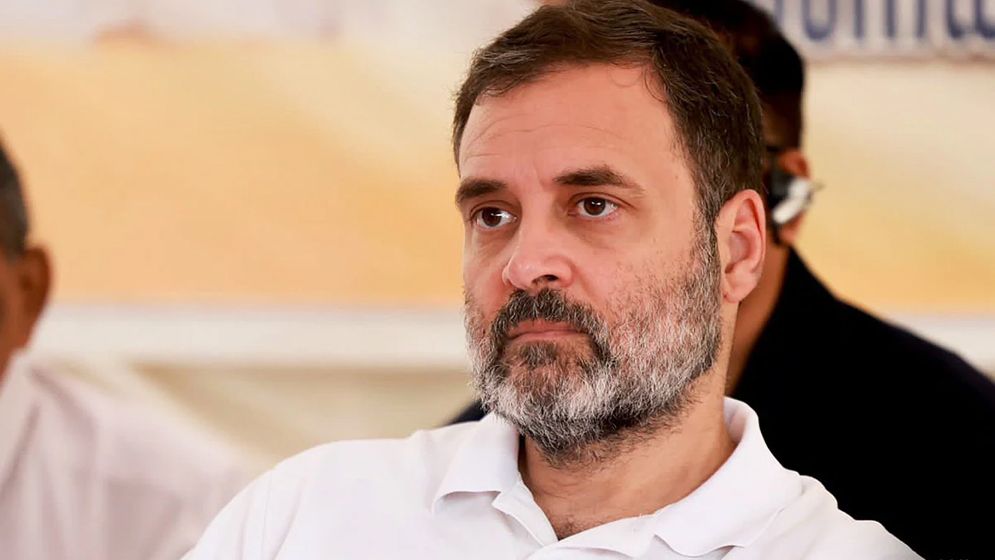
Throughout Rahul Gandhi’s political career, one recurring complaint has emerged from within the Congress party: he is more comfortable working with outsiders than with the party’s own cadre, NDTV reported in a detailed analysis.
The term “outsider” does not always mean someone who joined the party yesterday. It can refer to anyone who came from outside the traditional state-level organizational structure — a technocrat, activist, former bureaucrat, professional, NGO-oriented political worker, or personal aide who did not rise through the familiar path of district committees, Youth Congress, Pradesh Congress, or the All India Congress Committee.
The most recent example is Rajendra Pal Gautam, a former Aam Aadmi Party leader and Dalit activist, who has been appointed AICC in-charge of Uttar Pradesh, replacing Avinash Pande. Gautam also heads the Congress Scheduled Caste department and is seen as part of Rahul’s project to rebuild the party’s social justice and Dalit outreach image. The decision stunned many heavyweight Congress leaders.
Uttar Pradesh is no ordinary state for Congress — it is where the party was born as a national force, where the Nehru-Gandhi family’s politics once commanded mass legitimacy, and where its decline has been most humiliating, the analysis said. In 2019, Priyanka Gandhi was given charge of eastern UP and Jyotiraditya Scindia of western UP. Today, the party’s principal driver in the state is a newcomer who is neither an AICC general secretary nor a member of the Congress Working Committee.
The appointment is not merely an organizational change but a clear signal, NDTV’s analysis said. Rahul is making plain that the old guard’s future does not rest on automatic entitlement or inheritance. He is signaling that on ideological positioning, social justice, Dalit outreach, and the anti-BJP fight, he trusts a newly converted outsider more than a weary insider.
The pattern is not new. Rahul’s inner circle has at various times included Shashikant Senthil, a former IAS officer who led the Congress war room in the 2024 general election and later won a seat from Tamil Nadu; Sachin Rao, influential in the party’s ideological direction; Krishna Allavaru, who came from the corporate sector and rose through Rahul’s Youth Congress; K Raju, a former bureaucrat long involved in Rahul’s social justice projects; Praveen Chakravarty, who brought data analytics and professional-class politics to the party; and personal aides Alankar Sawai and KB Baiju, who manage logistics, intelligence, and last-minute decisions.
Rahul’s motivation is not difficult to understand, the analysis said. When he entered active politics, he was surrounded by an old Congress establishment — district-level power brokers, factional managers, legacy loyalists, and Delhi intermediaries — many of whom viewed him not as a capable leader but merely as an heir. They showed public loyalty but were privately dismissive and constantly opportunistic. The old Congress, in Rahul’s view, represents compromise with power, upper-caste dominance, and soft Hindutva politics. Outsiders, by contrast, appear uncontaminated by the party’s decaying culture.
But the party’s lifelong workers see this very differently, NDTV reported. Their resentment runs across states: those who stayed through the hardest days — Enforcement Directorate and CBI pressure, BJP aggression, ideological attacks, and serial election defeats — feel they are being overlooked in favor of newcomers and Rahul’s personal loyalists.
The Haryana Rajya Sabha election laid this bare. Rahul’s camp backed Karamvir Singh Bauddh, an obscure Dalit candidate, over a traditional heavyweight. Bauddh eventually won after a dramatic contest, but the process exposed internal sabotage, spoiled ballots, and cross-voting by Congress legislators. A similar fracture appeared in Madhya Pradesh, where Rahul’s loyalist Meenakshi Natarajan was given priority over a safer, more experienced veteran. Praveen Chakravarty’s Rajya Sabha nomination from Tamil Nadu reflected the same professional-class politics.
The analysis identified a fundamental paradox: Rahul correctly diagnoses that the old machinery is broken, but he frequently replaces it with new instruments that have no connection to the grassroots. Outsiders can write brilliant strategy papers but cannot persuade district presidents. They speak the modern language of caste justice, constitutional values, and data-driven reform but do not know who controls the booth network in Rohtak or the factional dynamics in Morena.
Two Rahul Gandhis coexist within today’s Congress, the analysis concluded. One speaks of decentralization, Dalit representation, youth voice, and ideological clarity. The other operates a system where access is controlled by a small circle, unelected advisers matter more than elected leaders, and lifelong loyalists are left guessing which door leads inside. This contradiction has weakened him politically.
A party cannot be rebuilt with professional advisers, ideological converts, and personal loyalists alone — nor can it be rebuilt with only the old, exhausted managers, NDTV said. It needs both reform and roots. The irony is that in trying to break the party’s opportunistic culture by trusting only his personal circle, Rahul is creating a new clique of his own.
The core grievance of loyal Congress workers is not simply that outsiders are being rewarded. It is that they are needed on the battlefield but invisible on the podium and excluded from strategy sessions. For a party whose workers have done nothing but sacrifice for a decade, this feeling of neglect is no small emotion — it is becoming the big politics, the analysis said.
বাংলায় মূল প্রতিবেদন পড়ুন · Read the original Bengali report