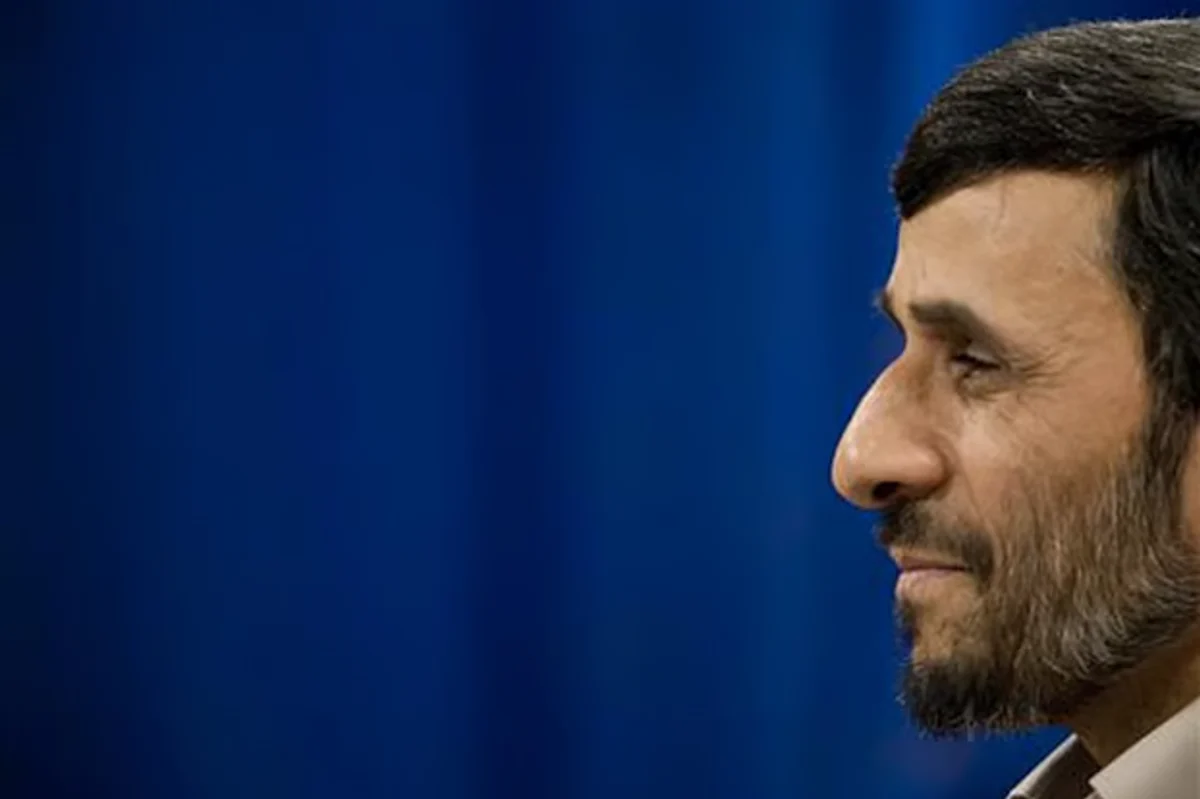
Early in 2024, the rector of a university in the Hungarian capital Budapest received an unexpected request from a senior government official, according to The New York Times. The official told the rector, Professor Gergely Deli, that Ludovika University of Public Service should host a conference on climate change and invite former Iranian president Mahmoud Ahmadinejad, an internationally controversial figure. The reason was more surprising still: the official told Deli that the conference was merely a pretext, behind which Ahmadinejad would hold secret meetings in Budapest with Israeli intelligence officers — though he had always publicly called Israel an enemy.
Deli told The New York Times that he knew the invitation could damage his personal reputation and the university’s image, but believed he might be taking part in an effort to save lives. Ahmadinejad’s 2024 visit to Budapest, and another the following year, were part of a years-long secret Israeli plan, the newspaper reported. Multiple US and Iranian officials, speaking on condition of anonymity, told the Times that Israel wanted to turn Ahmadinejad into an intelligence asset who could be installed as Iran’s new leader at the appropriate time. Israel considered winning him over so important that its then intelligence chief, David Barnea, went to Budapest himself in 2024 to meet him, the officials said, and Mossad soon informed the CIA that it had established contact with Ahmadinejad.
According to the report, the final phase of the effort began in late February this year, in the first days of the US-Israeli offensive against Iran, with a bold operation to extract Ahmadinejad — under tight surveillance in Tehran — in order to carry out a plan to topple the current system and install him in power. But the plan ultimately failed. On February 28, an Israeli airstrike targeted Ahmadinejad’s residence, hitting his bodyguards’ building and a bulletproof car. Four senior Iranian officials said that after the strike, a black Peugeot arrived and quickly whisked Ahmadinejad away; US and Iranian officials familiar with the operation said Mossad members were driving the car and took him to a secret safe house inside Iran. People connected to the episode said Ahmadinejad was angered by the hasty rescue and grew doubtful about Israel’s plan to return him to power.
Ahmadinejad, who was Iran’s president from 2005 to 2013 and was known as one of the country’s most influential hardliners, publicly called for Israel’s destruction, restarted uranium enrichment and denied the Holocaust. After leaving office he gradually moderated, criticising the security forces’ crackdowns and alleging financial corruption by the ruling establishment. According to US officials cited by the Times, Israel secretly covered his living and foreign-travel expenses in recent years, and Israeli intelligence met him several times abroad. Former IDF intelligence chief Tamir Hayman said on the US programme “Firing Line” in May that a “highly exceptional” series of special operations had been planned for regime change in Iran, and that “Ahmadinejad was part of that series of plans.” The plan reportedly also involved arming and training Iranian Kurdish fighters based in northern Iraq to enter western Iran, seize some areas and then advance toward Tehran, but that too never came to fruition.
Four senior Iranian officials said that after Ahmadinejad’s contacts with Israel came to light, he is now in the custody of the intelligence branch of the Islamic Revolutionary Guard Corps (IRGC) and under house arrest. Israeli officials have not publicly commented on the plan. Ahmadinejad was seen briefly in public last Monday at the funeral of Iran’s slain supreme leader, Ayatollah Ali Khamenei; before that he had not been seen publicly since being driven from his Tehran home in the black Peugeot in late February. Two other living former Iranian presidents, Hassan Rouhani and Mohammad Khatami, were not invited to the funeral.
বাংলায় মূল প্রতিবেদন পড়ুন · Read the original Bengali report