Italy is to ban the burqa and the niqab in schools. At the same time it will fix the number of foreign pupils who may be in each classroom.
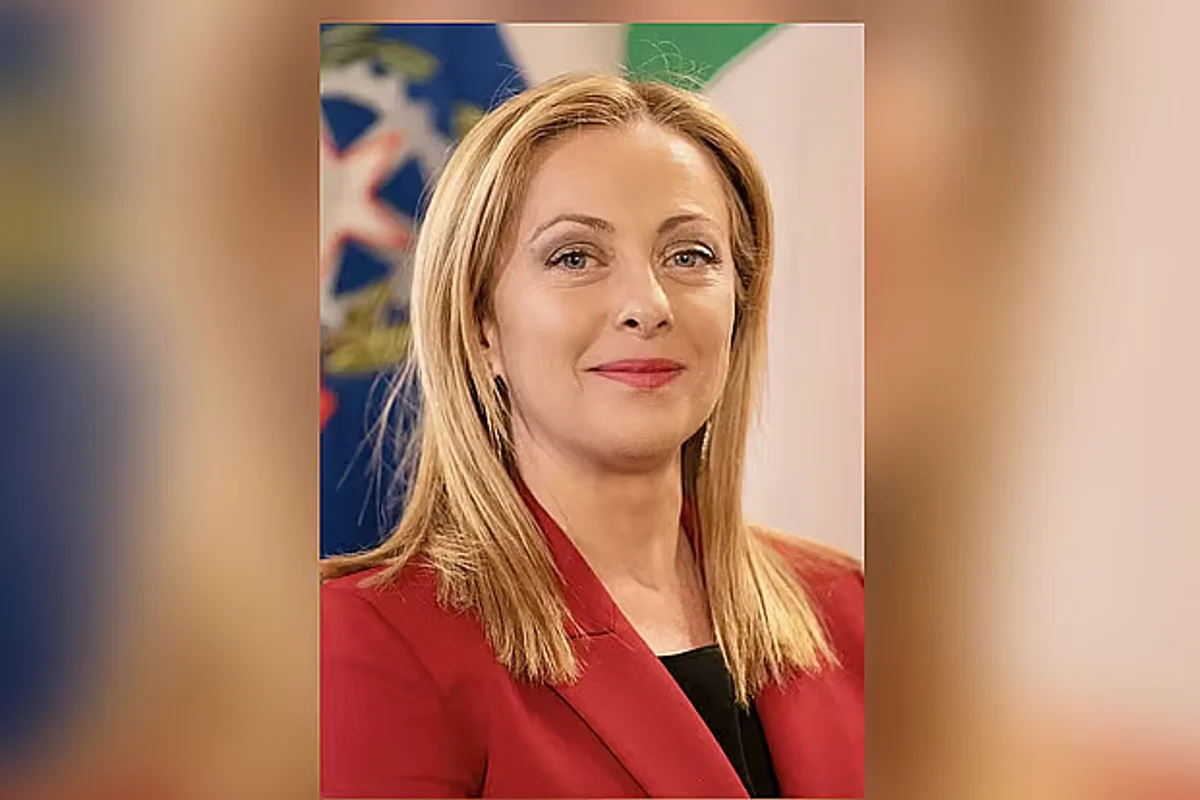
The country’s hard-right prime minister, Giorgia Meloni, made the announcement on Sunday.
Italy is one of the main transit countries for migrants entering Europe. A general election is due in the country next year, and ahead of it the question of migrants “adapting” to mainstream society has become one of the principal campaign issues.
Meloni spoke at a rally of the youth wing of her party, Brothers of Italy (FdI). She said a proposal would shortly be put to the cabinet to bring the maximum number of foreign pupils allowed in each classroom within a legal framework.
Meloni also said the parents of foreign pupils facing serious difficulty in adapting to the education system would themselves have to learn Italian. Alongside that, the proposal includes a ban on wearing the burqa and the niqab in schools.
In July the National Future (FN) party had called for restrictions on the wearing of the burqa in schools.
FN is not part of the governing coalition. In political terms, however, it stands further to the hard right than Meloni’s party. Its standing in opinion polls has been strengthening rapidly since it emerged in February, and it has now become a significant rival to Meloni.
Italy has no specific law directly banning the burqa in schools or in public places. A law of 1975 does state that clothing or helmets which cover the face or conceal identity may not be worn without good reason.
Italy’s highest administrative court then gave an interpretation in 2008. It said clothing covering the whole face could be worn for religious or cultural reasons, but that the face had to be uncovered when identification was required.
Meloni’s coalition partner, the anti-immigration League party, brought a bill to the Senate earlier this year. It proposed a complete ban on face-covering clothing and helmets, apart from in certain specified settings such as sporting events and places of worship.
Italian law already has rules limiting the number of foreign pupils in each classroom. Meloni did not make clear exactly what changes would be made to those rules.
According to the national statistics institute (ISTAT), about 12 percent of all pupils in Italian schools are foreign. Since 2010 there has been a rule keeping the proportion of foreign pupils in each class and school to a maximum of 30 percent.
The quota can be raised for foreign pupils with sufficient command of the language. Foreign pupils born in Italy, for instance, benefit from that. Where language skills are weak, on the other hand, the limit can be lowered further.