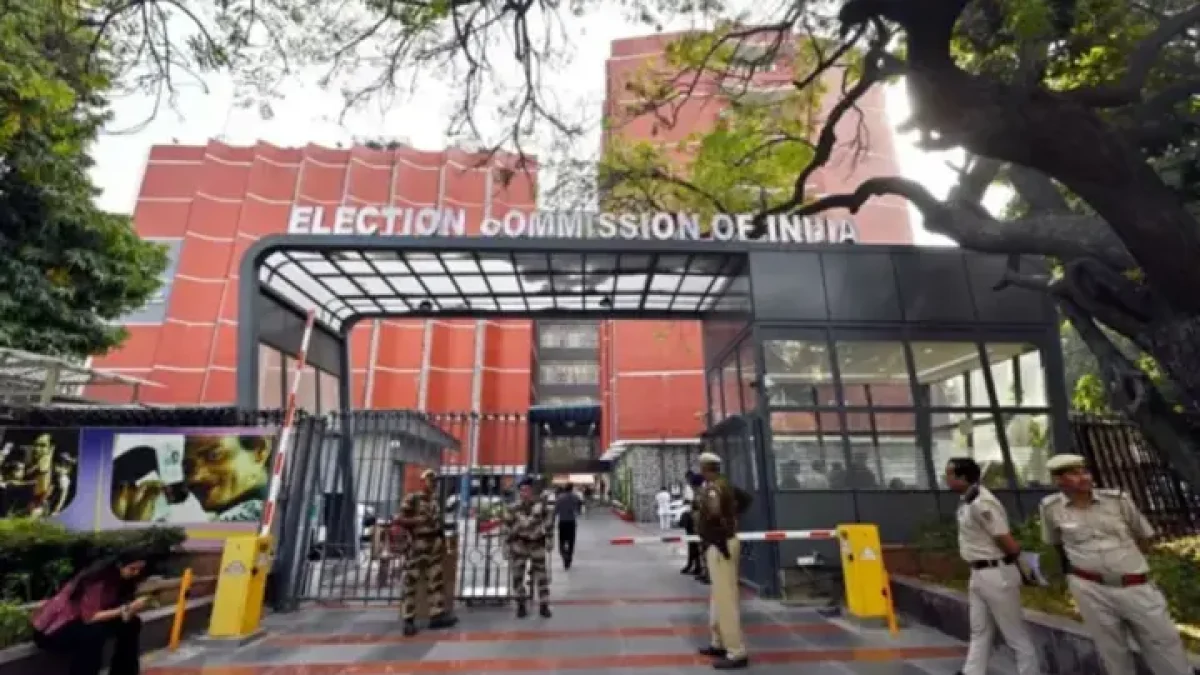
For most of his 36-year career in India’s bureaucracy, Gyanesh Kumar earned a reputation for getting difficult jobs done. But now the 62-year-old faces a different challenge over how his own institution makes decisions.
It is an unusual position for a bureaucrat who long stayed out of the public eye despite handling some of the government’s most politically sensitive tasks. For almost a year as India’s chief election commissioner (CEC), Kumar has been under intense political pressure over a sweeping revision of the country’s voter rolls known as the Special Intensive Revision (SIR).
The exercise, which began in Bihar last year, has since been extended to most of India, and more than 130 million names, about 13 percent of the country’s voters, have been removed from draft rolls across 30 states and union territories. The Election Commission says the move is meant to remove duplicate and ineligible entries and ensure valid voters are included.
Opposition parties and rights activists, however, say it puts valid voters at risk of losing their right to vote. Kumar and the commission have rejected all allegations of distorting the process for political ends.
This week the controversy reached inside Kumar’s own institution. An investigation by The Indian Express reported that his two fellow election commissioners, Sukhbir Singh Sandhu and Vivek Joshi, formally objected at least 14 times over 10 months to decisions and orders taken without their knowledge.
The report says the disagreements concerned core aspects of the SIR, including how names are added to or removed from the rolls, changes to voter registration procedures and access to the database of hundreds of millions of voters.
Such allegations are highly sensitive in the three-member commission, which takes decisions by majority. Kumar has not personally responded to the investigation. In a statement afterwards, the commission did not deny the disagreements reported, but rejected any internal rift, saying differences of opinion were part of normal discussion and that the past year’s decisions had been taken unanimously.
Kumar, Sandhu and Joshi later met and issued a joint statement, and the commission released a photograph of the three together. But the response did not end the controversy. According to several media reports, opposition parties are preparing a motion in parliament seeking Kumar’s removal. The youth group Cockroach Janata Party (CJP) has threatened a nationwide movement, while Andhra Pradesh chief minister N Chandrababu Naidu welcomed the commission’s clarification and expressed confidence in its integrity.
Born in Uttar Pradesh, Kumar studied civil engineering at IIT Kanpur and joined the IAS in 1988. Early in his career in the Kerala cadre, the redevelopment of Kochi’s waterfront as district collector of Ernakulam was one of his notable projects. In 2016 he joined the Jammu and Kashmir division of the home ministry and was involved in drafting the Jammu and Kashmir Reorganisation Bill in 2019.
He also led the formation of the trust overseeing construction of the Ram temple in Ayodhya after the 2019 Supreme Court verdict. Former colleagues praise him as extremely hard-working, attentive to detail and calm under pressure.
After retiring in January 2024, he was appointed election commissioner in March and became chief election commissioner in February 2025, the first CEC appointed under a 2023 law that opposition parties objected to and which is under consideration by the Supreme Court. He has launched administrative reforms and an “EC 2.0” initiative, but the SIR controversy has come to define his tenure.
Despite questions over internal disagreements and oversight of the SIR, the commission says decisions were unanimous and that it is introducing rules to publish meeting agendas and minutes in advance. The controversy has sparked fresh debate over Kumar’s role and constitutional institutions such as India’s Election Commission.
বাংলায় মূল প্রতিবেদন পড়ুন · Read the original Bengali report