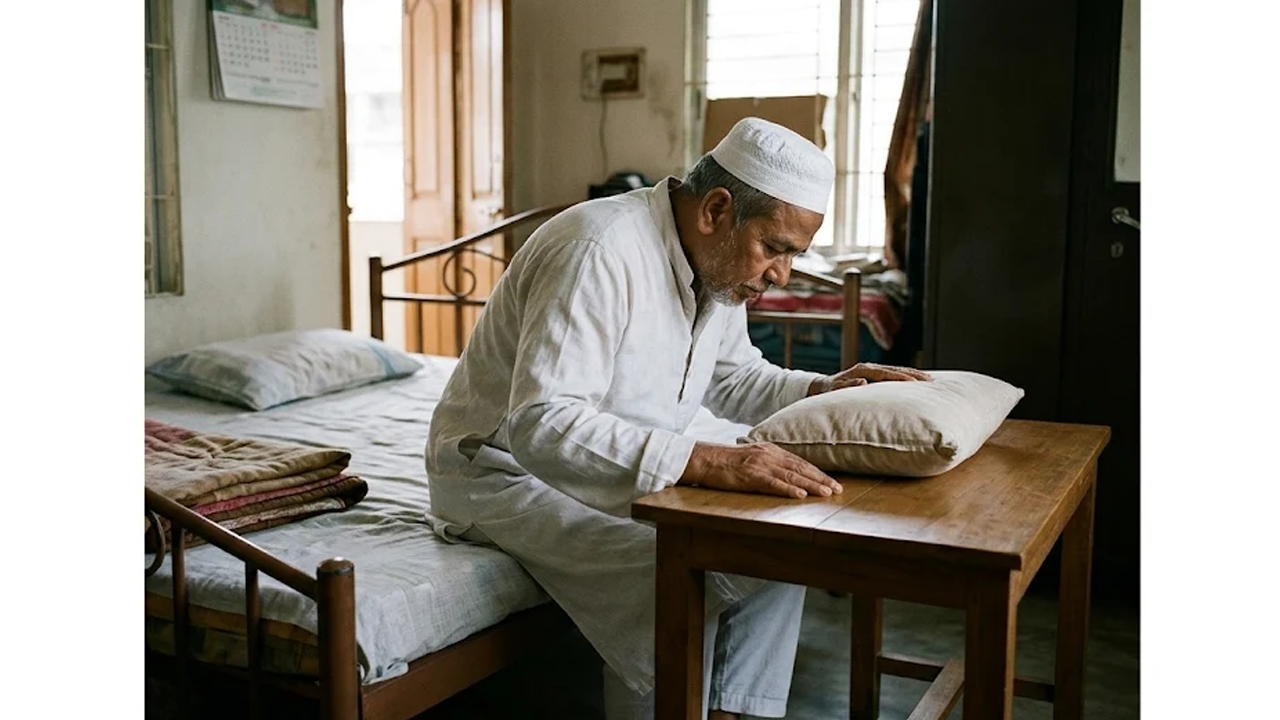
Islamic scholar Sheikh Ahmadullah has explained how people unable to perform the usual prayer movements because of illness can pray while seated.
Islamic rules allow flexibility according to physical ability, age and illness. Some people with knee or back pain sit on a bed or chair and place a table or raised stool in front of them to rest their forehead on during prostration.
In a discussion recently published on YouTube, Ahmadullah described this as a common mistake under his interpretation of Islamic law.
He said a person could pray seated on a chair or stool if illness, severe pain, old age or the risk of prolonging an illness prevented standing. However, placing the forehead on a table, stool or other raised furniture for prostration was not prescribed, he said.
Ahmadullah said the prescribed surface for placing the forehead in prostration was the floor or ground. If that was impossible, he said there was no separate rule or special merit in raising an object to head level, and no need for that extra effort.
He outlined two methods for an ill person. Those physically able to do so should place their forehead on the floor or ground, including when otherwise praying seated. Those completely unable to reach the ground should perform bowing and prostration through head gestures without touching a raised object.
When praying through gestures, he said, a seated person should lower the head slightly with the intention of bowing. For prostration, the head should be lowered farther than for bowing.
The person should then straighten the head for the next seated or standing position in the prayer, he said. No artificially raised surface is needed.
বাংলায় মূল প্রতিবেদন পড়ুন · Read the original Bengali report