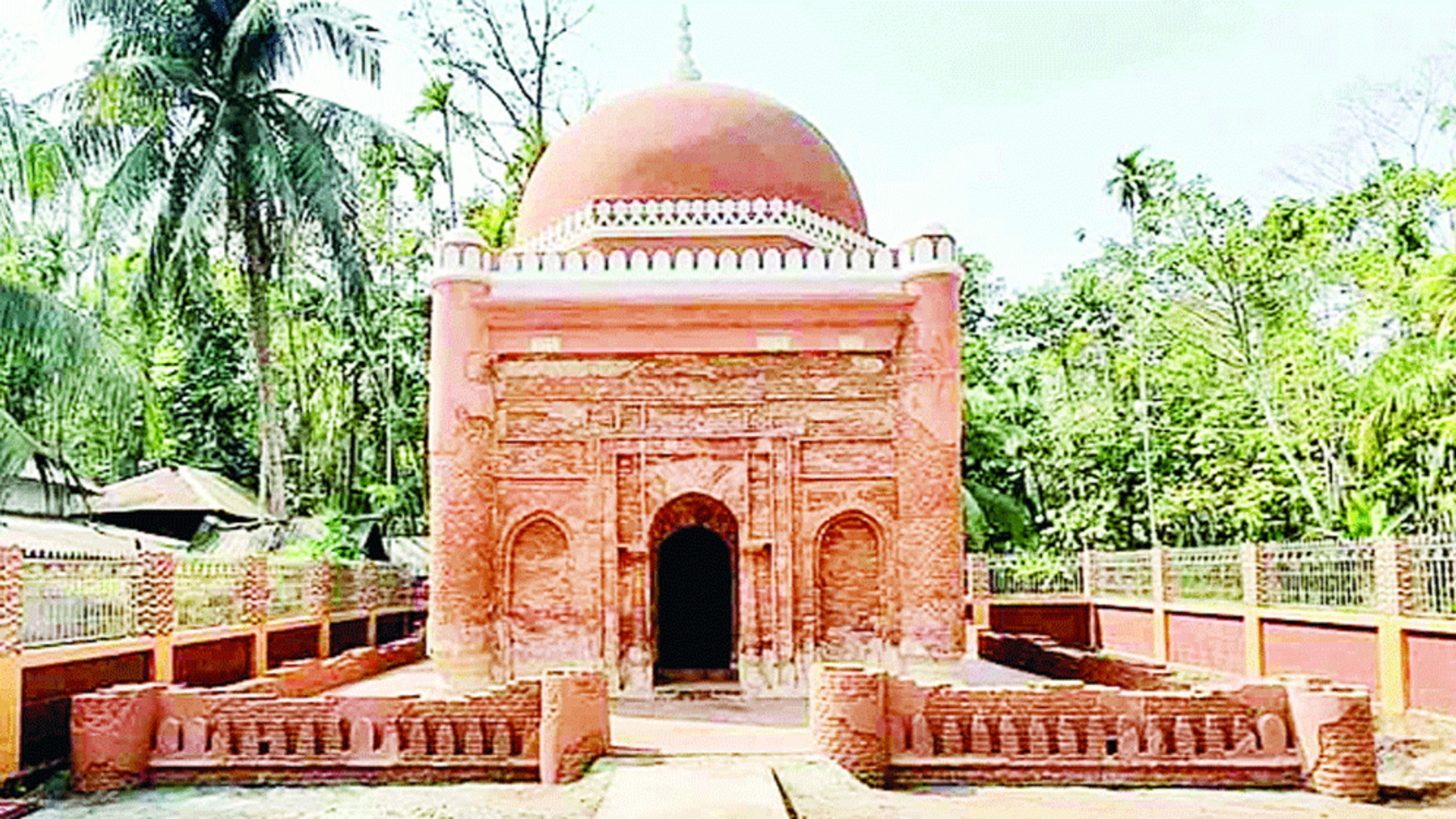
PIROJPUR — The Miabari Mosque in Bhandaria, Pirojpur, is a striking example of Mughal-era architecture about 400 years old. The mosque sits on the bank of the Pona River near the Miabari area of Bhandaria town. Distinguished by its fine ornamentation, the single-domed structure is now protected by the Department of Archaeology. The small mosque combines Mughal architectural style with local craftsmanship and measures about 30 feet long and 17 feet wide. More than a place of worship, it is an important witness to the region’s history and architecture and attracts tourists.
Residents had long demanded that the structure be restored. The Department of Archaeology took up the work in 2022. Its walls are built of red brick mixed with limestone. Locals said gold leaf was applied to the dome’s ceiling and to the arches when the mosque was built, though no trace of it remains. The patterned red brick walls and terracotta plaque artwork attract visitors. Each year many tourists travel to see the mosque.
Abul Kalam Azad, a local worshipper, said the Department of Archaeology restored the mosque at a cost of 20 lakh taka (about $17,000) a few years ago. Apart from this mosque, the upazila has six more mosques of similar character at locations including the Kazi Bari mosque, the mosque behind the Bhandaria police station and the mosque at Belai Chopdar’s residence. None has yet been taken up for restoration; the mosques stand as witnesses to time.
Residents said the mixture of red brick and limestone in the mosque walls reflects the architectural tradition of Delhi’s red-brick buildings. The walls feature patterned brickwork and terracotta plaques. The dome ceilings and arches once had golden leaf work, which is no longer visible. Surrounded by a small railing and boundary wall, these small but elegant mosques have mihrabs and interior dome surfaces carved with stone flowers, intricate foliage and Arabesque patterns. The mosques have terracotta designs inside and out, a fine combination of Mughal and local artistic styles. The interior, decorated with elaborate floral designs, was used for adjudication and meetings as well as for prayer.
Residents also said the Miabari Mosque could accommodate at least six worshippers praying side by side in a single row. The interior is now in disrepair, and no one comes to pray there.
Tamiz Uddin Kajal, a resident of Miabari, said an old reservoir exists in East Bhandaria village. A wealthy zamindar named Belai Chokdar dug the reservoir on about five acres of land during the Mughal era. On its banks stand a mosque built by Belai Chokdar and two other structures from that period. The exact date of construction and the identity of the builder of these mosques are not confirmed, but architectural analysis suggests they were probably built toward the end of the Mughal era.
The Miabari Mosque is surrounded by a flower garden, with a large pond in front of it. The Department of Archaeology restored the mosque in the 2019-20 fiscal year and declared it a protected antiquity mosque.
বাংলায় মূল প্রতিবেদন পড়ুন · Read the original Bengali report