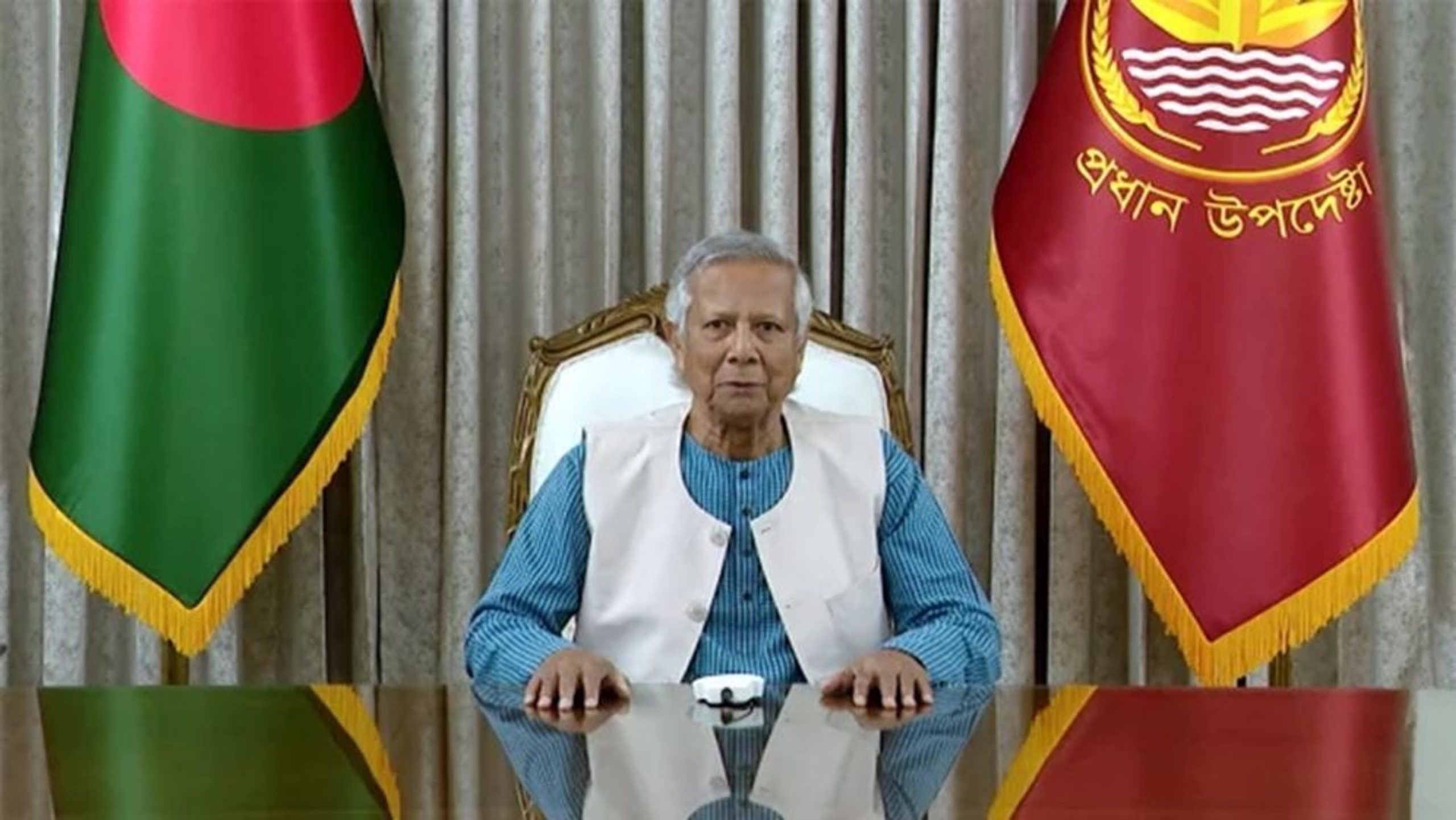
DHAKA — A one-week deadline the interim government gave political parties to reach agreement on implementing the July Charter and holding a national referendum expires Sunday with no compromise in sight, leaving the decision to the administration of Chief Adviser Muhammad Yunus, officials said.
Jamaat-e-Islami said it had invited BNP to talks but the party did not respond. BNP said it was the government’s responsibility to initiate negotiations. The National Citizen Party, or NCP, had also tried to mediate between BNP and Jamaat but failed.
With the parties deadlocked, the burden of setting a date for the referendum and implementing the charter now falls on the government, which has said it will announce its decision quickly if the parties fail to agree.
People involved in the talks said the interim government has two options: hold further talks with the parties, or announce a decision without further consultation.
Shafiqul Alam, press secretary to the chief adviser, said the government would act in the national interest if the parties failed to agree by Sunday. “After the deadline expires, the advisers will undoubtedly sit again among themselves for talks, and then take a decision in the interest of the country and the people,” he said.
“We remain hopeful, because the political parties have resolved many of the country’s big problems before, so they will come to a decision,” Shafiqul said. “Since the time has not yet expired, it would not be right for the government to say anything in advance. We will wait until the last moment.”
He said that in politics, “one day is a long time,” and that the government would consider any request from the parties for a day or two more. Differences among the parties were natural, he said, but a consensus had to be reached. “It will happen quickly, because the government does not want any uncertainty over the election.”
Shafiqul said all issues had been raised in the July Charter and the parties had given their considered views. Four thousand pages of audio and video had been recorded, he said, and the discussion could resume after the election.
So far 25 political parties have signed the July National Charter. The National Consensus Commission submitted its recommendations for implementing the charter on Oct. 28. The commission said the government would issue an order to implement the charter, but disputes among the parties became severe before any order was issued.
An emergency meeting of the advisory council, chaired by the chief adviser, was held on Nov. 3 on implementation of the charter. The parties were urged to compromise. After the meeting, Law Adviser Asif Nazrul said there were differences among the parties on the timing and content of the referendum, calling the situation worrying and urging the parties to reach a decision within a week if possible.
BNP response: Following the government’s appeal, Jamaat-e-Islami’s Nayeb-e-Ameer Dr. Syed Abdullah Mohammad Taher called BNP Secretary General Mirza Fakhrul Islam Alamgir on Thursday to invite him to talks. Fakhrul said he would consult party leaders and respond. At a meeting of BNP’s standing committee the next day, leaders said Jamaat could not invite them on a state matter, only on a personal or two-party basis, and that Jamaat’s approach was not the correct method. BNP decided not to respond.
Amir Khasru Mahmud Chowdhury, a member of the BNP standing committee, said the charter had been signed by consensus after long discussion, and that consensus had to be respected. “Some political parties want to forcibly impose their demands on everyone. An authoritarian mindset has crept in from Sheikh Hasina’s rule,” he said. “What has been agreed will be implemented. What has not been agreed must go to the people. There is no scope to go beyond consensus.”
Sources said BNP policymakers believed the government and the National Consensus Commission had created the problem because the commission’s recommendations for implementing the charter did not match the charter signed by the parties.
Jamaat’s position: Mia Golam Parwar, secretary general of Jamaat-e-Islami, said the government must take the initiative on talks. “BNP is firm in its position. We have also made our party’s position clear. We have already submitted a memorandum to the chief adviser,” he said. Jamaat and seven other parties have a major program planned for Nov. 11.
“Out of respect for the advisory council’s appeal, we asked BNP to sit for talks. But they are not showing interest, so the government must now take the initiative. Otherwise the problem will not be solved,” Parwar said.
NCP’s role: NCP and eight other parties had tried to mediate. The parties met on Wednesday but did not reach a decision. Leaders said talks with BNP and Jamaat were essential to resolve the deadlock, and that divisive politics had taken hold since the consensus commission’s recommendations. With the February election now in doubt, the government must act, they said.
Government’s thinking: Government sources said the administration had taken a preliminary decision on implementing the charter after analyzing the commission’s recommendations and consulting the parties. The decision attempts to balance the parties’ demands and includes holding the referendum on the same day as the next general election. The referendum will not list notes of dissent from individual parties on charter proposals. The commission’s recommendation for a 270-day binding deadline for implementation will be dropped. The upper house of parliament will be formed under proportional representation.
Analysts’ views: Manjur Ahmed, emeritus professor at BRAC University, told Jugantor on Saturday that citizens had expected political parties to behave responsibly. “We expected them to play an important role in the democratic transition through elections, and to put the country and the people above differences and party considerations. The interim government was expected to discharge its responsibilities impartially. But we are not seeing such signs. Our expectation is that the government will behave more responsibly,” he said.
Dr. A.K.M. Shahnewaz, a teacher at Jahangirnagar University’s archaeology department, said expecting everyone to agree was “simply foolishness” in Bangladesh’s political culture, but coming close was reasonable. “Nearly 15 months have passed since the mass uprising, but the government has not been able to reach any compromise on important issues including the July Charter, nor bring the parties to compromise. That is its big failure,” he said. Trying to force a patched-up solution on some parties would be self-destructive, he said.
Parties at odds: Since the government’s call, conflict between BNP and Jamaat has grown openly rather than easing. Both parties support a referendum on the charter, but BNP wants it on the same day as the general election, with notes of dissent listed. BNP on Monday announced candidates for 237 parliamentary seats, in what analysts said was a move to shift public attention from the charter talks. Jamaat wants the referendum before the general election, with no notes of dissent listed. Eight Islamic parties led by Jamaat had given the government an ultimatum until Friday, and on Thursday delivered a memorandum to the chief adviser. The memorandum said that if their demands were not met by the stated time, “a flood of people” would descend on Dhaka on Nov. 11.
বাংলায় মূল প্রতিবেদন পড়ুন · Read the original Bengali report