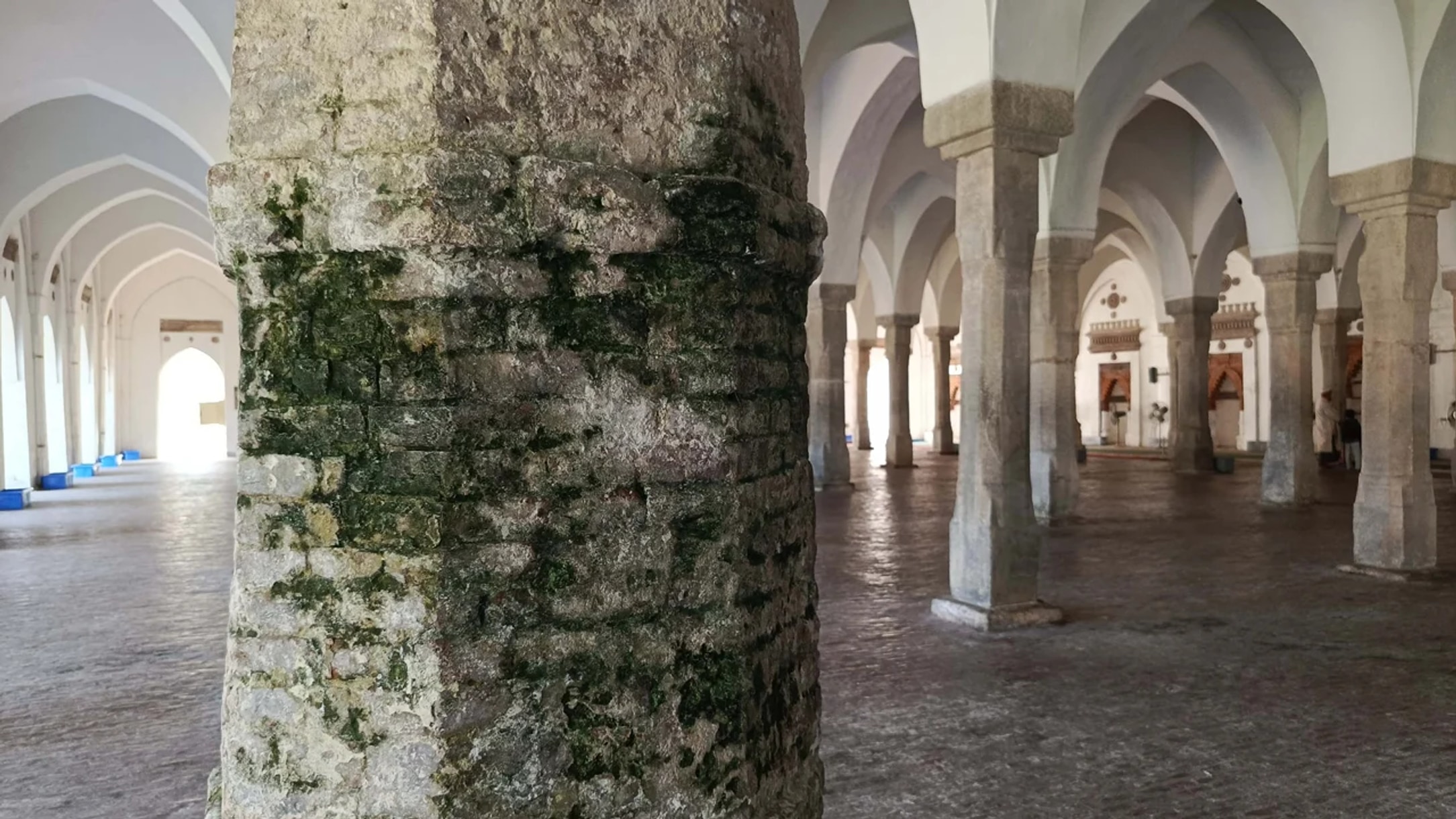
DHAKA — The Sixty Dome Mosque, a UNESCO World Heritage site in Bangladesh, is decaying rapidly because of climate change and excessive salinity, researchers and conservation officials said.
Cracks, falling plaster and visible white salt deposits are appearing on the mosque’s walls, domes, pillars and especially in the mihrab, the niche indicating the direction of prayer. Salty water rising from below is forming salt crystals inside the bricks and weakening the structure’s core, officials said.
A joint study by Khulna University, the National Geographic Society and the International Council on Monuments and Sites (ICOMOS) found that rising temperatures, industrial pollution, monsoon humidity and underground salinity are accelerating the damage.
The Department of Archaeology has formed a five-member expert committee, led by former director general Dr. Md. Shafiqul Alam, to carry out urgent conservation work on the historic monument, officials said. The investigation found that the mihrab is at risk of collapsing at any moment. Iron clamps used to hold stone fragments in place have rusted, reducing their load-bearing capacity.
Lovely Yeasmin, the regional director, said a complete decay map of the mosque will be prepared with UNESCO’s support, and conservation work will begin quickly with international experts involved. UNESCO Dhaka has also recommended temporary conservation measures on an urgent basis, she said.
Experts said that without quick action, the Sixty Dome Mosque could be declared a “World Heritage in Danger” — a major setback for Bangladesh.
বাংলায় মূল প্রতিবেদন পড়ুন · Read the original Bengali report