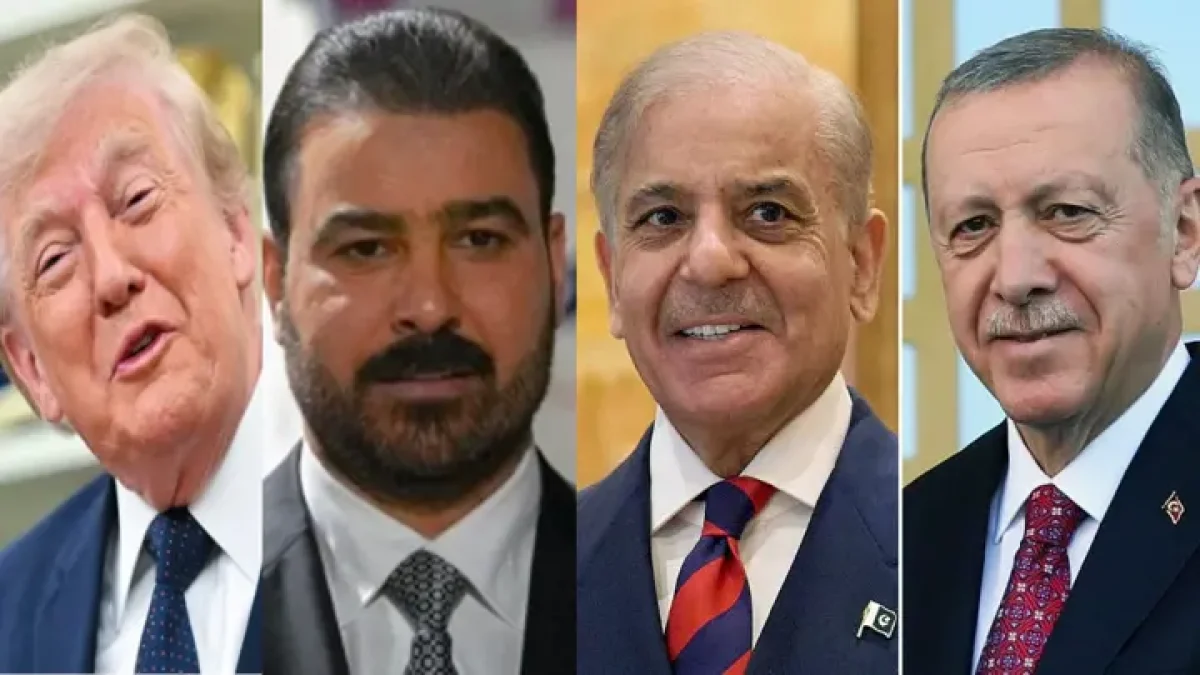
Iraq, Turkey and Pakistan have refused to close their land borders with Iran despite pressure from the United States. After weeks of diplomatic effort by Washington, none of the three countries has agreed to halt cross-border trade, a setback for the US push to restrict Iran’s overland commerce.
The United States has been pressing Iran’s neighbours to shut their border crossings. But with important economic and trade ties to Iran, those countries are reluctant to accept Washington’s demand.
Iraq, Turkey and Pakistan were the main targets of the US pressure. Three Iraqi officials and one US official familiar with the matter told the outlet that reported it that the three countries had resisted the US demand in different ways.
The effort is part of wider US economic pressure on Iran. Having imposed a naval blockade on Iran’s ports, Washington is now trying to stop the movement of goods and trade over land. In effect, Iran’s neighbours are being asked to help enforce US sanctions on Iran.
Iraq will not close its border with Iran
Iraqi officials said that in regular meetings with US diplomats, Baghdad was asked to close every crossing on its border with Iran except two. Thomas Barrack, the US regional envoy, also took part in those meetings.
Iraq did not accept the demand, although it temporarily closed one or two crossings to placate Washington. That disrupted trade in the border areas and caused widespread anger among ordinary people.
Iraq’s dependence on Iranian energy makes closing the border harder still. More than a third of the natural gas Iraq uses to generate electricity comes from Iran, so a long closure could badly hit the country’s power generation and economy.
Turkey reluctant, Pakistan’s crossings open and shut
Turkey, too, has in effect refused to change its border policy with Iran. Pakistan, meanwhile, has closed and reopened crossings at various times, citing the security situation and the introduction of a new electronic import system.
Pakistan’s formal trade with Iran is worth about $3 billion a year, and the country also depends on Iran for energy supplies. Accepting the US demand to close the border could hurt Pakistan’s economy.
A US official involved in the talks acknowledged that halting trade and the movement of goods across the borders could cause serious unrest among border communities in Iraq, Pakistan and Turkey. He warned that the situation could even turn into a “popular uprising”.
The official added that resentment of the US pressure campaign against Iran is growing among regional partners. Neighbouring countries were already unhappy about the US and Israeli war against Iran and its economic and humanitarian consequences.
Ellie Geranmayeh, an Iran specialist at the European Council on Foreign Relations, said Washington is now seen in many cases as an “unpredictable and unreliable ally”. In her words, “Iran will remain their neighbour.”
Iron Gate: a new US move on border control
Unable to persuade the neighbours through diplomatic pressure, the United States has taken a new step. US Central Command (CENTCOM) has announced a special programme called Task Force Iron Gate.
The task force is made up of 20 civilian and military staff based in Florida. Its aim is to control the movement of goods across Iran’s land borders and the Caspian Sea.
A US military official said members of the task force will not carry out military strikes themselves, but may encourage Iran’s neighbours to deploy their own forces to limit the movement of goods across the borders.
Meanwhile, on Tuesday Iran’s deputy foreign minister, Kazem Gharibabadi, met Alexey Dedov, Russia’s ambassador in Tehran, to discuss ways of countering the new US move.
Iraqi provincial governor pledges to stand by Iran
Separately, Ali Hassan Salimoun, governor of Iraq’s Wasit province, declared that Iraq would stand by Iran in the face of foreign aggression. Neither the Iraqi government nor its people, he said, would leave the Islamic Republic of Iran alone.
He spoke on Thursday at a joint meeting in the Iraqi city of Kut with Ahmad Karami, governor of Iran’s Ilam province. Salimoun said that during the recent US and Israeli aggression, the Iranian people and armed forces had proved they could stand up to foreign powers.
At the meeting Salimoun also conveyed the Iraqi prime minister’s greetings and welcome to the Iranian delegation. He said Baghdad was determined to strengthen and expand cooperation with Iran in various sectors.
He spoke of the potential to increase trade and links between Ilam and Wasit, two provinces on either side of the border, and cited the annual Arbaeen pilgrimage as an example of successful cooperation between them. Field visits and joint decisions, he said, had made it possible to solve problems and improve coordination.
He said setting up a joint free trade zone between Iran and Iraq was a priority, with particular emphasis on expanding commercial ties between Ilam and Wasit. He also spoke of increasing bilateral cooperation in tourism and of easing vehicle traffic through a memorandum of understanding.
Iran’s Ilam province shares a 430-kilometre border with Iraq, the longest common border of any province of either country. The province plays an important role in trade and religious tourism with Iraq, and the Mehran international border terminal in particular is one of the main gateways for travel and trade between the two countries.
Mehran, about 230 kilometres from Baghdad, is one of the shortest land routes from Iran to the Iraqi capital and the country’s main pilgrimage sites. Kut, the capital of Wasit province, lies about 90 kilometres from Mehran and 180 kilometres from Ilam.
বাংলায় মূল প্রতিবেদন পড়ুন · Read the original Bengali report