The history of World War II still holds important lessons for the wars of today. Winning on the battlefield matters, but so do adapting quickly to technology, building far-sighted leadership, raising military production and keeping the nation united in a crisis. The wars in Iran and Ukraine, and the growing use of artificial intelligence (AI) in military technology, have brought those lessons to the fore again.
The author David McCullough once said that history is a guide to navigation in perilous times. In this period of fast change in war and technology, his words matter even more. Looking back on the experience of World War II is especially fitting on Veterans Day in the United States.
The history of World War II offers at least four important lessons about military strategy and preparing for future wars.
The first lesson is how quickly a change in technology can transform the battlefield. During World War II, signals and intelligence analysis, code breaking, and battlefield surveillance systems such as radar and sonar brought major changes to military strategy. Those advances can be compared with today’s cyber warfare, artificial intelligence and advanced satellite surveillance.
In the same way, naval power once rested on the heavy guns of battleships. Later, aircraft carriers grew in importance. Today, the widespread use of drones has raised new questions about the safety and usefulness of conventional equipment such as tanks and artillery.
At the start of the war in Ukraine, artillery, tanks, trenches, snipers and frontal combat dominated, much as in World War I, but the nature of the fighting changed quickly over time. Drones, surveillance technology, electronic warfare and long-range precision strikes have now become central to the war. As in World War II, investment in military research, development and production needs to rise today.
To adapt to technological change during World War II, the United States changed its military leadership and command structure. In particular, the command system was changed to manage the use of new technology in the naval war in the Pacific.
A step taken by the Pentagon today is notable in this respect. The United States has set up a new Autonomous Warfare Command to run the military’s robotic, AI-based and uncrewed combat systems. It is meant to operate as a combatant command led by a four-star general.
The second lesson is that leadership at the highest level plays a large part in the outcome of a war. In the Pacific theatre of World War II, two commanders of the US Navy had completely different styles of leadership.
The US Third Fleet was led by Admiral William Halsey. He was an aggressive, bold, emotional officer who loved a fight. Known as “Bull”, Halsey believed in attacking the enemy head-on. That attitude served well in hard campaigns in island areas such as Guadalcanal and Rabaul. But at the naval battle of Leyte Gulf in 1944, he misread Japan’s strategy and risked a major disaster. His decisions in one of the largest naval battles in history were widely debated afterwards.
The commander of the US Fifth Fleet, Admiral Raymond Spruance, was by contrast calm, thoughtful and strategic. He played an important role in directing the amphibious operations of the final stage of the war.
The experience of these two commanders shows that in war it is sometimes necessary to strike the enemy with full force, and at other times to decide on the basis of long-term results rather than emotion. Leading in war needs judgement and patience as well as aggression.
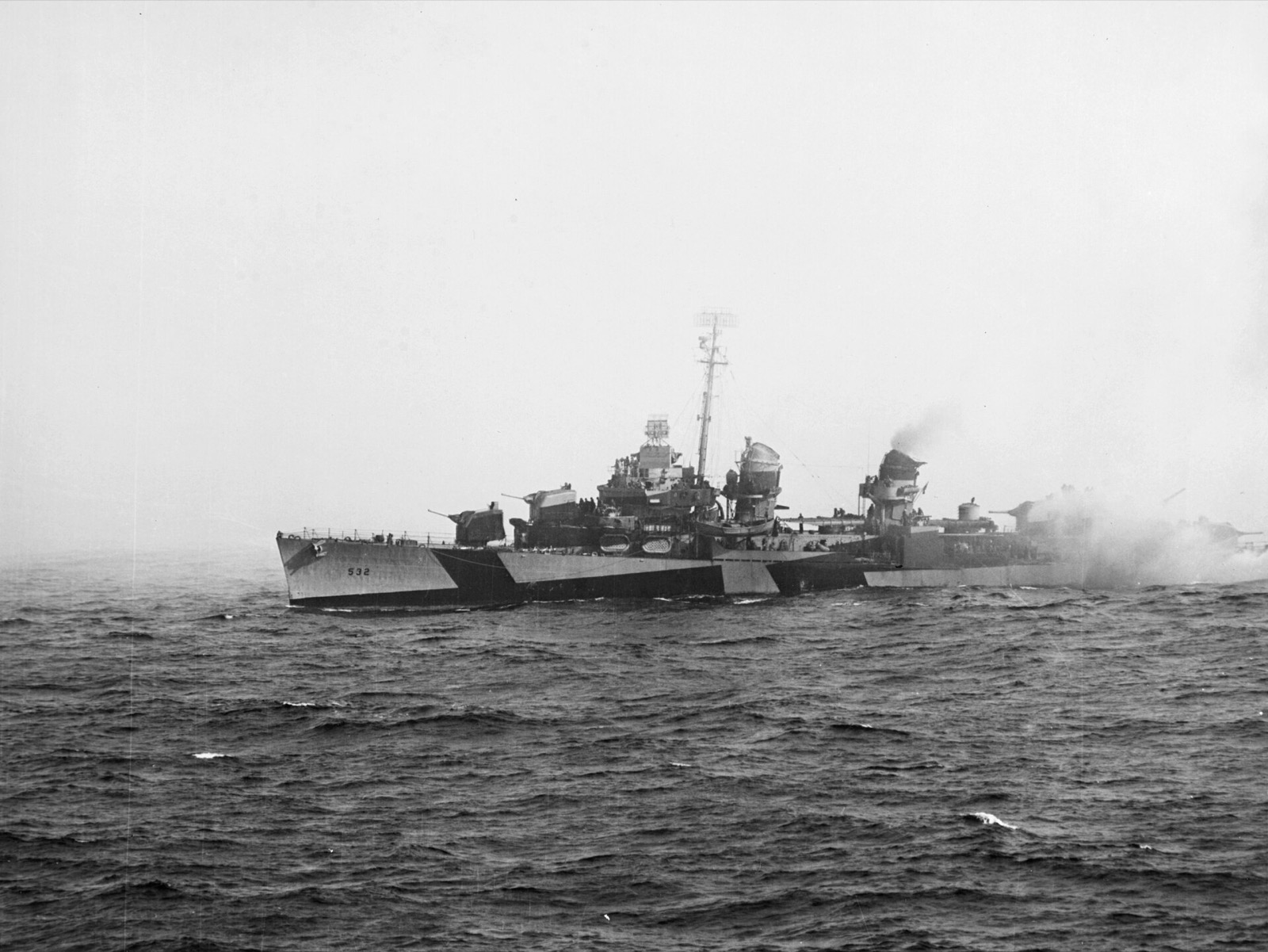
The third lesson is that victory in war is not decided only by fighting on land, at sea and in the air; shipyards and industry play an equally important part. During World War II, the production capacity of American shipbuilding was extraordinary. The country’s shipyards were able to build more than one destroyer a week.
Today, however, the United States builds only one or two destroyers a year, while China is building ships on a vast scale to create the world’s largest navy. In this situation, the United States urgently needs a long-term plan for shipbuilding and repair. The US Congress could raise military production capacity through such multi-year plans.
World War II showed that it is necessary to stay ahead of the enemy in producing military equipment as well as in strategy. Inventing advanced technology is not enough; there must also be the capacity to produce it quickly and at scale.
The fourth lesson is the horror of war and the importance of national unity. War is neither simple nor thrilling; it leaves a deep mark on people’s lives, families and society. This becomes clearer when one thinks of the young American sailors setting out on deployments of nearly a year in the Persian Gulf and the Red Sea. Iran’s ballistic missiles, advanced drones, fast attack boats and sea mines pose a serious risk to them. It is natural that they too worry about how ready they will be if a war starts, and whether they will come back safely from that ordeal.
During World War II, the sailors on American warships fought with a common purpose. Some came from farming areas, some from small industrial towns and some from big cities. But in wartime their political identity or ideology did not matter. On the battlefield, mutual trust and a shared sense of duty mattered more to a sailor than a shipmate’s politics.
The armed forces need the same national unity today. Whatever the country’s political divisions and disagreements, the whole nation must stand behind the soldiers and sailors who serve in the face of the risk of war.
The experience of World War II is therefore not only history for today’s world but also an important guide to preparing for future wars. Adapting to technological change, wise leadership, a strong system of military production and national unity: these four things will play a key part in deciding success in the wars of the future.
বাংলায় মূল প্রতিবেদন পড়ুন · Read the original Bengali report